Malaysia's five digital banks have opened over 5.5 million accounts. On the surface, that looks like a strong start. But a global study by Moneythor found that only 35% of registered digital banking customers remain actively engaged, and 15% of new users stop using the service within three months.
The problem isn't just user behaviour. Banks spend heavily to acquire customers, only to watch them go dormant within weeks. The missing piece is proactive engagement—reaching out at the right time, with the right message, in a way that feels personal.

Why digital banking customers drift away
Acquiring a customer is expensive. Losing them within the first 90 days turns that investment into a sunk cost. Yet most banks still rely on SMS blasts and generic push notifications—passive channels that cannot adapt to individual concerns or answer follow‑up questions.
A customer who signs up but never activates their account may simply be unsure how to set up a standing instruction or what fees apply. A notification cannot resolve that confusion. A conversation can.
How AI voicebot turns passive accounts into active customers
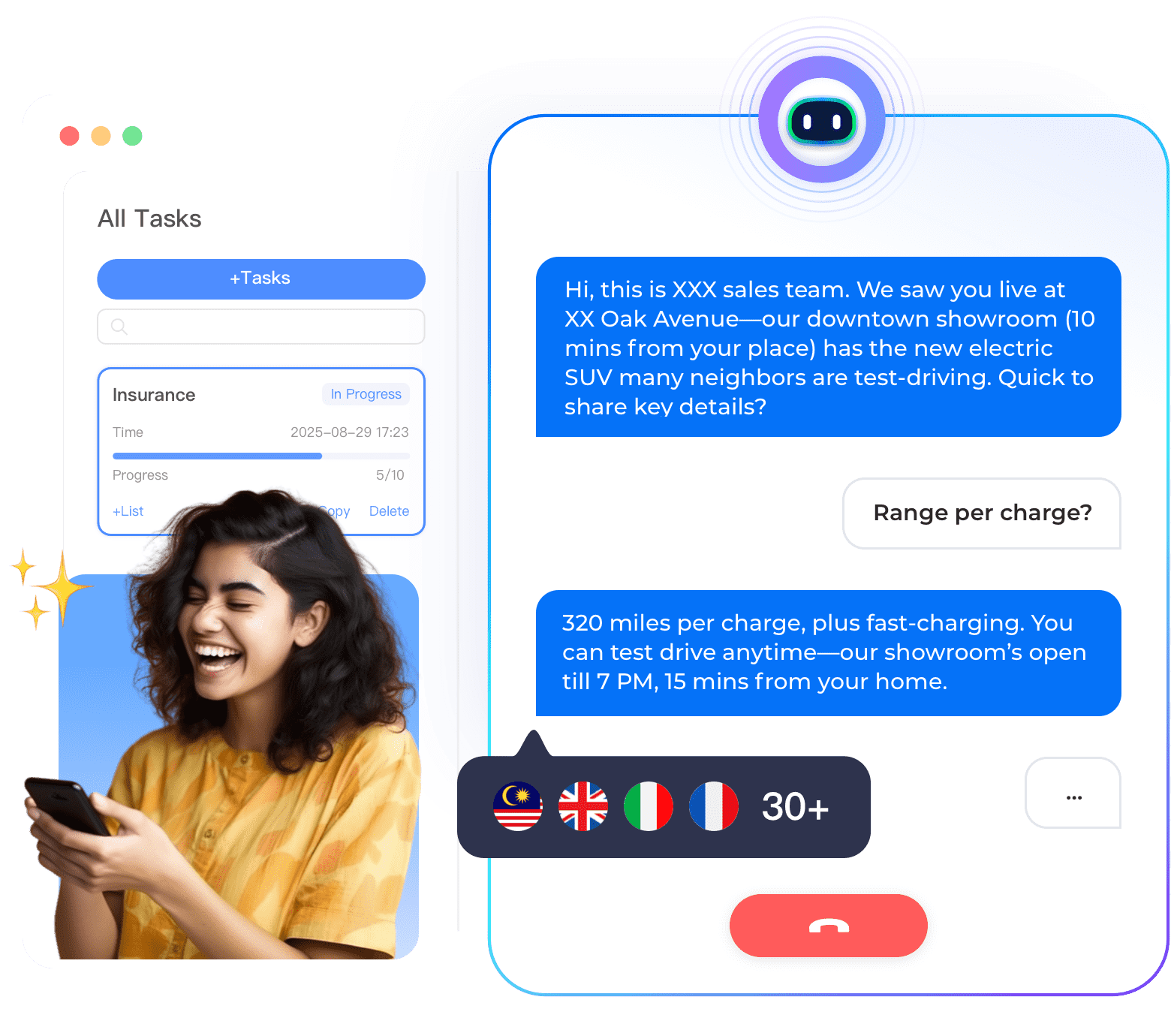
AI-powered outbound voice bridges the gap between static s and real engagement. Instead of waiting for customers to churn silently, an AI voice agent initiates a call that feels natural and helpful.
The agent can ask whether the customer is experiencing issues with the app, offer assistance with setting up a recurring transfer, or explain the benefits of a product feature they haven‘t tried. The conversation flows naturally—the AI detects hesitation, answers follow‑up questions, and adjusts its tone based on the customer's emotional state.
This approach works. A leading financial institution using voice AI reduced average handling time by thirty seconds while improving customer satisfaction scores. For digital banks struggling with early‑stage churn, these improvements translate directly into higher customer lifetime value.
Speaking the customer's language
Malaysia's digital banking users are diverse. About 65% of digital bank customers come from unserved and underserved groups, including low‑income households, gig workers, and youth. A one‑size‑fits-all English script will resonate with some and alienate others.
AI voicebots that support Bahasa Malaysia and English—with natural code‑switching for Manglish—allow banks to communicate in the language customers are most comfortable with. A customer in Kuala Lumpur may prefer English. A gig worker in Kedah may respond better to Bahasa Malaysia. The same AI voice agent handles both seamlessly.
A real-world signal: Ryt Bank
In August 2025, Malaysia launched the world's first AI‑powered digital bank. Ryt Bank, built around a conversational AI assistant, understands natural conversation in Bahasa Malaysia, English, and Manglish. Just over seven months after launch, it surpassed 1.2 million users—one of Malaysia's fastest‑growing digital banks.
This is the direction the market is moving. Banks that treat AI as an internal efficiency tool are falling behind. The new benchmark is AI that customers actually interact with—and that means outbound voice.
What this means for Malaysian digital banks
BNM has made clear that digital banking growth must be responsible and inclusive. The newly launched Digital Bank Inclusion Monitoring and Evaluation (DIME) Framework looks at whether digital banks are delivering meaningful outcomes for consumers, including stronger financial health.
AI voice outbound fits squarely within this framework. It educates customers, builds trust, and reduces the confusion that leads to inactivity. It reaches underserved segments in their preferred language. And when deployed with proper data governance and security, it meets regulatory expectations.
A new standard for customer engagement
Digital banking has already proven its ability to acquire customers. The next phase of competition will be defined by something harder: retention.
The banks that win will be those that move beyond passive notifications. They will initiate conversations that educate, guide, and build trust. They will reach customers in the language they speak, at the time they are most likely to listen, and with messages tailored to their behaviour.
For digital banks ready to turn inactive users into engaged customers, AI voice outbound is not just an upgrade—it's the engine of growth.
Instadesk VoiceBot is built for this shift—with support for Bahasa Malaysia, English, and code‑switching, zero‑code visual orchestration that launches campaigns in days, and enterprise‑grade security that meets banking compliance requirements. It helps digital banks move from silent churn to active conversation, one call at a time.