Why Industry Leaders Switching to AI Voice Agents: ROI, Efficiency, Conversion Data
Many businesses still rely on traditional outbound calling or rigid IVR menus, unaware of the revenue slipping through their fingers. High labor costs, inconsistent sales scripts, and inefficient lead filtering are telltale signs of outdated voice systems. The hidden costs—from lengthy agent training to missed follow-ups—are accumulating faster than most organizations realize.
Forward-thinking contact centers recognize the need to modernize, yet building a case for AI voice agents often feels daunting. That's why we've analyzed how leading enterprises are transforming their voice channels with Instadesk VoiceBot—starting strategically, scaling thoughtfully, and tracking measurable outcomes.

Legacy voice processes and manual workflows have become deeply woven into daily operations. Sales teams spend countless hours filtering through massive lead lists. Customer service agents remain trapped in cycles of answering repetitive questions. Training new hires stretches across weeks, with costs frequently exceeding those of retaining experienced staff.
These operational drains represent real dollars leaving your business. Yet many companies hesitate to change, paralyzed by the perceived risks of replacing familiar workflows.
Smart organizations have discovered a liberating truth: modernizing voice capabilities doesn't require dismantling everything at once. AI voice agents seamlessly integrate with your existing stack and processes, enhancing rather than disrupting current operations.
Proving the value of AI voice agents becomes straightforward when you identify the right starting point. The foundational approach targets repetitive, high-volume scenarios—appointment reminders, payment collections, FAQs, and policy questions. These minor tasks silently consume agent hours and drive up operational costs.
Instadesk VoiceBot transforms this reality with remarkable speed. Through zero-code visual orchestration and drag-and-drop interface, teams can launch within a single day.
The measurable outcomes tell an unmistakable story:
• 1000% increase in outbound call efficiency
• 13x higher efficiency compared to manual outbound
• 125% of industry average connection rates in marketing campaigns
This initial phase maintains complete operational control. Complex scenarios requiring human judgment flow instantly to your team, while analytics dashboards provide complete visibility into AI performance.
After establishing success with foundational use cases, organizations progress toward equipping AI voice agents to drive real business outcomes—rescheduling appointments, processing order inquiries, updating account information, and qualifying sales leads.
Seamless CRM integration enables automatic lead creation—when the voice agent identifies genuine customer interest, it instantly generates a sales lead and s your team, accelerating follow-up speed by 90%.
Organizations at this stage consistently report:
• 40% increase in sales conversion rates
• 65% increase in customer satisfaction
• 60% reduction in manual costs while expanding follow-ups by 5x
Consider Chongqing Department Store's transformation. Deploying Instadesk VoiceBot for automated outbound follow-ups delivered:
• 15% increase in effective resolution rates
• 30% improvement in response service efficiency
• 96.5% satisfaction rate on after-sale surveys
This stage often catalyzes broader operational evolution. Agent responsibilities shift from repetitive tasks toward relationship building and quality assurance.

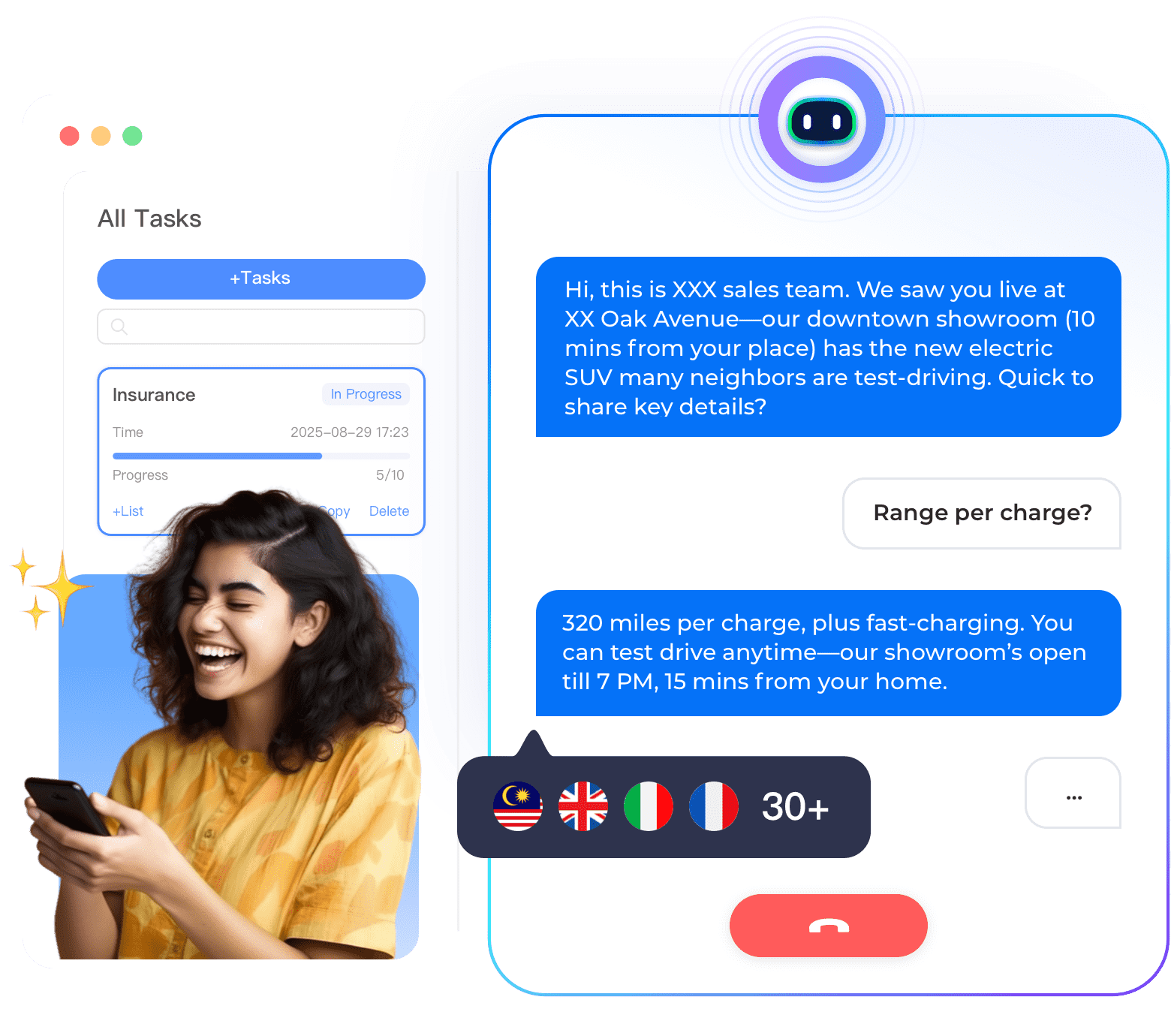
The most sophisticated stage represents a fundamental shift. Rather than simply responding, advanced AI voice agents recognize patterns, understand context, and initiate proactive engagement—surfacing personalized renewal offers, notifying customers about expiring subscriptions, or suggesting relevant cross-sells.
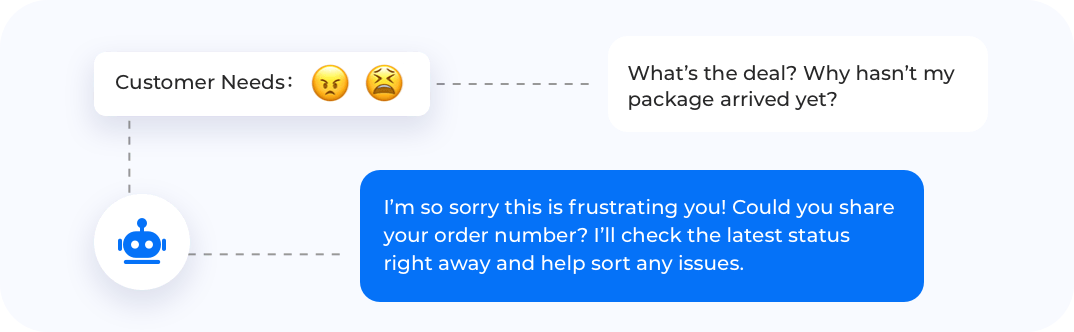
Instadesk VoiceBot's large-model technology enables natural, multi-round conversations that feel remarkably human. The system incorporates emotional intelligence, assessing customer sentiment and dynamically adjusting conversation content.
iKang Guobin's experience illustrates this transformation. Facing user growth that outpaced service capacity, they implemented Instadesk's Voice Contact Center with inbound and outbound voice bots, delivering 24/7 availability and serving over 100,000 customers per store.
The most remarkable AI voice programs transcend the tool mindset entirely—they integrate automation as genuine teammates requiring training and continuous development. Industry leaders invest in voice agent coaching, transcript review, and decision path optimization using pre-configured templates validated through real outbound performance.
Knowledge management becomes strategic—feeding the AI fresh data through Q&A knowledge bases, custom words, and synonym management. Organizations leverage ASR dialect models and support for over 30 languages, ensuring deep adaptation to local communication patterns.
The most successful approach never attempts everything simultaneously. Starting with one high-impact use case, validating results rigorously, and scaling methodically creates sustainable success.
The voice channel remains where customers turn when answers matter quickly. When voice operations remain trapped in manual processes or rigid IVR menus, ROI, loyalty, and revenue all suffer.
Instadesk VoiceBot fundamentally changes this equation. Key capabilities include multi-language automated outbound increasing conversion rates by over 30%, multi-round voice conversations rivaling human interaction, zero-code visual orchestration, intelligent interruption responding within 2 seconds, and comprehensive data encryption ensuring complete compliance.
The platform continuously improves through usage. With the right strategic approach, it becomes your most efficient, scalable team member. For organizations ready to transform their voice operations, Instadesk offers a proven formula: start with high-impact use cases, layer AI thoughtfully onto existing operations, prove value quickly, and scale confidently.
Issac
Omnichannel Digital Operations: Driving Traffic Growth & Deepening User Value
You may also like
Instadesk vs. Sobot: A 2026 Comparison of AI-Powered Customer Service Platforms
This 2026 comparison contrasts Sobot, an all-in-one practical omnichannel customer service platform, with Instadesk, an LLM-focused solution boasting advanced voice AI, end-to-end automation and deep multilingual capabilities.
Sentiment Analysis for Gaming: Understanding Player Emotions
Sentiment analysis uses AI to extract emotional tone from player communications, differing from intent recognition by focusing on feelings. It boosts gaming support efficiency, reduces churn, and optimizes design; Instadesk’s VoiceBot delivers tailored real-time sentiment tools for the gaming industry.
What Is Lead Scoring and Why It Matters for Gaming
Lead scoring is a systematic methodology used to rank prospects against a scale that represents the perceived value each lead holds for an organization.It assigns numerical values—or scores—to leads based on a range of predefined criteria,helping sales and marketing teams pinpoint where a prospect stands in the buyer’s journey and determine the most appropriate follow-up strategy.
Get Started in Minutes. Experience the Difference.