
The Volunteer Who Spent a Month Trying to Train
A Kansas City volunteer spent a full month trying to access FIFA’s online training portal,repeatedly emailing for help to no avail,according to the Kansas City Star.The portal simply did not work.
Local coordinators told volunteers to contact FIFA.FIFA pointed them back to Kansas City.No one owned the problem.
Another volunteer in Dallas completed her e-learning weeks ago.She never received shift assignments or uniform pickup instructions.
Boston:A Cascade of Logistical Letdowns
In Boston,the experience for many volunteers was,according to the Boston Globe,a baffling conga line of communication breakdowns and bottlenecks.More than a dozen applicants described canceled training events,rejection emails sent in error,incorrect birthdates that delayed accreditation,and vague or missing role descriptions.
The uniform pickup site in downtown Boston had an unmarked entrance and no staff.Large group tryouts offered no clear selection criteria.
What should have been an awesome,once-in-a-lifetime experience was a frustrating mess,said Diana Correia,who received her rejection notice on Mother‘s Day after a six-month wait.The entire operation felt amateurish,like no one had ever done this before,said Warren Lee,a retiree who withdrew out of frustration.
The Numbers Don’t Add Up
FIFA expected around 1,500 volunteers in Boston—roughly half the number organizers initially sought.Seattle received 35,000 applications for just 2,000 volunteer slots.
FIFA is projected to rake in a record$11 billion in revenue from this year‘s World Cup.Yet volunteers could not get basic training or uniform pickup.
In Kansas City,some volunteers couldn‘t access training.Others couldn’t sign up for shifts.One volunteer asked on Facebook:Is anyone having a difficult time selecting Accreditation and Uniform Time?It‘s showing that every time slot is booked.Another responded:it’s a system wide glitch across multiple US host cities.
The Real Problem:Training That Can‘t Scale
Traditional training for 65,000 volunteers across 16 host cities was always going to fail.Classroom sessions couldn’t reach everyone.E-learning portals broke under the load.
Volunteers received inconsistent information.Some got 4 hours of training.Others got 2 hours.Many got nothing at all.
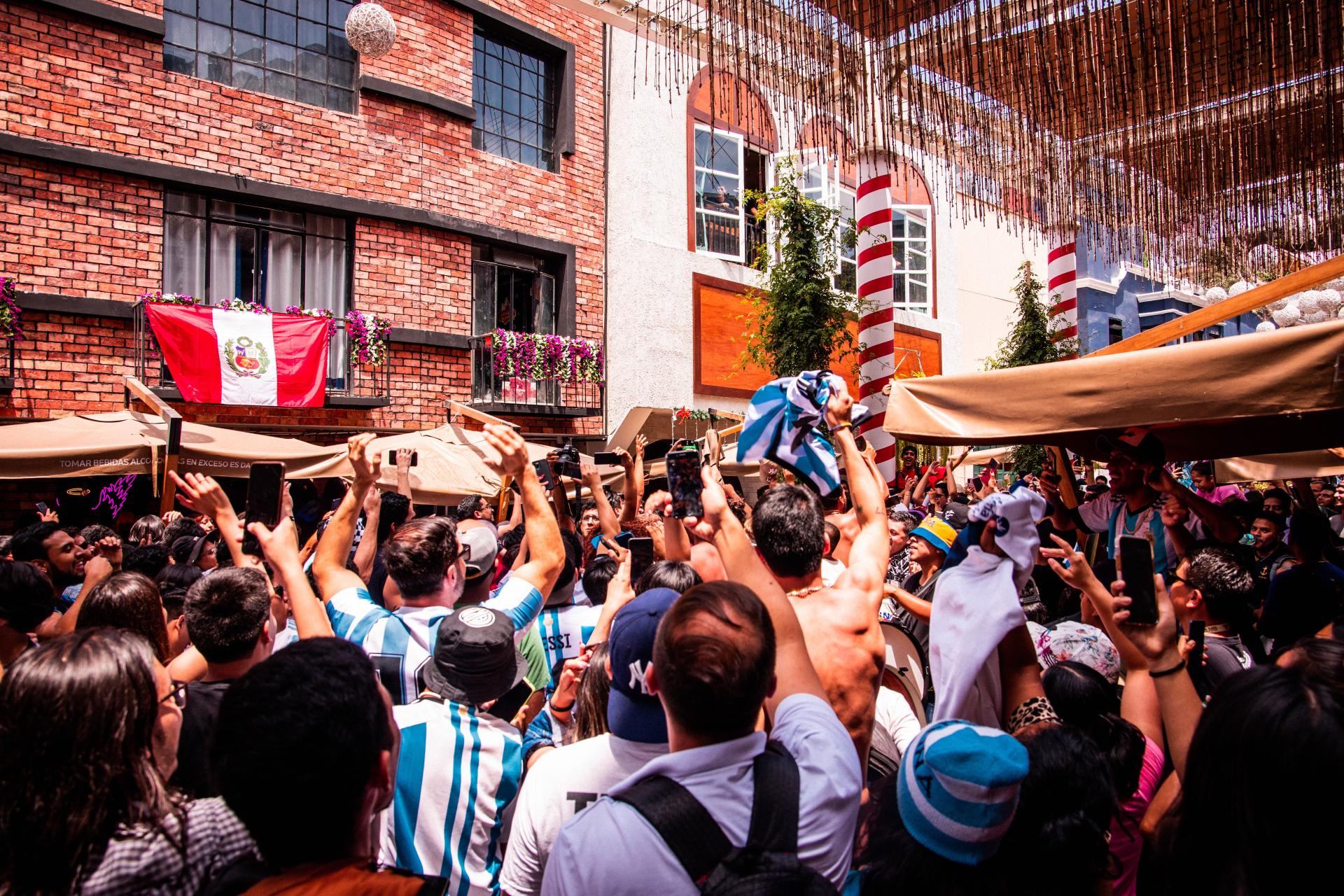
When the first wave of fans arrived,volunteers were unprepared.They gave wrong directions.They couldn‘t answer basic questions.The volunteers—the heartbeat of the tournament—became a source of confusion rather than help.
This is exactly where Instadesk Intelligent Training comes in.
What Instadesk Intelligent Training Does
Instadesk Intelligent Training provides AI-powered simulation training that scales to thousands of volunteers instantly.No broken portals.No inconsistent quality.
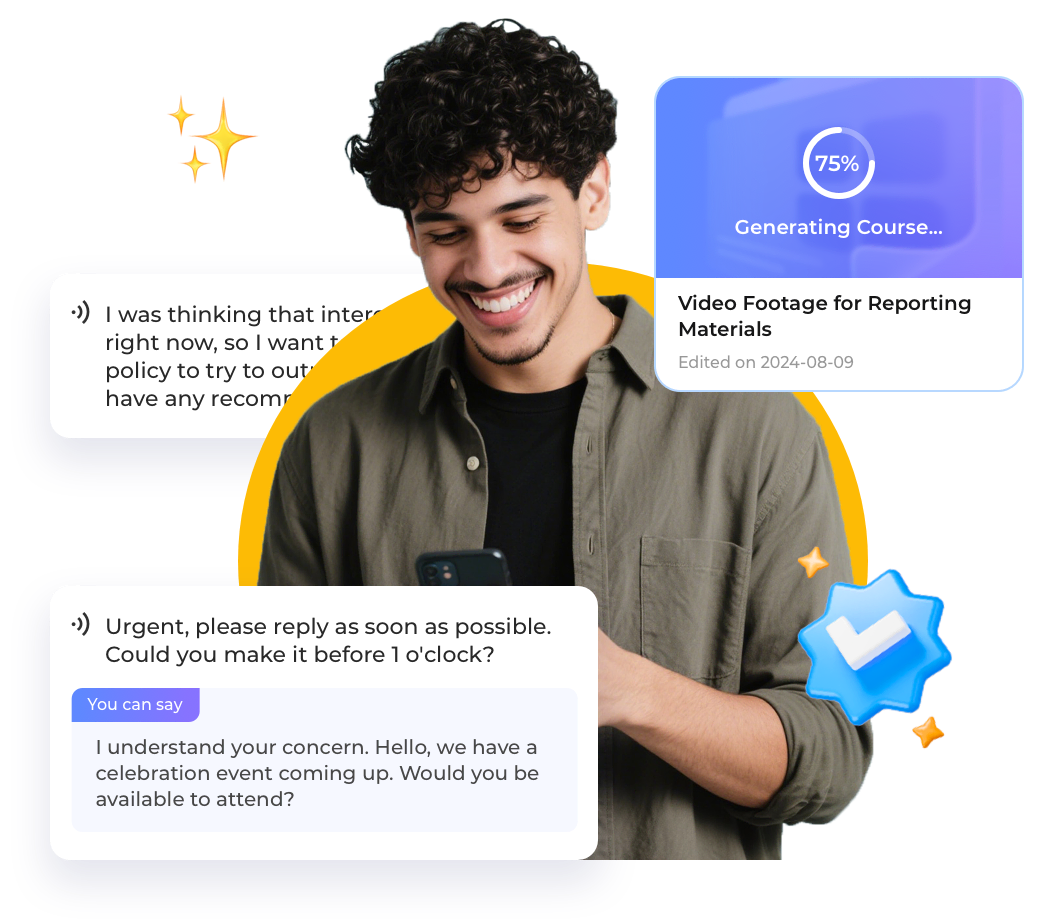
When organizers upload training materials—stadium maps,emergency protocols,guest service scripts—the AI structures everything automatically.Volunteers access training on their phones in 20-minute sessions,whenever they have time.
Instead of passive e-learning,volunteers practice with AI-generated virtual fans.They handle real scenarios:angry fans,confused tourists,medical emergencies.The AI adapts in real time,providing specific feedback after each scenario.
Training that once took weeks now takes days.Volunteers who complete AI simulation are ready for the field—not just certified.
Key Features That Make a Difference
AI-powered simulation.Volunteers practice with virtual fans who ask questions,raise objections,and express emotions.They learn by doing,not by watching slides.
Real-time feedback.After each scenario,volunteers see specific corrections:You missed the stadium entrance question—try saying this instead.No more guessing what went wrong.
Scalable training.Train 10 volunteers or 10,000.The platform scales instantly.No broken portals.No waitlists.
Role-specific modules.Security volunteers learn crowd control.Guest service volunteers learn hospitality protocols.Medical volunteers learn emergency response.
Progress tracking.Managers see who has completed training and who hasn‘t.Automated reminders go out to those falling behind.
Multi-language support.International volunteers train in their own language.The platform supports 100+languages with real-time translation.
What Could Have Been Different
Imagine Kansas City volunteers completing training on their phones in 20 minutes instead of spending a month trying to access a broken portal.
Imagine Boston volunteers receiving clear,consistent training through AI simulation instead of canceled events and rejection emails sent in error.
Imagine 65,000 volunteers across 16 cities all receiving the same high-quality training,delivered instantly,with real-time feedback and progress tracking.
This is not speculation.This is what Instadesk Intelligent Training delivers today.
How to Deploy
First,upload your training materials—stadium maps,emergency protocols,guest service scripts.The AI structures everything automatically.
Second,configure role-specific training modules.Security volunteers learn crowd control.Guest service volunteers learn hospitality protocols.
Third,invite volunteers to the platform.They complete training on their phones in 20-minute sessions.
Fourth,monitor progress through the analytics dashboard.See who is ready and who needs more practice.
Most tournament organizers and host cities deploy Instadesk Intelligent Training in under one week.
Conclusion
The 2026 World Cup has exposed a fundamental failure:volunteer training cannot scale with traditional methods.Kansas City volunteers couldn‘t access e-learning portals.Boston volunteers faced canceled training events and rejection emails.Volunteers arrived unprepared.
Volunteers deserve training that is consistent,scalable,and effective.Instadesk Intelligent Training provides the AI-powered simulation platform that every major event needs.