
Beauty retail is different from most other industries. A customer doesn't just want to know if a product is in stock. She wants to know if a foundation matches her skin tone, if a serum works for sensitive skin, or which lipstick shade looks best for her wedding day.
These questions require something beyond simple yes-or-no answers. They require product knowledge, judgment, and the ability to tailor recommendations to each individual.
That's why training matters so much in beauty. And that's why traditional training methods — static manuals, one-size-fits-all onboarding, annual compliance quizzes — often fall short.
The Training Challenge in Beauty Retail
New beauty advisors face a steep learning curve. They need to memorize hundreds of products, understand ingredients, learn application techniques, and master the art of asking the right questions to make personalized recommendations.
On top of that, they need to learn your brand's voice. Is it clinical and results-driven? Warm and approachable? Trendy and bold? Every brand has a distinct personality, and every customer interaction should reflect it. These complicated circumstances often lead to inconsistent service.
In a crowded market where customers can buy the same products from dozens of retailers, that inconsistency hurts loyalty.
What Makes Beauty Service Training Different
Most customer service training focuses on problem-solving: how to process a return, how to track an order, how to escalate a complaint. Those skills are important, but they're not what builds customer loyalty in beauty.
Beauty service is consultative. It's about understanding what the customer actually needs and matching them to the right product. That requires active listening, product expertise, and the confidence to make recommendations.
Traditional training methods struggle to teach these skills at scale. Role-playing with managers is time-consuming. Shadowing experienced advisors isn't always possible. And by the time a new advisor handles their first real customer, they've had very little practice.

How Intelligent Training Bridges the Gap
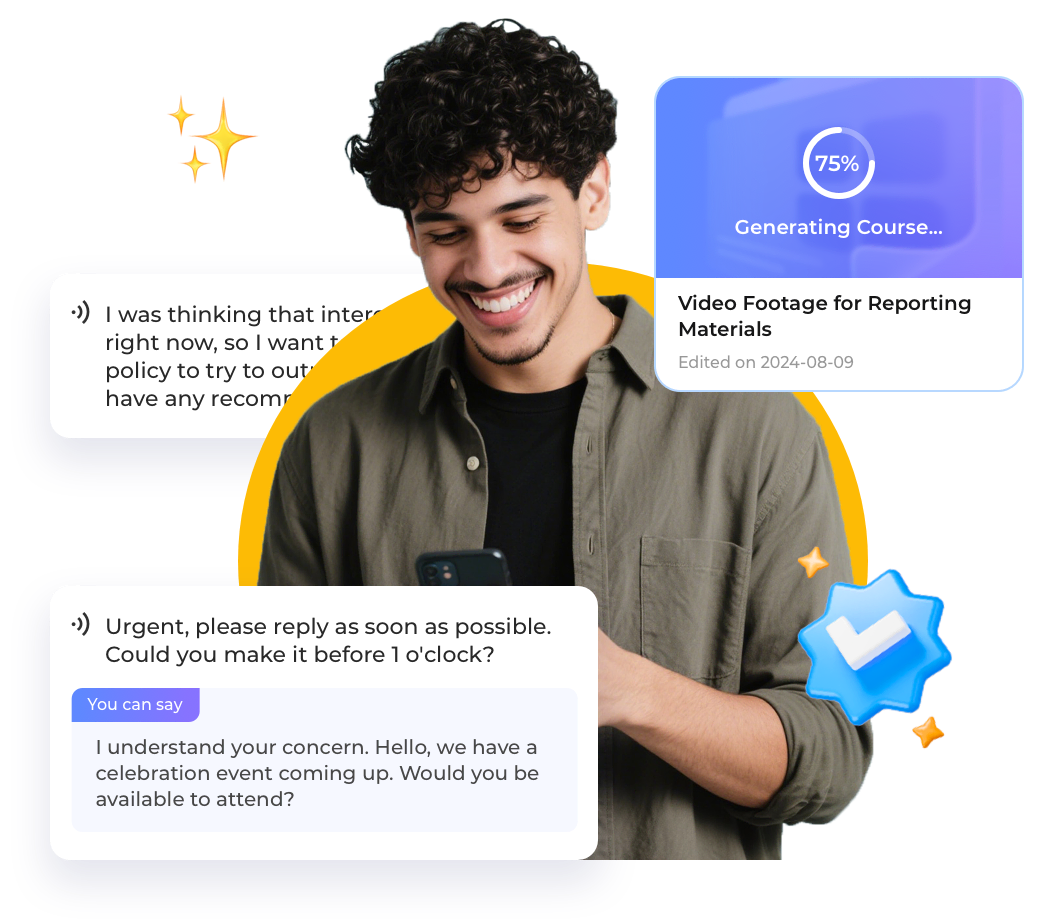
Intelligent Training changes how beauty brands prepare their teams. Instead of static manuals and occasional role-plays, new advisors practice on an AI-powered simulation platform before they ever talk to a real customer.
The system creates realistic customer scenarios. A customer wants a foundation for oily skin. Another asks for a cruelty-free alternative to their current moisturizer. A third is deciding between two serums and needs help choosing.
Advisors practice navigating these conversations in a safe, low-pressure environment. The AI provides real-time feedback on their responses — what they did well, what they missed, and how they could improve.
The table below compares traditional training methods with AI-powered intelligent training for beauty retail:
| Aspect | Traditional Training | AI-Powered Intelligent Training |
| Course material preparation | Manual creation, weeks to complete | AI delivers course materials instantly, cuts 60% of processing time |
| Practice scenarios | Limited role-play with managers | Auto-generated virtual customer scenes, triples training effect |
| Feedback | Delayed, subjective manager evaluation | Instant positive feedback + real-time skill s |
| Performance evaluation | Annual or quarterly reviews | 14+ dimension evaluation, clear capability overview |
| Training cost | High (trainer time, travel, materials) | 32% reduction in training costs |
| Employee ramp-up time | Weeks or months | 32% shorter cycle time |
| Customer complaint rate | Inconsistent, hard to track | 32% reduction in complaint rate |
| Lead retention | Unmeasured | 19% improvement in lead retention |
Over time, the system builds a knowledge base of best practices. Top-performing conversations become training examples. Common mistakes get flagged for extra coaching. Every interaction makes the training smarter.
For beauty brands with a strong brand voice, Intelligent Training ensures consistency. Advisors learn not just what to say, but how to say it — in a way that sounds like your brand, not a generic script.
Application Scenarios in Beauty Retail
New product launch. A brand releases a new skincare line. Instead of printing new manuals and scheduling live training sessions, the brand loads product information into the training platform. Advisors practice recommending the new line in simulated conversations before it hits shelves.
Seasonal peak preparation. Before the holiday shopping rush, advisors practice handling high-pressure scenarios — gift recommendations, returns, out-of-stock items. They build confidence before the real crowds arrive.
Brand voice alignment. A heritage beauty brand wants to modernize its customer experience without losing its identity. The training platform reinforces the brand's unique voice across every simulated conversation, ensuring consistency as new advisors join the team.
Why Intelligent Training Works for Beauty
Beauty retail is built on relationships. Customers come back to advisors who remember them, understand their preferences, and make them feel seen. That level of service doesn't happen by accident. It's the result of intentional, consistent training that prepares advisors for real conversations.
The Instadesk Intelligent Training platform gives beauty brands a scalable way to train their teams. New advisors practice on realistic scenarios before they face customers. The system provides instant feedback and builds a knowledge base of best practices. And because the training is AI-powered, it gets better over time — every conversation makes the next trainee more prepared.
In an industry where personalization is everything, your team can't afford to learn on the job. Intelligent Training makes sure they're ready from day one.