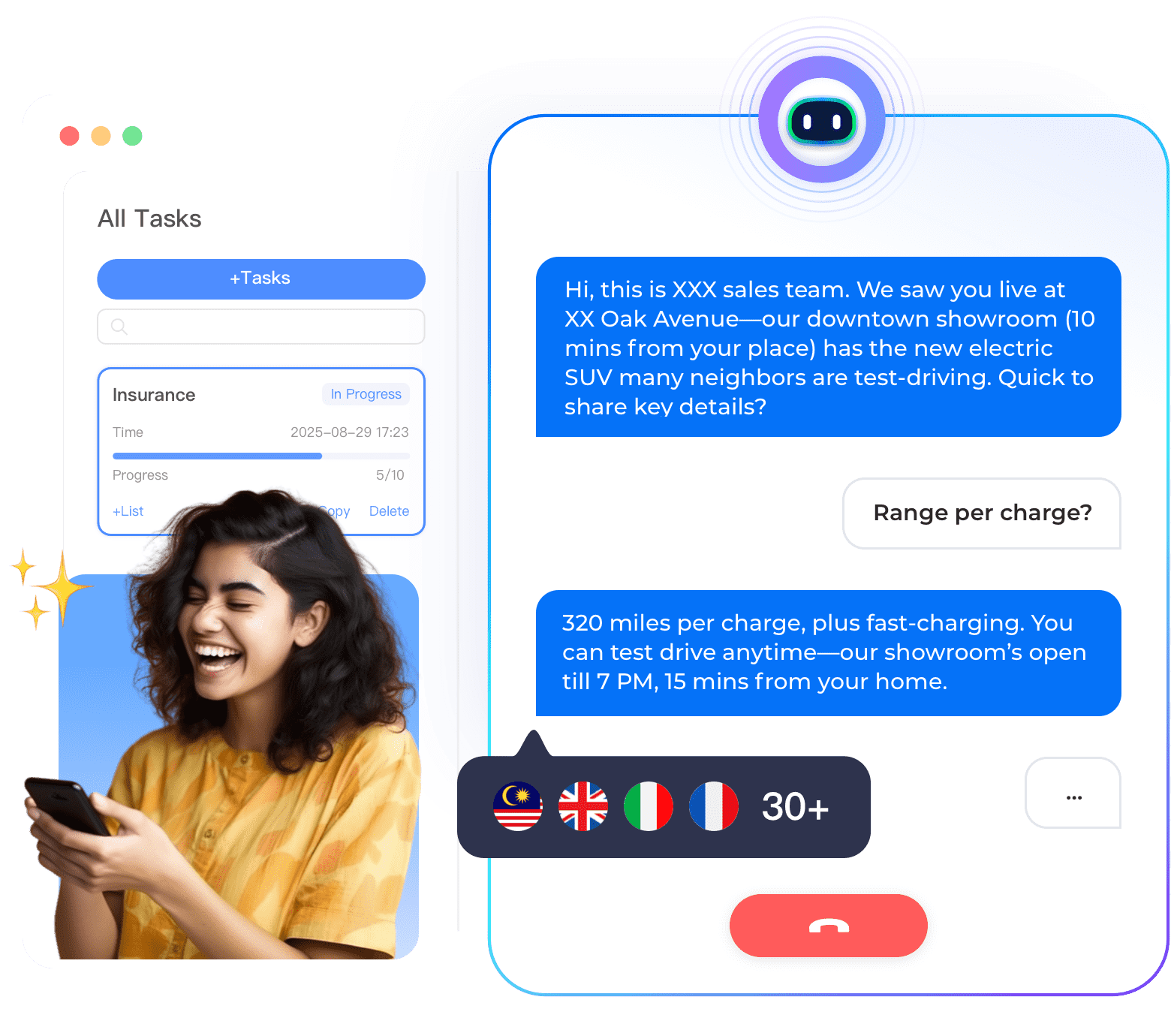

Quálitas,Mexico's leading auto insurer,faced a problem many insurance companies would envy:too many calls.Customer demand surged–and with it,call volume.But instead of hiring hundreds of new agents,Quálitas did something different.They deployed agentic AI–and the results are rewriting the economics of insurance contact centers.The insurer's experience proves that AI voice agents can handle massive call volume increases without proportional headcount growth,fundamentally changing the staffing calculus for the entire insurance industry.
The Insurance Staffing Crisis
Insurance call centers face an impossible choice:hire more agents to handle growing volume,or let customers wait.Hiring is expensive.Training takes months.Turnover is high–often exceeding 40%annually in insurance contact centers.Letting customers wait damages satisfaction and loyalty,leading to policy churn that costs millions.Quálitas found a third path:AI voice agents that handle routine and complex inquiries end-to-end,reducing the need for human agents while improving customer experience.
The Scale of the Challenge
Insurance call centers handle millions of calls annually.Each call requires an agent to verify identity,access policy data,understand the inquiry,and provide a resolution.For complex workflows like claims and roadside assistance,the process can take 10-15 minutes per call.Multiply this by thousands of daily calls,and the cost is staggering.Traditional approaches to managing growth require hiring more agents,building more call center capacity,and absorbing higher training and turnover costs.
What Agentic AI Did for Quálitas
Quálitas began its AI journey in 2022 with conversational AI for high-volume inquiries.By 2026,the insurer had expanded to SoundHound's agentic AI platform–and the results were dramatic.AI agents now support an average of 100,000 calls per month–a 150%increase in call volume handled by AI.The deployment significantly reduces the need for human agent involvement,speeding up claims processing and minimizing follow-up calls.
Detailed Results Across Insurance Workflows
•More than 74%of car assistance requests–including lost keys,empty fuel,and vehicle lockouts–handled end-to-end by AI without human intervention.
•Over two-thirds of partial theft requests automated–stolen mirrors,tires,and other vehicle parts reported and processed without agent involvement.
•More than three-quarters of broken glass claims resolved without human intervention–a complex workflow that previously required multiple agent touchpoints.
•Over 80%of interactions successfully capturing a policy number–a critical authentication step that ensures accuracy and compliance.
•Regional dialect understanding built trust with customers across Latin America,increasing satisfaction and reducing escalations.
The Staffing Impact
Quálitas's experience proves that AI voice agents can handle a 150%call surge without adding a single agent.Human agents are freed to focus on complex,high-value interactions while AI manages routine and semi-routine inquiries.The insurer scaled operations without proportional headcount growth,avoiding the costs of hiring,training,and turnover.Customer satisfaction improved as wait times dropped and resolution times accelerated.
Why This Matters for Every Insurer
Quálitas's experience proves that AI voice agents don't just handle simple FAQs–they manage complex insurance workflows end-to-end.Roadside assistance requires coordinating with tow trucks,service centers,and policyholders.Broken glass claims require processing photos,verifying coverage,and approving repairs.Theft reports require multiple authentication steps and coordination with law enforcement.AI handles all of these–autonomously,accurately,and at scale.
The Financial Impact
For a typical insurer with 500 agents and$50 million annual contact center costs,the financial impact is substantial.If AI handles 55-60%of routine inquiries–a conservative estimate based on Quálitas's results–annual savings would exceed$25 million.The ROI case for AI voice agents in insurance is no longer theoretical–it's proven in production.
How Instadesk Delivers AI Voice Agents That Reduce Live Agent Needs
Instadesk's AI voice platform is purpose-built for insurance:
•Agentic AI that handles complex claims workflows end-to-end–from first notice of loss to final resolution.
•Pre-built insurance intents for claims,roadside assistance,policy servicing,and theft reporting–deploy in days,not months.
•Integration with claims management and policy administration systems for real-time data access.
•24/7 availability with no hold time–policyholders get answers anytime,day or night.
•Regional dialect and language support–serve customers in their preferred language.
•Pay-as-you-go per-minute pricing with no per-seat minimum–scale without adding headcount.
Case Study–Regional Insurer Handles 150%More Calls Without Adding Agents
A regional insurer with 300 agents deployed Instadesk's AI voice agents across claims and roadside assistance.Within 12 months,AI handled 100,000+calls monthly,containment rates exceeded 70%for key workflows,and the insurer handled a 150%increase in call volume without adding agents.Customer satisfaction increased from 65%to 87%.Annual contact center costs were reduced by 45%.
Conclusion
Quálitas proved that AI voice agents can handle a 150%call surge without adding a single agent.Instadesk provides a purpose-built platform for insurers who want to scale without hiring.Start a free trial and handle more calls with fewer agents.