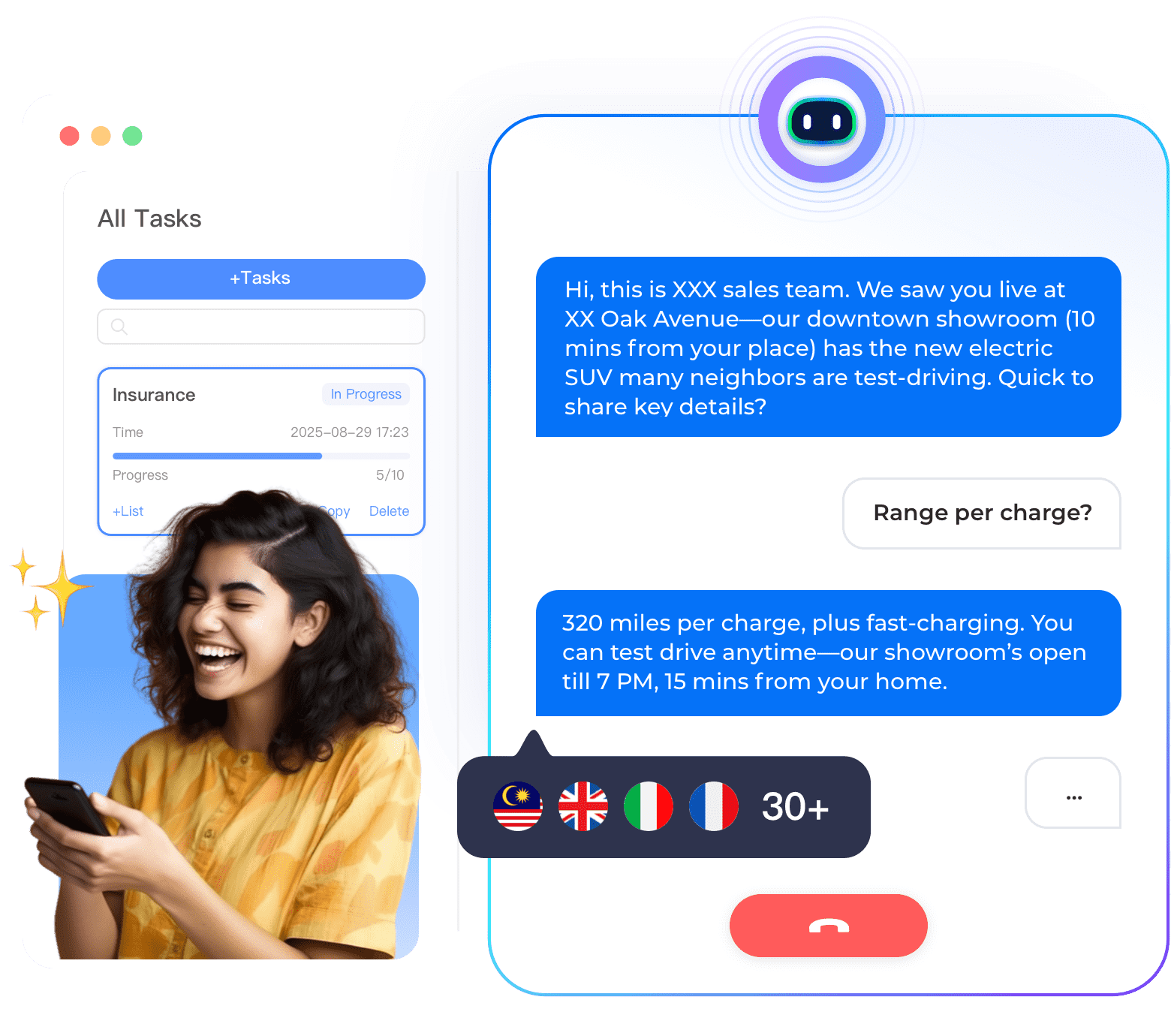
Energy companies serve diverse customer bases that speak multiple languages.A monolingual voice bot supports only one language,forcing non-native speakers to struggle or seek human agents.A multilingual voice bot can understand and respond in several languages,improving customer experience and reducing agent workload.This article compares multilingual and monolingual voice bots,highlights the benefits of multilingual capabilities for energy utilities,and explains how Instadesk’s platform enables cost-effective multilingual deployment.
What Is a Monolingual Voice Bot?
A monolingual voice bot is designed to understand and speak only one language(typically English).It works well for homogeneous customer bases but fails when customers speak other languages.Callers who attempt to use the bot in a different language receive error messages or are transferred to human agents,increasing costs and frustration.

What Is a Multilingual Voice Bot?
A multilingual voice bot can understand and respond in multiple languages.It automatically detects the caller’s language(based on speech or input)and switches to that language for the conversation.Advanced multilingual bots use separate NLU models per language or real-time translation to provide accurate understanding.
Key Differences
| Aspect | Monolingual Voice Bot | Multilingual Voice Bot |
| Language support | One language | 5-30+ languages |
| Customer experience for non-native speakers | Poor (cannot understand or be understood) | Excellent (natural conversation in native language) |
| Escalation rate | High for non-native speakers | Low across all languages |
| Agent workload | High (handling non-English calls) | Reduced (bot handles more languages) |
| Implementation complexity | Low | Moderate (requires multi-language NLU) |
Why Multilingual Voice Bots Matter for Energy Companies
Energy utilities serve diverse communities,especially in regions with immigrant populations.Multilingual voice bots deliver improved customer satisfaction as customers interact in their preferred language,reduced call handling time by eliminating transfers to language lines,lower operational costs by automating more calls,and regulatory compliance with language access requirements in some jurisdictions.
How Multilingual Voice Bots Work
There are two main approaches.Language-specific NLU models:the bot has separate NLU engines for each language,providing high accuracy but requiring more resources.Real-time translation:the bot translates the caller’s speech to the agent’s language and vice versa;simpler but may lose nuance.Hybrid approaches combine both.
How Instadesk Delivers Multilingual Voice Bots
Instadesk’s voice bot platform supports 30+languages with native NLU models for major languages(English,Spanish,French,German,Mandarin,etc.).Key features include automatic language detection,per-language conversation flows,real-time fallback to human agents if confidence is low,and unified analytics across all languages.Energy companies can deploy a single voice bot that serves their entire customer base,regardless of language.

Case Study:Energy Utility Reduces Transfers by 50%with Multilingual Bot
A regional energy utility serving a diverse population deployed Instadesk’s multilingual voice bot.Previously,non-English callers were transferred to a language line,averaging 10 minutes per call.After deployment,the bot handled 40 percent of non-English calls autonomously,reducing transfers by 50 percent and cutting average handle time by 6 minutes for those calls.
Conclusion
For energy companies serving multilingual communities,a multilingual voice bot is superior to a monolingual one.It improves customer experience,reduces agent workload,and lowers operational costs.Instadesk’s platform provides cost-effective multilingual capabilities with native NLU for 30+languages.