For decades, the ritual was simple: peel off an old road tax sticker, apply a new one to the windscreen, and drive on. That era ended on 1 February 2026, when the Road Transport Department (JPJ) officially stopped issuing physical road tax slips for private vehicles, completing its transition to a fully digital system. Road tax details are now stored in the MyJPJ mobile app and can be presented directly from a smartphone when required by enforcement officers.
This shift is part of a broader national agenda. Prime Minister Anwar Ibrahim has called for all public sector transactions to be conducted online, with the government aiming for 95% of federal services to be delivered online by 2030. Yet moving services online is only half the equation. The real test is how effectively government communicates with citizens after the digital shift.

The notification gap in Malaysia’s digital transformation
When JPJ eliminated physical road tax slips, it also removed a built in reminder system. The printed slip on the windscreen was a passive but ever present nudge. Its absence leaves a gap that digital notifications must fill. The Ministry of Transport has acknowledged this: Transport Minister Anthony Loke ed that JPJ plans to introduce road tax expiry notifications on the MyJPJ app, with improvements to be made in phases. However, as of early 2026, the timeline for full implementation remains unclear.
This pattern holds across the public sector. Citizen facing communication, particularly outbound notifications, has lagged behind internal digitalisation. A survey of government communication professionals found that 78% have delivered some form of citizen engagement activity, and 75% recognise that effective engagement generates policy support and rebuilds trust. Yet engagement is often limited to soliciting opinions, with little influence on actual policy delivery. Notifications that simply appear in an app are easily missed.
From passive notification to active conversation
The fundamental problem with digital notifications is that they are passive. An app can push a reminder, but it cannot that the citizen understood the message, answer follow up questions, or adjust its approach based on tone and sentiment.
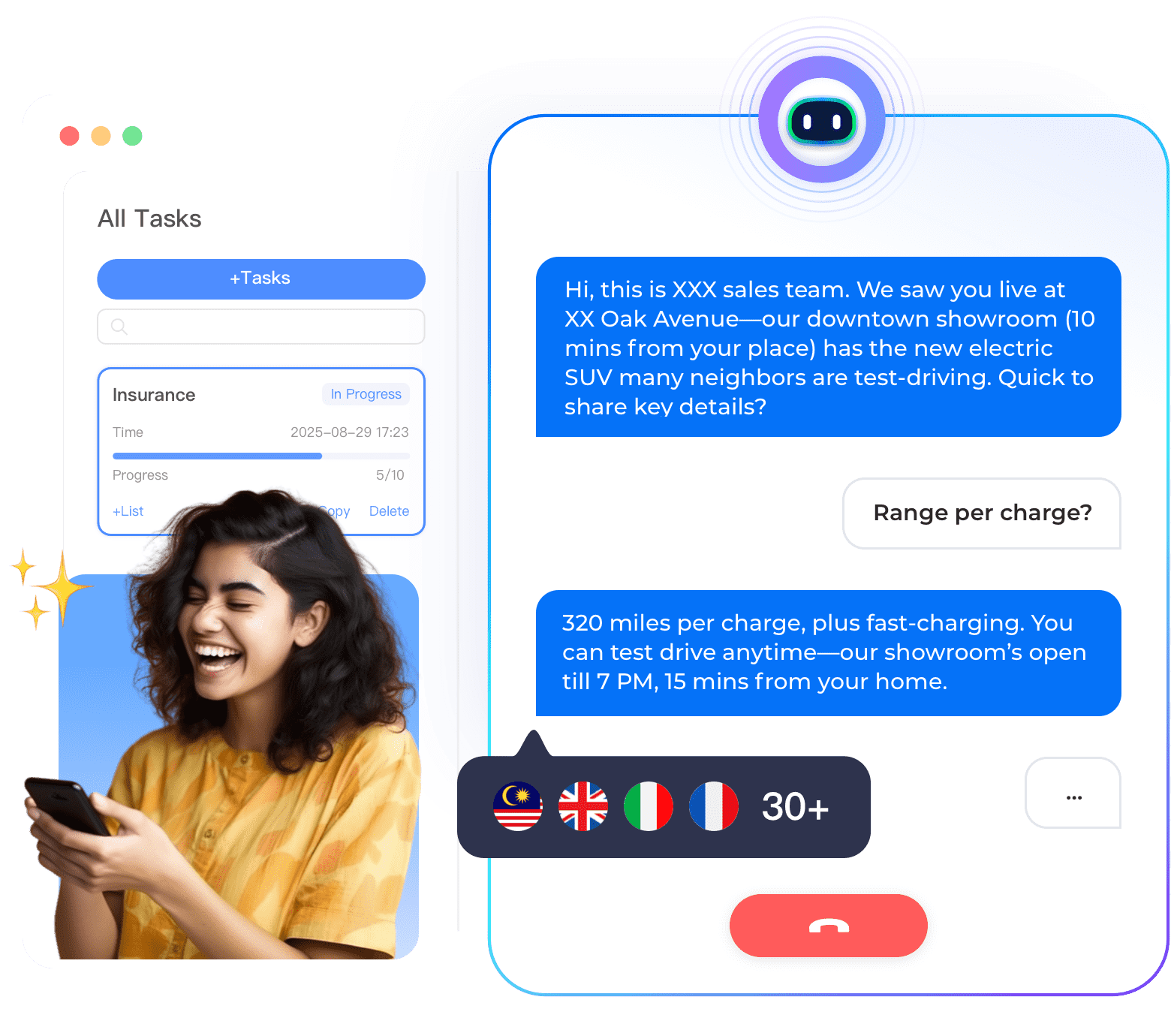
AI voice outbound calling changes this. An AI voice agent does not just notify—it converses. It can explain renewal steps in real time, answer questions about payment methods, offer to reschedule calls, and even detect hesitation or confusion in the citizen’s voice. This transforms a one way into a two way service interaction.
Consider road tax renewal. A citizen receives an AI voice call notifying them of an upcoming expiry. The system, trained to understand natural language across multiple languages, can respond to questions like “How do I renew online?” without escalating to a human agent. The citizen gets immediate guidance, and the government agency reduces call centre volume. For financial and technology clients deploying AI voice in similar scenarios, these capabilities have increased conversion rates by over 30% and customer satisfaction by 65%.
The scale of public sector communication
The volume of government notifications is immense. Road tax renewals alone affect millions of vehicle owners annually. Adding licence expiries, passport renewals, health appointment reminders, and social welfare updates makes the communication load staggering.
Traditional approaches—mailers, SMS blasts, app push notifications—treat every citizen the same. They cannot adapt to individual circumstances, language preferences, or communication habits. AI voice systems change this. Intelligent customer segmentation based on location, language, and past behaviour allows each call to be personalised. A single AI voice agent handles the workload of ten human representatives, operating 24/7 without breaks. For a government agency managing millions of annual notifications, this represents not just efficiency but the difference between citizens who are informed and those who are left behind.

Data privacy and security are built in
Government communication carries unique obligations around data protection. Any outbound calling solution must meet stringent requirements for data security, call encryption, and privacy protection. Malaysia’s Digital Trust & Data Security Strategy 2026–2030 is designed to safeguard the nation’s digital progress, and the Ministry of Transport has stressed that integration efforts will not compromise personal data protection.
Modern AI voice platforms are built with these requirements in mind. Data desensitisation ensures plain text personal information is never exposed unnecessarily. Call link encryption prevents interception. Private deployment options allow government agencies to maintain full control over citizen data. Pre installed compliance quality control systems automatically filter non compliant content, reducing business violation rates by 40%.
Upgrading government communication for the AI era
Malaysia’s public sector digitalisation plan is already underway. The government has allocated RM18.1 million to the National AI Office (NAIO) to shape national AI strategies, and the AI@Work initiative has successfully scaled AI adoption across hundreds of thousands of civil servants. But external citizen communication—the direct line between government and the people—has not received the same level of modernisation.
This is where the next upgrade must happen. App based push notifications are an improvement over paper slips, but they are still one way. The logical next step is two way, conversational, AI powered outbound calling that scales across millions of citizens, adapts to individual needs, and provides measurable outcomes.
For government agencies ready to move beyond passive notifications, Instadesk VoiceBot provides the platform. With 24/7 batch outbound calling, multilingual support (including Malay and English code switching), emotion infused voice, zero code visual orchestration that deploys campaigns in days, and enterprise grade security built for public sector requirements, it helps government turn notifications into conversations and services into relationships.