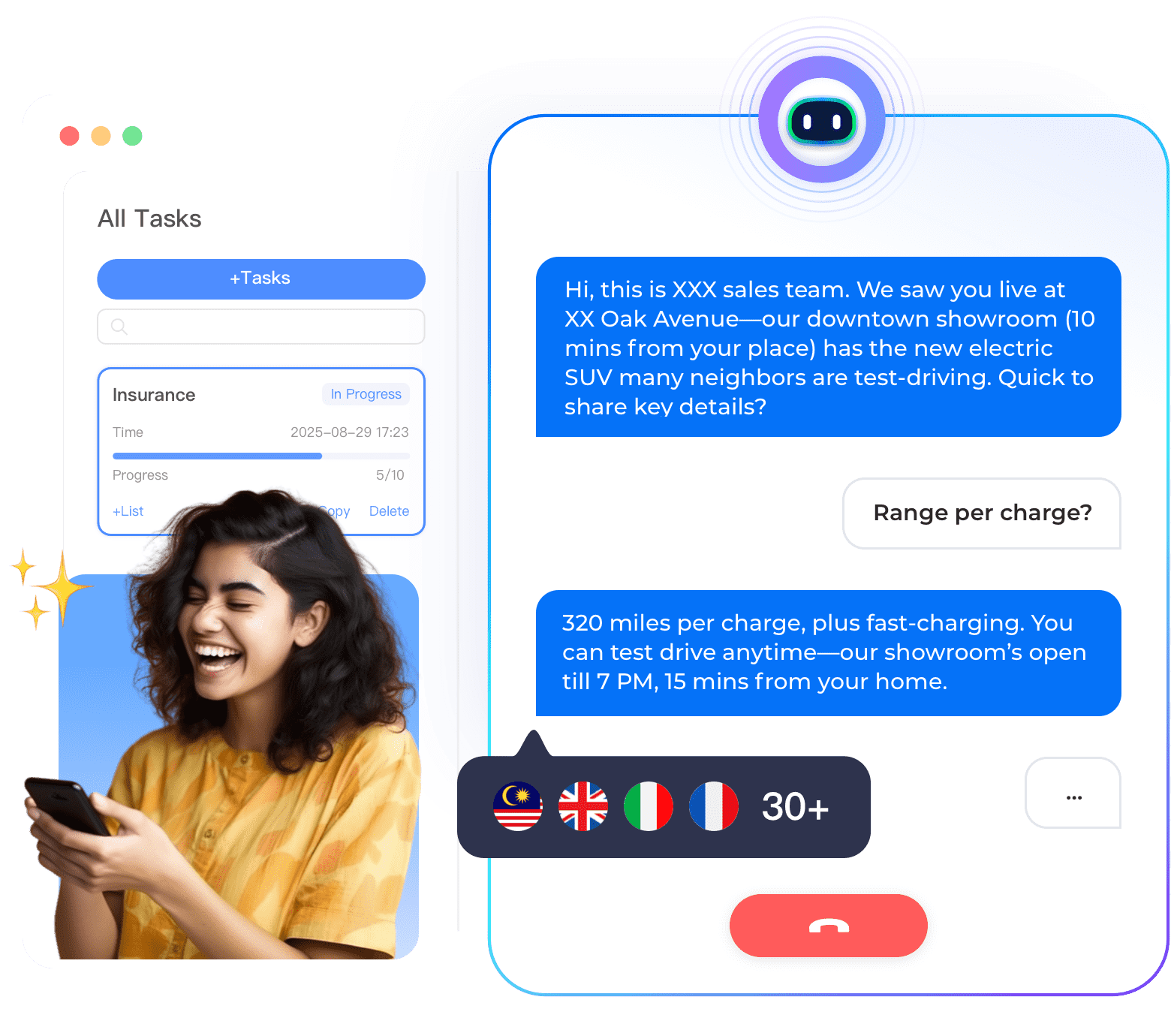
Telecom operators use outbound calls for lead generation, plan upgrades, and customer retention. A voice bot designed for high conversion rates goes beyond basic scripting—it uses sentiment analysis, dynamic personalization, and A/B testing to maximize the percentage of calls that result in a sale or desired action. This guide provides step-by-step instructions for building a conversion-optimized voice bot, best practices, and how Instadesk’s platform helps operators achieve higher conversion rates at lower cost.

The Telecom Outbound Conversion Challenge
Traditional outbound sales calls by human agents have low conversion rates (1–5%), high cost per call, and inconsistency. Voice bots can improve conversion by delivering perfectly optimized scripts, calling at the right time, and personalizing based on customer data. However, not all voice bots are created equal—conversion optimization requires specific features.Key Features of a Conversion-Optimized Voice Bot
Dynamic scripting: Personalize the pitch based on customer data (plan, usage, tenure, past offers).
Sentiment analysis: Detect when the prospect is interested, hesitant, or annoyed, and adjust the script accordingly.
Objection-handling library: Preprogrammed responses to common objections (“I’m not interested,” “too expensive,” “already have a plan”).
Call timing optimization: Dial at times when the prospect is most likely to answer and engage (based on historical data).
A/B testing: Test different scripts, offers, and opening lines to identify top performers.
Live transfer: When the bot detects a hot lead, seamlessly transfer to a human agent for closing.
Post-call analytics: Track conversion rate by script, time, and customer segment.Step-by-Step Guide to Building a High-Conversion Voice Bot
Step 1: Identify your target campaign. Choose a specific offer (e.g., data plan upgrade, fiber internet upsell). Define success metrics (e.g., 8% conversion rate).
Step 2: Integrate with your CRM. Pull customer data (name, current plan, usage, tenure) for personalization. Use prebuilt connectors (Salesforce, HubSpot) for fast setup.
Step 3: Design conversation flows. Create a script that introduces the offer, handles common objections, and drives to a clear call-to-action. Keep opening under 15 seconds.
Step 4: Set up dynamic personalization. Use variables like {{customer.name}} and {{customer.usage}} to tailor the pitch.
Step 5: Configure sentiment detection. The bot will adjust tone based on the prospect’s responses (e.g., more empathetic if hesitant, more direct if interested).
Step 6: A/B test scripts. Run two versions simultaneously on similar prospect segments. After 500–1000 calls, identify the winner and deploy.
Step 7: Set up live transfer. When the bot detects a buying signal (“that sounds good,” “tell me more”), transfer to a human agent with full context.
Step 8: Launch and monitor. Track conversion rate, cost per conversion, and call outcomes. Continuously optimize based on data.Best Practices
Personalize: Use the customer’s name and relevant plan details.
Keep it short: The first 15 seconds determine engagement.
Handle objections gracefully: Preprogram responses, not just “okay, goodbye.”
Create urgency: Limited-time offers increase conversion.
Always offer live transfer: Let hot leads speak to a human.
Continuously A/B test: Never stop optimizing.Efficiency Data
Telecom operators using Instadesk’s conversion-optimized voice bots report 2–3x higher conversion rates than human agents for routine upgrades. Cost per conversion drops by 60–80%.How Instadesk’s Voice Bot Optimizes Conversion for Telecom
Instadesk’s voice bot platform includes conversion-optimization features. Key features include dynamic scripting that pulls customer data from CRM (name, plan, usage, tenure). Sentiment analysis to detect buying signals (“that sounds interesting”) and adjust tone. Prebuilt objection-handling library for telecom (price, contract, coverage). A/B testing dashboard to compare script versions in real time. Predictive dialing to maximize agent talk time (for live transfer). Live transfer to human agents with full conversation context. Conversion analytics by campaign, script, and time of day.Case Study: Telecom Operator Increases Upgrade Conversion by 35% with Voice Bot
A European telecom operator used Instadesk’s voice bot for outbound plan upgrade campaigns. Previously, human agents made calls with a 4% conversion rate. After deploying the voice bot with A/B testing, they tested three different opening scripts. The winning script achieved an 8% conversion rate (100% improvement). Combined with dynamic personalization (mentioning the customer’s data usage), conversion reached 10%. Overall, the voice bot campaign achieved a 35% higher conversion rate than the best human agent campaign, at 20% of the cost per call.
A voice bot designed for high conversion rates can outperform human agents for outbound sales in telecom, especially for routine upgrades and lead qualification. Follow this guide to build, test, and optimize your bot. Instadesk’s platform provides the dynamic scripting, sentiment analysis, and A/B testing tools needed to maximize conversion rates while reducing costs.