Water utilities manage essential services that affect every household and business. Customer callback and follow-up processes—the practice of returning customer calls and proactively checking in after service interactions—are critical to maintaining trust and ensuring service quality. With increasing customer expectations, utilities are turning to AI to automate and enhance these processes. This article defines customer callback and follow-up, explains how it differs from traditional outbound calling, outlines its importance for water utilities, and demonstrates how Instadesk’s VoiceBot enables automated callback and follow-up at scale.

What Is Customer Callback and Follow-Up?
Customer callback refers to the practice of returning a customer’s call when they have requested assistance or when a query cannot be resolved immediately. Follow-up involves contacting customers after a service interaction to resolution, gather feedback, or provide additional information. Together, these processes ensure that no customer inquiry falls through the cracks and that service issues are fully resolved.
How It Differs from Traditional Outbound Calling
Traditional outbound calling is often associated with sales or collections. Callback and follow-up, in contrast, are service-oriented. They demonstrate that the organization values the customer’s time and is committed to resolving issues. AI-powered callback systems can automate the scheduling and execution of these calls, ensuring they happen ly and consistently.
Why It Matters for Water Utilities
Water utilities handle critical services where delays can have serious consequences. Key reasons to prioritize callback and follow-up:
Emergency Response:
Customers reporting leaks or service interruptions expect immediate acknowledgment and timely updates.
Customer Trust:
Proactive follow-up shows that the utility takes service quality seriously.
Regulatory Compliance:
Many utilities are required to document resolution of customer complaints.
Operational Insight:
Follow-up calls provide valuable feedback on service performance and areas for improvement.
Customer Satisfaction:
Acknowledging and resolving issues ly builds long-term loyalty.
How to Implement AI-Powered Callback and Follow-Up
Implementation begins with identifying the types of interactions that require follow-up. Utilities should follow these steps:
Identify Use Cases:
Leak reports, billing disputes, service activation requests, maintenance notifications, and complaint escalations.
Set Callback Rules:
Define timing (e.g., call back within 1 hour for emergencies, within 24 hours for billing inquiries) and escalation paths.
Deploy AI VoiceBot:
Use a platform that can schedule and place calls automatically, using natural language to resolution and collect feedback.
Integrate with Systems:
Connect to CRM, billing, and outage management systems to access relevant data for personalized calls.
Monitor and Optimize:
Track callback completion rates, resolution outcomes, and customer feedback to refine the process.
Leveraging AI Tools for Efficiency
AI-powered callback and follow-up can be enhanced with additional capabilities:
Smart Scheduling:
Automatically determine the best time to call based on customer preferences and history.
Contextual Conversations:
Use data from previous interactions to personalize the call.
Emotion Detection:
Identify dissatisfied customers and escalate to a human agent for immediate attention.
Automated Documentation:
Log call outcomes, feedback, and follow-up actions directly into CRM systems.
How Instadesk’s VoiceBot Enables Automated Callback and Follow-Up
Instadesk’s VoiceBot offers 24/7 batch outbound calls with near-human emotional interaction. For water utilities, this means automated callback and follow-up at scale. The system uses large model-powered multilingual conversations and accurate intent recognition to handle a variety of scenarios. If a customer expresses dissatisfaction or requires further assistance, the VoiceBot creates a ticket and routes the call to the appropriate agent.
Key features for water utilities include:
Emergency Priority Routing:
Detect urgent keywords (leak, burst, no water) and escalate immediately to live agents.
Multilingual Support:
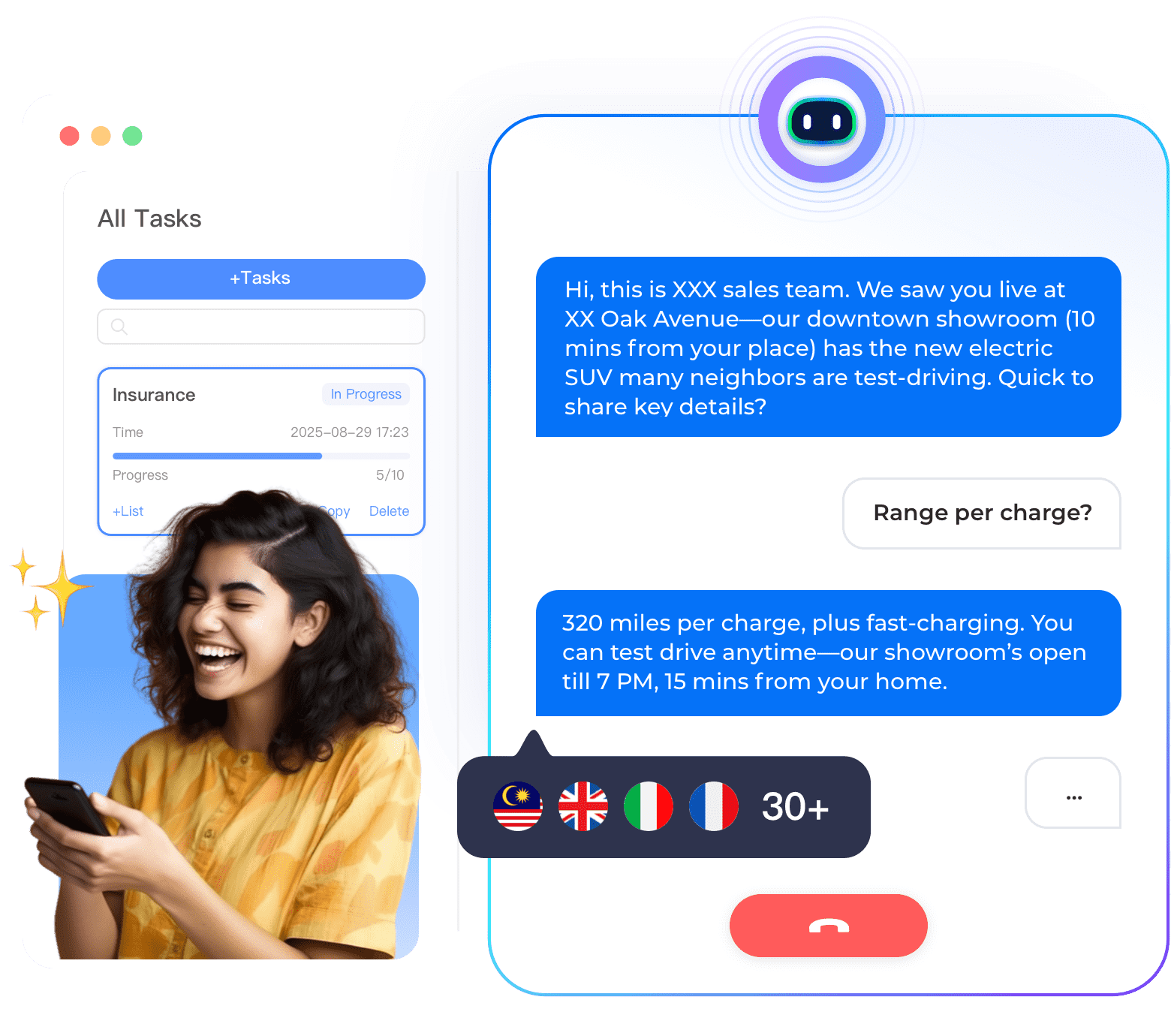
Serve diverse customer bases with real-time translation in 30+ languages.
Integration with Outage Systems:
Pull real-time restoration estimates and service updates to inform customers.
Automated Feedback Collection:
Gather customer satisfaction ratings and service feedback automatically.
Audit Trails: Complete records of all callback attempts, conversations, and outcomes for regulatory compliance.
Frequently Asked Questions
How do you ensure customers are not annoyed by automated calls?
Calls are scheduled based on customer preferences and are designed to be brief, helpful, and easy to escalate to a human if desired.
Can AI handle complex follow-up scenarios?
Yes. AI can ask qualifying questions, collect information, and escalate to the appropriate department based on the customer’s response.
What about customers who prefer text over voice?
Instadesk supports omnichannel follow-up, allowing utilities to reach customers via SMS, email, or chat as an alternative to voice calls.
Conclusion
Automated callback and follow-up is essential for water utilities to maintain customer trust, meet regulatory requirements, and improve service quality. Instadesk’s VoiceBot platform enables utilities to automate these processes at scale, ensuring timely responses, consistent follow-up, and valuable feedback collection. By reducing manual workload and enhancing customer communication, AI-powered callback and follow-up helps utilities deliver the reliable service that customers expect.