
Singapore's $234 million investment in OpenAI plus Google's regional AI integration locks its infrastructure into US closed-source models,creating hidden pricing,data and geopolitical risks for local firms,while open-source stacks like Qwen and DeepSeek deliver cost,sovereignty advantages for Southeast Asian voice customer service.
Hidden Risks of Reliant Closed-Source American LLMs
·Building voice workflows on proprietary OpenAI/Gemini APIs creates long-term dependency for SEA businesses.
·US Cloud Act enables cross-border data access regardless of local PDPA regulations,exposing call recordings and user identity data to overseas jurisdiction.
·Closed platforms adjust pricing arbitrarily;regional SMEs face steep cost spikes during peak outbound voice campaigns.
·Geopolitical export controls may cut off API access overnight,halting 24/7 payment reminders and order follow-up voice services.
·Even Singapore's native SEA-LION open model struggles to compete against big tech's capital subsidies,limiting localized voice AI options.
Open-Source LLM Alternative: Lower Cost & Full Data Control
·Chinese open models Qwen and DeepSeek offer up to 35x cheaper token pricing versus Western closed LLMs,a decisive edge for high-volume voice outbound scenarios.
·All weights can be self-hosted on local servers,keeping call audio,customer dialogue data within regional data residency rules.
·Models are fully fine-tunable for Bahasa,Thai,Vietnamese and other SEA languages,supporting bilingual mixed speech critical for local voice calls.
·Regional players like Indonesia's Sahabat-AI already deploy Qwen-based voice systems to avoid vendor lock-in and cross-border data leakage.
Instadesk VoiceBot: Dual LLM Compatibility for SEA Sovereign Voice Service
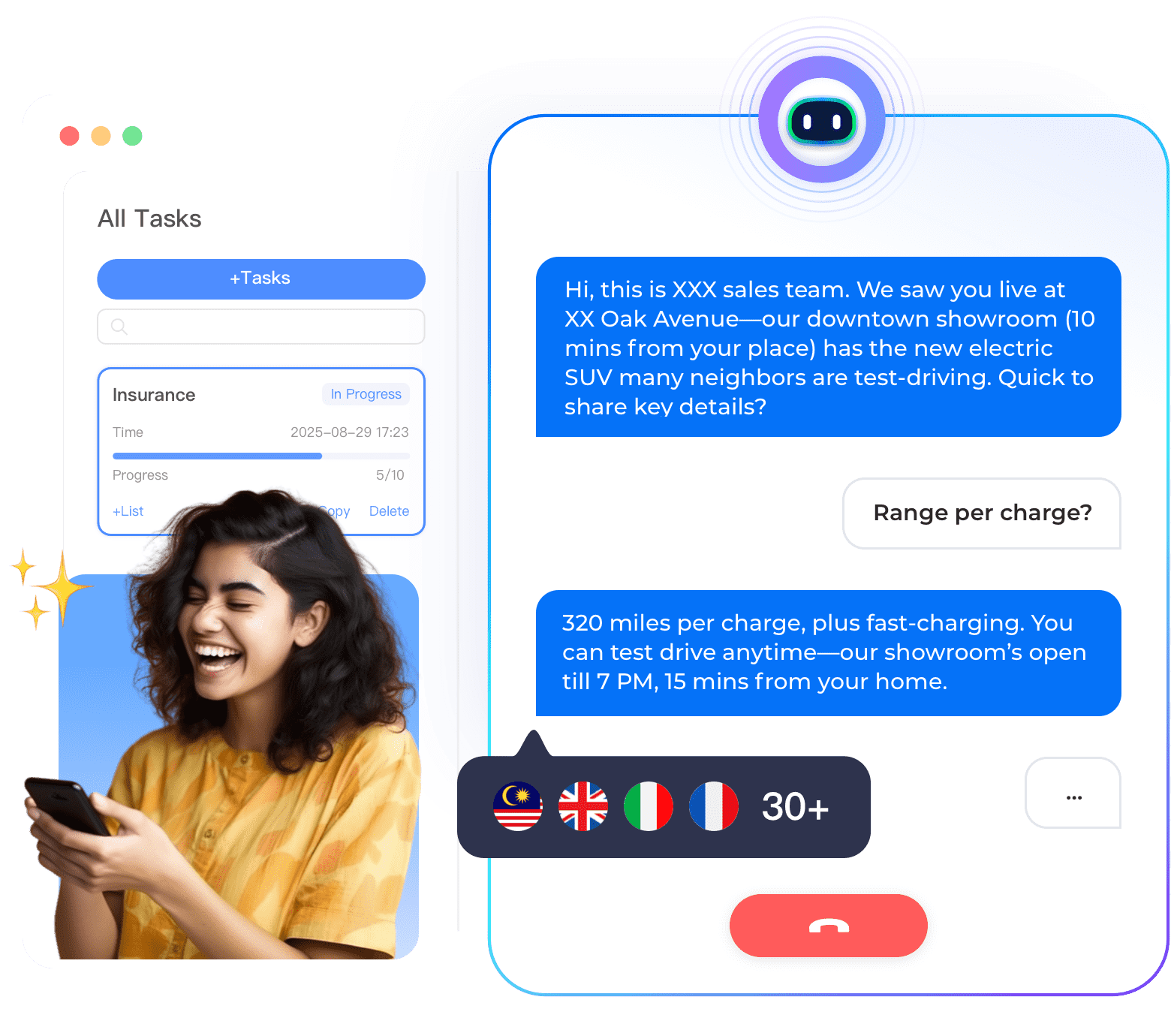
Instadesk VoiceBot natively integrates both closed third-party APIs and open-source stacks including Qwen,DeepSeek and SEA-LION,letting enterprises pick their AI route without switching platforms.
It supports 30+ SEA languages with emotion-driven ASR/TTS,handling bilingual Malay-English natural outbound conversations natively.
Private,hybrid and SaaS deployment modes isolate all voice conversation data locally,fully complying with Singapore PDPA,GDPR and regional financial compliance rules.
Visual zero-code orchestration lets teams build multilingual outbound voice campaigns tuned to open model characteristics within days,no advanced AI engineering required.
Automated outbound calling cuts manual labor costs by 80% while retaining full control over underlying large model infrastructure.
Real Business Outcomes Across Southeast Asian Markets
A Singapore cross-border fintech switched voice AI from closed APIs to self-hosted Qwen,slashing monthly LLM expenses by 72% and eliminating cross-border data audit risks.
Malaysian retail brands leverage Instadesk bilingual VoiceBot to run holiday promotion outbound calls,boosting lead conversion by 30% without vendor lock-in.
Indonesian logistics firms process 18,000 daily tracking voice inquiries via open model-powered bots,avoiding sudden API access interruptions during peak seasons.
Regional digital banks automate 65% balance and compliance voice inquiries,cutting average handling time in half while keeping all call data onshore.
Wrap-up
The split between US closed AI and Asia open-source stacks reshapes Southeast Asia's customer service landscape,with data sovereignty and long-term cost now top business priorities.
Instadesk VoiceBot removes the forced choice between proprietary big tech APIs and fragmented regional open models,offering unified multilingual voice AI compatible with all mainstream open LLMs.
SEA enterprises can build stable,low-cost outbound voice workflows,retain full ownership of customer call data,and escape the geopolitical and commercial risks of closed-source AI dependency.