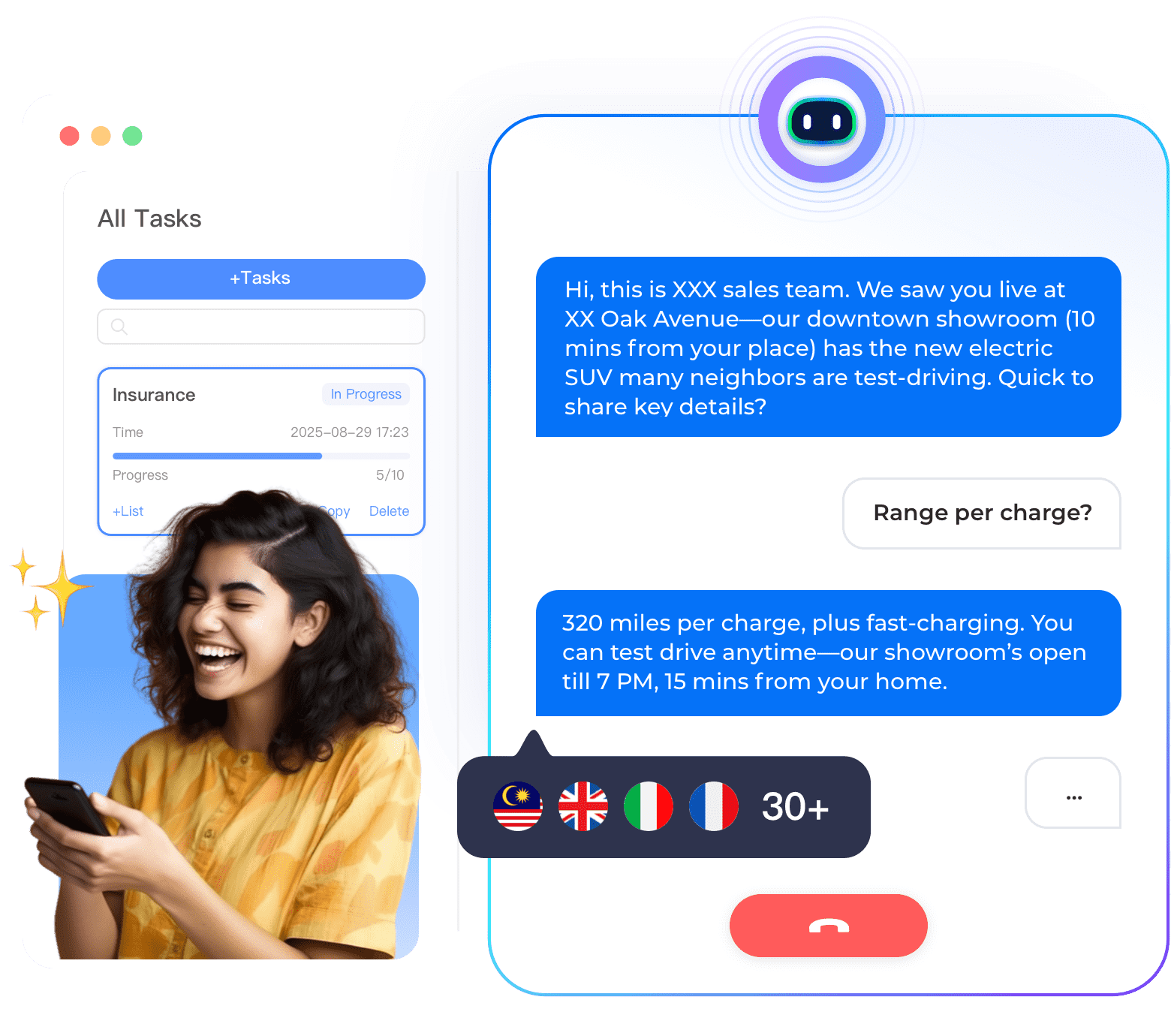

In Southeast Asia,many enterprises have begun to reconsider how voice communication can enter the modern customer service system.Digital channels continue to increase,but voice is still the most commonly used and trusted way for customers,citizens and business partners to obtain instant support.Public utilities need to respond to emergency service calls.Global platforms need to support large-scale outbound scenarios.Voice interaction remains in a key position in daily operations.However,the operation of voice services has become more complicated.Enterprises need to invest more resources to maintain service stability.
Why Voice Service Is Still Critical in Southeast Asia
In Southeast Asian markets,telephone contact has a sense of trust that digital channels cannot give.If the bill is not available,the service is stopped,a transaction needs to be edited,or there is an emergency,the customer will call directly.On the side of public service key facility providers,the hotline is still the main way for everyone to contact.
It has always been difficult to manage large-scale voice services.The number of calls fluctuates between high and low.If the service is broken,facilities fail,promotions are launched,or peak season arrives,the phone lines suddenly become full.This kind of unpredictable traffic peak puts great stress on contact center operations.Companies operating in Southeast Asia have to support many languages,and recruiting and training managers has become more troublesome.
Service demand has long exceeded regular working hours.Customers and citizens now want to find someone to help on weekends and holidays.If you consider that at these times,the service line would have to be shifted or outsourced,the operating cost will definitely be higher.Most calls are answered manually,and quality depends on the customer service agent’s experience and current workload.It is difficult to maintain consistent service across institutions.With so much pressure,enterprises have to find alternatives that can scale up while preserving a human touch at critical times.
What a Custom VoiceBot for Enterprise Really Involves
Customized voice robots are different from traditional Q&A systems.Universal voice tools cannot compare.They do not need rigid scripts.The limited decision tree model is gone.They adapt to real business processes and are closely integrated with existing systems.
Instadesk's voice automation focuses on practical implementation.The robot function relies on voice recognition.It has no problem understanding natural language.The synthetic voice quality is high.Users just talk directly to the person on the phone.No need to operate complicated menus.
The system connects to the internal platform through a secure interface.It is easy for the robot to check information,check accounts,check status,and track cases.All these can be done directly.
Cooperation with human customer service is very important.Instadesk robots do not replace front-line employees.They specialize in handling high-frequency repetitive activities.Complex cases are transferred to real agents,and sensitive matters are also handed over.Human-machine cooperation can expand service volume,keep service quality stable,and clarify responsibilities.
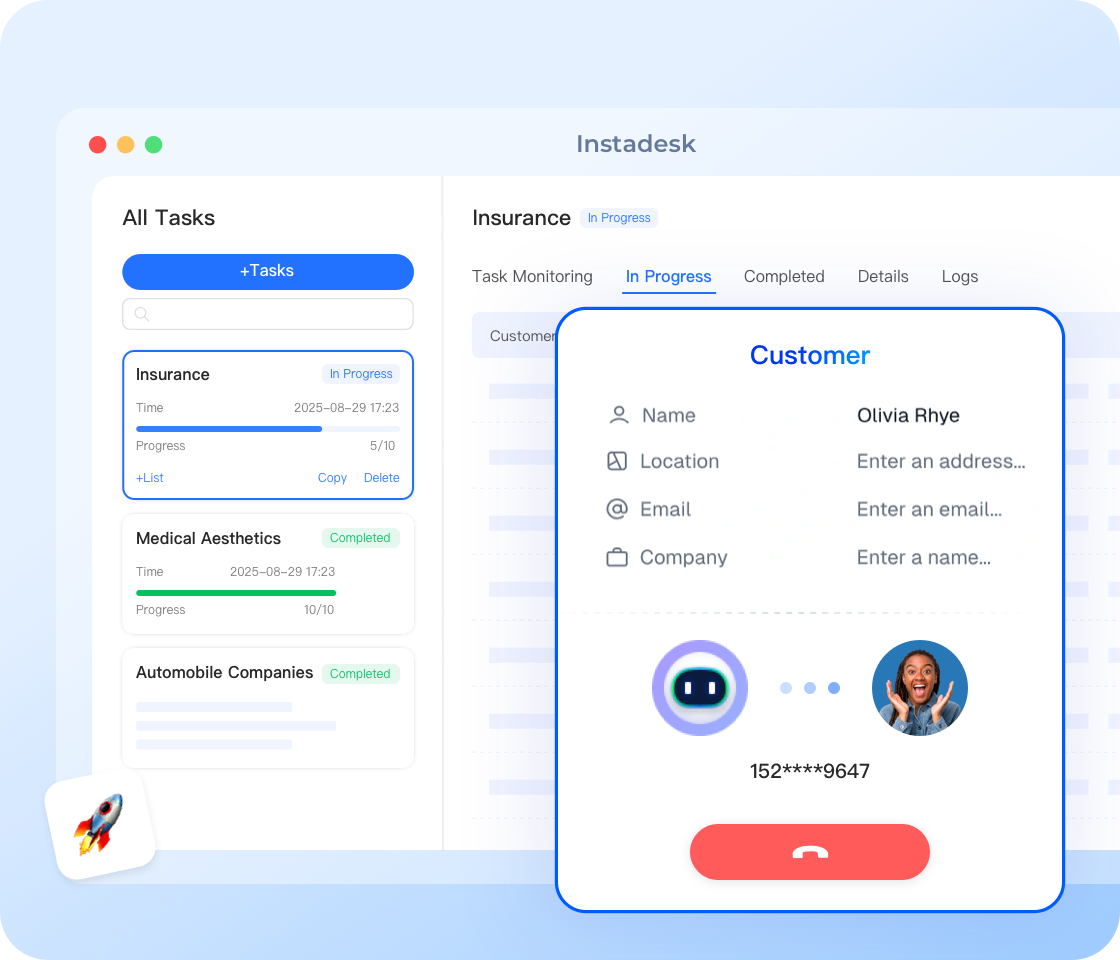
Modernizing Public Service:MWA in Thailand
The Thai public sector has a good example of voice robot deployment by a Southeast Asian enterprise.The Bangkok Water Authority(MWA)is a state-owned enterprise that controls water supply in Bangkok and surrounding provinces,including distribution and customer service.The 1125 hotline is a very important public service channel for checking bills,reporting water outages,and requesting maintenance.The service must be reliable—this baseline cannot move.Total call volume changes with extreme weather and facility incidents.Citizens want the hotline to be connected at all times with no delay.Unstable service hurts trust.MWA must be disciplined about data protection and service transparency.MWA partnered with Instadesk to meet these challenges using an AI-driven voice robot platform integrated into the hotline operation system.The deployment process was very careful and systematic.Stability came first;this was not an experiment.Our team deployed Instadesk into the MWA cloud environment,then integrated it with the local Cisco CUCM phone system.System migration was performed without service interruption.
Instadesk became the entrance for daily operations.It answers every incoming call,no matter when and no matter how many calls.Greetings are unified.The system supports more than 50 simultaneous calls—the hotline can respond during peak hours without voice quality or system performance degradation.Natural language interaction is used.The robot understands intent,deconstructs the knowledge base to find information,and queries internal systems.If a consultation requires manual judgment or urgent intervention,the system transfers the call to a human agent with no gap.Calls are recorded.There is a real-time dashboard and performance reports.The whole process is visible.MWA's service model is now flexible,the pressure on customer service is reduced,citizens receive quick responses,and service consistency is high.
Scaling Multilingual Outbound Voice:Alibaba International
Voice automation technology is particularly useful for outbound calls,and companies doing business in many Southeast Asian countries need it.Alibaba International Group runs one of the world’s largest B2B e-commerce platforms,connecting buyers and sellers from all over the world,each with different language habits.
As its business scope expanded,Alibaba International faced the problem of how to contact corporate customers in different countries.To communicate well and understand multiple languages,messages must be clear,and outbound call speed must keep up.In the past,the old method relied too heavily on manual customer service.It was difficult to save money,maintain standards,and keep up with business growth.
Using the Instadesk intelligent outbound VoiceBot solution,Alibaba International turned outbound calling into a scalable system process.The robot understands common words across Southeast Asian languages and can contact locals without hiring many different speakers.It can make many calls at the same time—from thousands to tens of thousands per day.It also identifies intents and identifies potential customers faster.In our implementation,we achieved a 4x increase in effective contacts and a 62%reduction in cost per call.
Instadesk includes call recording and data analysis features,so you can directly see how outbound calls are performing.Scripts and workflows can always be improved.As business scale grows,contact quality will become better,not worse.Outbound operation efficiency becomes higher,manpower and money are saved,and the business can continue to grow.
Why Instadesk Fits Southeast Asian Enterprises
Whether for public service or business,Instadesk is particularly suitable for the actual situation in Southeast Asia and works very well in practice.It is built for real working environments.It stays stable even with many users and heavy traffic.This is not a beta version that can only be tried in a small range.The architecture is very flexible—whether on cloud,on-premises,or hybrid—to help enterprises deal with local infrastructure and regulations.
The system comes with many languages built in.Enterprises can handle all kinds of language needs in this region without much extra effort.Operations are clearly visible,which has always been the most important thing.By looking at the dashboard,listening to recordings,or generating reports,the enterprise can understand how the service is performing,whether it is compliant,and whether customers are satisfied.
Instadesk does not require you to redo your processes for automation.It can match your current way of working,so there is no risk in adoption.Enterprises can gradually scale up voice automation,keep quality manageable,and maintain all existing rules.
From Voice Tool to Core Infrastructure
Many Southeast Asian companies find that custom-made voice robots are not just a nice-to-have;they have become the center of customer service interaction.MWA used it in Thailand,and Alibaba International also used it locally.Voice robots made according to real needs help enterprises improve public services and business performance.Instadesk focuses on system reliability,integration,and human-machine cooperation.Enterprises upgrade voice services while preserving trust and maintaining control.Voice calls are very important in Southeast Asia.This approach supports long-term operations and future scaling without problems.