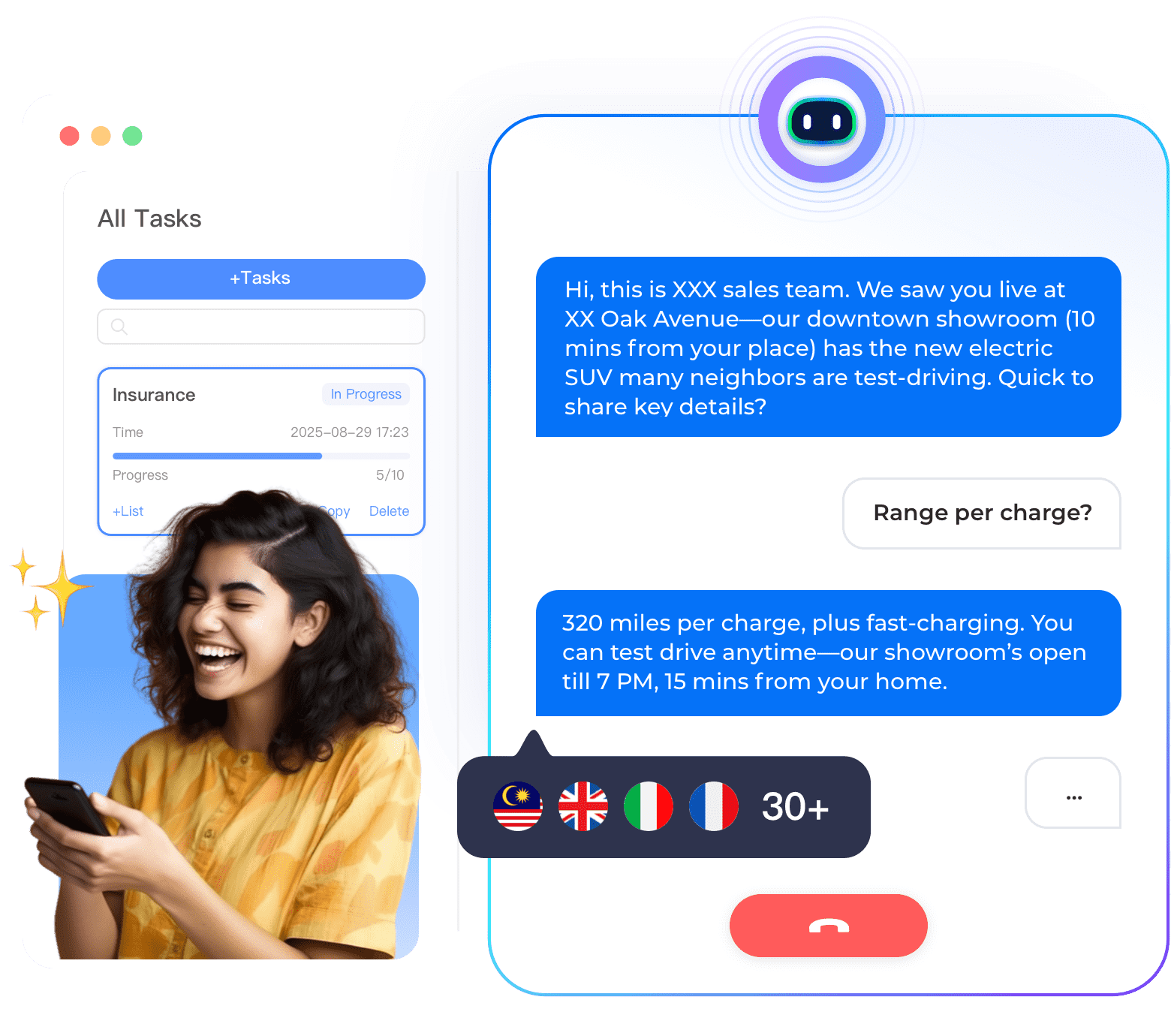

With the development of the global economy and the establishment of businesses around the world, voice calls have become an effective way to connect. Voice is also a particularly reliable channel for customers. Unlike text channels, voice interaction is often urgent and requires immediate decisions. People have high expectations for accuracy and response speed. The operational pressure of managing voice services across languages, time zones, and regulations is significant. Many organizations struggle with rapidly increasing call volumes, scattered systems, and heavy reliance on manual customer service. The commercial multilingual VoiceBot has emerged as a practical solution. Enterprises and public institutions can now handle large volumes of voice interactions more efficiently, with consistent local service, compliance, and stable customer experience.
From our deployments with enterprises and public sector organizations, we have observed that multilingual voice automation consistently reduces the burden of after-hours and cross‑language calls. While exact improvement numbers vary, the ability to offer consistent, compliant voice service across multiple languages has been a recurring operational win.

1. Voice Automation in Business
Instadesk provides a multilingual VoiceBot driven by artificial intelligence. The product is aimed at real production‑level business environments, not experimental or pilot scenarios. The solution is designed as a front‑end voice service system that can run directly on existing contact center infrastructure. The system supports both cloud telephony environments and on‑premise deployment, allowing organizations to upgrade voice services while retaining their core systems.
Instadesk VoiceBot is not a single‑use tool. It is integrated into the overall customer engagement platform. The VoiceBot can converse, access organized knowledge bases, maintain secure interfaces, and provide real‑time operational dashboards. When necessary, it can hand over to human agents. These components work together, allowing businesses to scale services, manage operational processes, follow consistent rules, and avoid service interruptions.
2. What the VoiceBot Actually Does in Day‑to‑Day Operations
The VoiceBot combines speech recognition, natural language understanding, and speech synthesis into a single function. This supports multilingual voice interaction. Users can speak naturally, and the system accurately captures intent. The synthetic voice quality is high. In practice, the VoiceBot covers English, Asian languages, and other regional dialects. Institutions can serve customers in their preferred language without expanding their multilingual manual customer service teams.
Let customers use their native language in conversation. Real business pressure can be reduced by the Instadesk voice robot. It can handle many simultaneous calls. In public service deployments, even with 40 concurrent calls, audio quality remains clear and response times fast. This is especially useful for institutions that experience sudden spikes in call volume—for example, during service outages, billing inquiries, or promotional campaigns.
No matter how many phone calls, you can still answer them. The robot relies on a well‑organized knowledge base. Administrators can classify issues, update reply content, and import information from official websites and internal documents. This ensures accurate, fast, and consistent responses. The system continuously learns, recognizing unanswered or frequently asked questions. Over time, its knowledge expands.
Keeping answers accurate with a structured knowledge base. Instadesk can securely connect to internal systems. The robot is not just a conversational tool; it can perform real tasks: verify identity, check bills, check service status, and track work orders. These capabilities upgrade the robot from a simple operator to a genuine business assistant.
Know when to find manual customer service. If a situation becomes difficult or urgent, VoiceBot transfers to live customer service according to predefined rules. During transfer, the conversation history, text records, and pending actions are preserved. Service is not interrupted. Human and machine cooperate, reducing agent fatigue while maintaining service quality and customer trust.
Staying transparent, compliant, and easy to monitor. Instadesk VoiceBot provides call recording, access controls, and audit trails. This meets local data protection requirements. Operations teams can monitor real‑time dashboards showing call status, queue length, and system health. Reports can be exported in Excel or CSV format for auditing, quality assurance, and performance analysis.
3. What Changes After Voice Automation Goes Live
Public service hotline designed for continuous operation. In a national public utility environment, Instadesk VoiceBot was used to upgrade a key citizen service hotline. The organization required 24/7 service availability, system stability, and governance standards. VoiceBot was integrated into the existing telephony system in stages, keeping service running normally during the transition.
After Instadesk went live, the hotline could handle over 40 simultaneous calls during peak hours. Citizens could access unified voice services at any time, including billing inquiries, service interruption checks, repair progress tracking, and status updates based on security system integration. Call recording and dashboards made service processes clearer and met compliance management requirements. The deployment reduced manual agent workload and improved service consistency and response performance.
Global consumer brand supporting cross‑time‑zone operations. A global consumer‑oriented enterprise serving customers in over 100 countries faced long‑standing delays in night service and cross‑time‑zone responses. Instadesk VoiceBot was introduced into the unified customer service platform to handle outbound notifications and inbound voice interactions during non‑working hours. The VoiceBot took on a large volume of routine inquiries and notifications. When further processing was required, complex issues were transferred to human agents. After implementing this human‑machine collaboration model, night‑service delays were significantly reduced, and overall service efficiency improved substantially.
4. Where Multilingual VoiceBots Make the Biggest Difference
As VoiceBot becomes a more sophisticated tool for organizations with high‑frequency voice interactions, business multilingualism is no longer just a new concept. Instadesk demonstrates how to use voice automation steadily in real production environments, covering multilingual communication, high concurrency processing, security system integration, and compliance. By combining AI voice capabilities with structured knowledge management and smooth manual takeover mechanisms, Instadesk enables enterprises and public institutions to scale voice services over the long term. The result is a more stable service model that improves efficiency, reduces operational burden, and maintains a consistent voice experience across different languages, regions, and time zones.