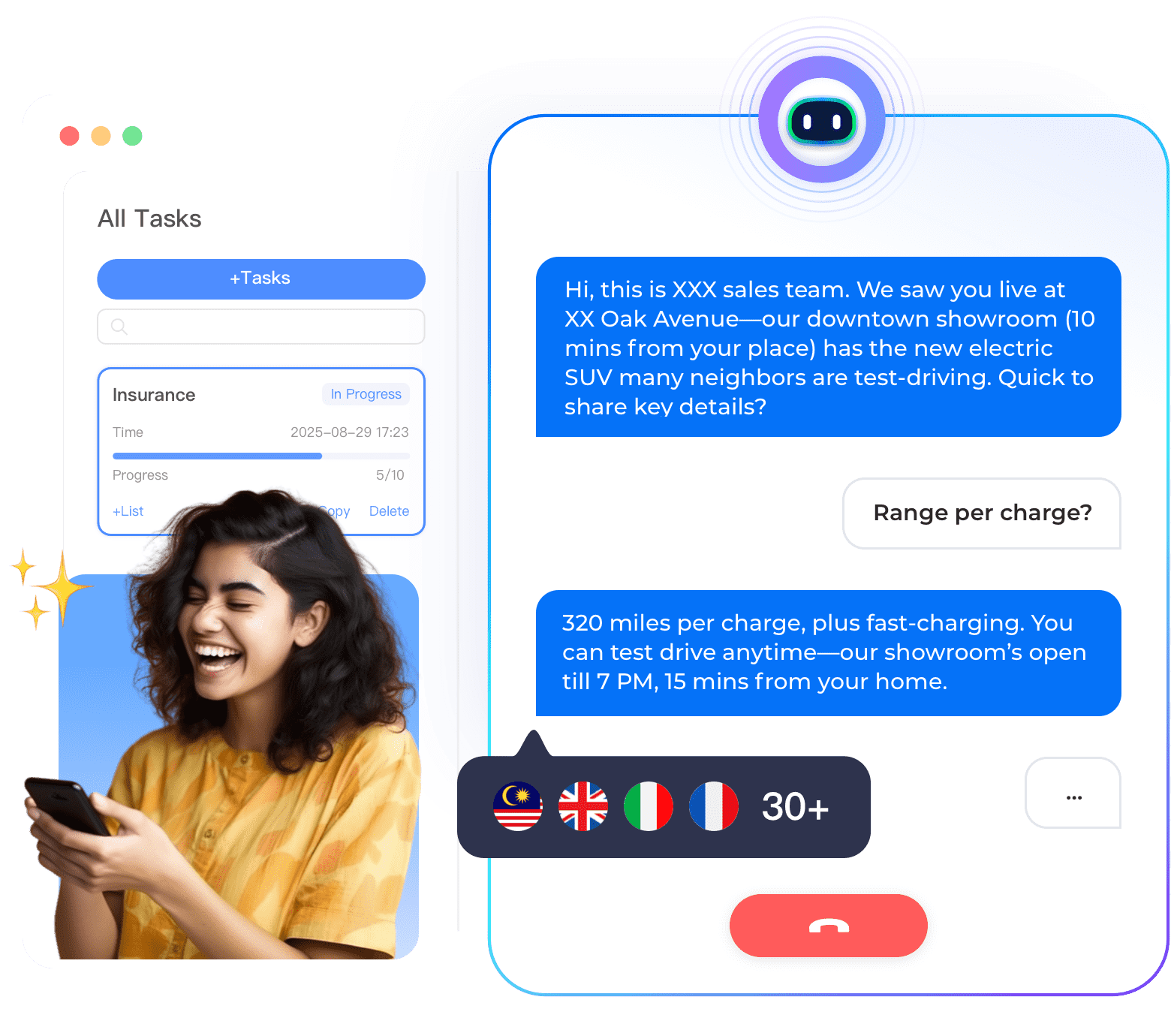

AI assistant voice response capability refers to the technology that enables voice-powered virtual agents to understand natural speech,maintain context,and generate human-like responses.In 2026,voice response technology has advanced significantly with large language models,real-time processing,and emotional intelligence.This ultimate guide explains the key capabilities of modern AI voice assistants,how they have evolved from traditional IVR,and what enterprises should look for when selecting a voice assistant platform.Instadesk's solution is highlighted as a leading example of enterprise-grade voice AI.
Evolution of Voice Response Technology
Ten years ago,voice response was limited to basic IVR with keyword spotting.Callers had to speak simple commands like"balance"or"hours".Five years ago,cloud-based speech recognition improved accuracy but still required rigid grammars.Today,large language models enable natural,open-ended conversations.The assistant can understand"What's the status of my order?"as well as"I haven't received my package yet,can you check?".It can handle corrections,interruptions,and even detect customer emotion.Latency has dropped from 2–3 seconds to under 500 milliseconds,making conversations feel natural.
Core Capabilities of Modern AI Voice Assistants
· Natural language understanding(NLU)with 90%+accuracy on common intents.The assistant understands variations in phrasing,accents,and background noise.
· Context retention over multiple turns.The assistant remembers previous questions and answers,so customers don't repeat themselves.
· Emotional intelligence:the assistant can detect frustration,satisfaction,or confusion from tone and word choice,and adapt its responses accordingly.
· Real-time speech recognition with low latency(under 500ms)for natural turn-taking.
· Integration with backend systems via API or prebuilt connectors for screen pop and auto-logging.
· Multi-language support:the assistant can handle 30+languages,often with automatic language detection.
· Generative responses:instead of playing pre-recorded messages,the assistant can generate dynamic answers based on customer data.
· Seamless escalation to human agents with full conversation context.
How to Evaluate Voice Response Capabilities
When evaluating a voice assistant,test the following:Can it handle natural speech without requiring customers to use specific keywords?How accurate is intent recognition on your specific call types?What is the latency–does it feel natural or robotic?Does it support your customers'languages out of the box?Can it integrate with your CRM and telephony?What is the pricing model–per minute,per seat,or usage-based?Instadesk excels in all these areas.
How Instadesk Delivers Advanced Voice Response
Instadesk's voice assistant platform includes pre-trained NLU for banking,retail,logistics,and healthcare,achieving 92%accuracy without custom training.Latency is under 500ms.It supports 30+languages with real-time translation.The platform includes emotional intelligence to detect customer sentiment.Pay-as-you-go per-minute pricing has no per-seat minimum.A free trial with 500 minutes is available.
Case Study: Indonesian Bank Tests Instadesk's Voice Response
An Indonesian bank tested Instadesk's voice assistant on 1,000 calls.Intent recognition accuracy was 94%on Bahasa Indonesia calls.Latency averaged 380ms,and customers rated the experience as"natural".The bank deployed the assistant for balance inquiries,reducing call volume by 55%.

Conclusion
AI assistant voice response capability has advanced dramatically in 2026.Enterprises should prioritize NLU accuracy,low latency,multi-language support,and transparent pricing.Instadesk offers a leading solution.Start with a free trial.