Implementing a voice bot for enterprise customer service is a multiphase project that requires careful planning, integration, testing, and continuous improvement. This comprehensive guide covers everything you need to know: from identifying use cases to deployment and optimization. It includes best practices, common pitfalls, and a detailed implementation timeline. Enterprises that follow this guide typically deploy a productionready voice bot in 812 weeks and achieve 50-70% automation on routine calls.
Phase 1: Discovery and Planning (Weeks 12)
• Identify highvolume, lowcomplexity call types from your call logs. Common enterprise intents include balance inquiry, order status, appointment scheduling, password reset, outage reporting, and billing due date. Focus on intents that represent at least 5% of call volume.
• Define success metrics: automation rate (target 50-70%), average handle time reduction (target 40-60%), customer satisfaction improvement (target +20 points), abandonment rate reduction (target 30-50%).
• Select a voice bot platform with pretrained industry NLU (Instadesk) to avoid custom training, which can take months and cost tens of thousands of dollars.
• Plan integration with your CRM, ERP, telephony systems (SIP trunk or cloud PBX), and knowledge base.
Phase 2: Design and Build (Weeks 34)
• Design conversation flows for each intent using a visual builder. Include variations in phrasing, error handling (when the bot doesn’t understand), and escalation paths.
• Create fallback responses for unrecognized intents (“I didn’t understand that. Let me transfer you to an agent.”).
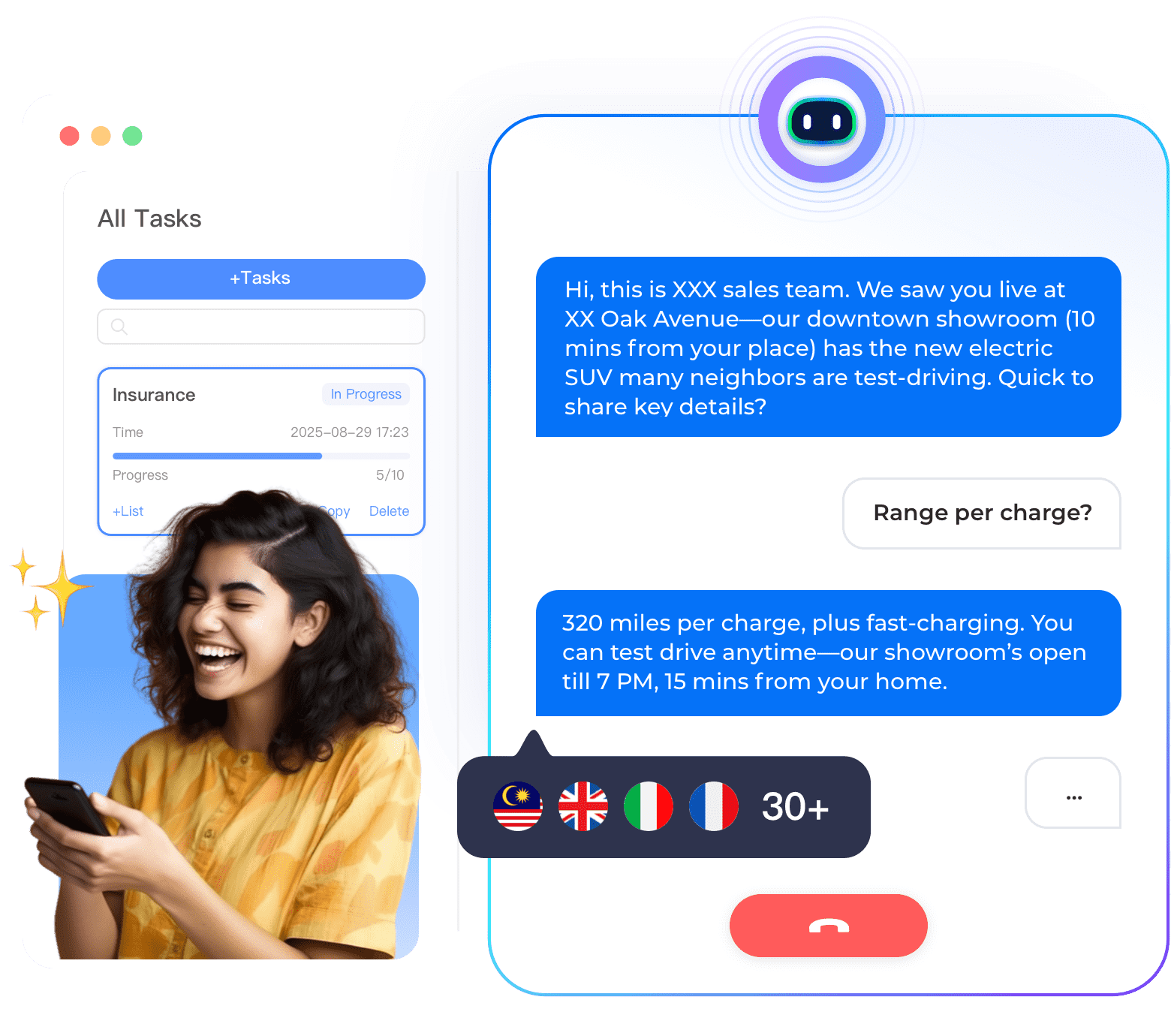
• Record messages using professional voice talent or use texttospeech with natural voices (Instadesk offers 30+ voices).
• Test flows with sample calls using the platform’s testing environment.
Phase 3: Integration (Weeks 56)
• Connect voice bot to your CRM for screen pop (agent sees customer record when call is escalated) and autologging (call notes saved automatically).
• Integrate with telephony via SIP trunk or cloud PBX (Twilio, AWS Connect, Genesys Cloud). Instadesk provides prebuilt connectors.
• Configure call recording and analytics. Set retention policies (e.g., 7 years for financial services).
• Set up compliance rules (required disclosures, prohibited phrases) using preconfigured rule sets for your industry.
Phase 4: Testing and Pilot (Weeks 78)
• Run internal tests with simulated calls from your QA team.
• Deploy to a pilot group of real customers (e.g., 5% of call volume). Monitor automation rate, accuracy, and customer satisfaction.
• Gather feedback from pilot callers via postcall surveys.
• Refine conversation flows based on pilot feedback. Add new training phrases for misunderstood intents.
Phase 5: Deployment and Scaling (Week 9)
• Roll out to all customers. Update your IVR to offer the voice bot as an option.
• Train agents on escalation procedures: how to take over a call from the bot, how to view conversation history, how to update the bot’s knowledge base.
• Monitor dashboards daily for the first 2 weeks to catch issues early.
Phase 6: Continuous Optimization (Ongoing)
• Review analytics weekly to identify new intents that should be added. Look for calls that frequently escalate to agents.
• Update conversation flows based on customer feedback and emerging issues.
• Retrain NLU with new phrases. Pretrained models require minimal effort – simply add new examples to each intent.
Best Practices
• Start with 35 intents; expand after success. Trying to automate everything at once leads to failure.
• Use real customer call transcripts to design flows, not assumptions.
• Keep s short (under 20 seconds). Long s frustrate callers.
• Always offer an optout to human agents (“Say ‘agent’ at any time”).
• Monitor abandonment rates; if high, add callback queuing (offer a callback instead of waiting on hold).
Common Pitfalls to Avoid
• Trying to automate complex, multistep processes first. Start simple.
• Neglecting integration – a voice bot that cannot access customer data is useless.
• Skipping pilot testing – you need real customer feedback.
• Ignoring compliance – ensure disclosures are included and prohibited phrases blocked.
Case Study: Telecom Operator Deploys Voice Bot in 8 Weeks
A telecom operator followed this guide and deployed a voice bot for billing and outage inquiries in 8 weeks. The bot handled 55% of calls automatically, reducing wait time from 7 minutes to 2 minutes. Customer satisfaction increased by 20 points. The operator saved $500,000 annually.
Conclusion
Comprehensive voice bot implementation is achievable with the right platform and process. Instadesk provides pretrained NLU and visual builder to accelerate each phase. Start with a free trial.