
Customer acquisition cost (CAC) tells you how much you spend to win each new customer. It‘s one of those numbers that seems simple on the surface, but the more you dig into it, the more it reveals about your business.
When CAC rises faster than revenue, growth becomes unsustainable. You might be adding customers, but you’re also losing money on each one. That's why smart teams track CAC closely—not just as a metric, but as a signal of whether their acquisition engine is healthy or broken.
How to calculate CAC
The formula is straightforward. Add up all your sales and marketing expenses over a given period, then divide by the number of new customers acquired during that same period. If you spent 80,000 on sales and marketing last quarter and gained 100 new customers, your CAC is 800.
Most teams stop there. But that number alone doesn’t tell you much. Without context, $800 could be excellent or disastrous.
Industry benchmarks for 2026
For B2B SaaS companies, CAC typically ranges from 300 to 5,000, depending on the sub-industry and sales complexity. A narrower benchmark puts the average between 400 and 900 for most B2B SaaS businesses. The median LTV:CAC ratio for B2B SaaS in 2025-2026 sits at around 3.6:1, meaning for every dollar spent on acquisition, the average customer generates $3.60 in lifetime value. A ratio below 3:1 suggests you‘re spending too much or losing customers too quickly, while above 5:1 may indicate you’re under-investing in growth.
What drives CAC higher
Breaking into a new market typically pushes CAC up. You‘re competing for attention against established players, and awareness takes time to build. Long sales cycles are another major factor. Enterprise deals that require multiple demos, procurement approvals, and legal reviews don’t just take longer—they consume more sales capacity per closed deal.
High customer churn also inflates CAC indirectly. If customers leave after six months, you need to acquire new ones just to stay flat. Acquisition becomes a treadmill rather than a growth engine.
The customer service connection most teams miss
Here‘s where many businesses get stuck. They treat CAC purely as a marketing and sales problem. But inefficient customer service directly increases acquisition costs.
Think about what happens when a prospect hits your website with a question. If your live chat responds instantly, that person gets their answer and moves toward a purchase. If they wait hours—or never hear back—they leave. That lead is now lost, and you’ll need to spend more to find another one. Research shows that responding to a lead within five minutes makes you 100 times more likely to connect and 21 times more likely to qualify that lead than waiting 30 minutes.
Bad customer experiences also hurt retention. Customers who don‘t feel supported churn faster. And when retention drops, you have to acquire more new customers just to maintain revenue. That pushes CAC up. Now consider the cost of customer service itself. Every time an agent spends five minutes manually filling forms or searching for information that could have been automated, you’re adding labor cost to your operations. That cost doesn‘t show up in your marketing spend, but it’s still part of your customer acquisition economics.
Where efficiency gains show up
The table below shows how different operational factors affect your effective customer acquisition cost:
| Factor | When It‘s Inefficient | When It’s Optimized |
| Lead response time | Hours-long delays → prospect loses interest → acquisition spend wasted | Instant response → higher conversion → lower effective CAC |
| Agent manual tasks | Agents spend minutes on form-filling and knowledge search → less capacity for revenue work | Automated form-filling and real-time knowledge recommendations → higher throughput per agent |
| Cross-channel consistency | Customer repeats information across channels → delayed resolution → churn risk | Unified customer view → faster resolution → higher retention |
| Agent onboarding | New agents take weeks to ramp up → lower productivity per labor dollar | Real-time assistance shortens ramp-up → better ROI |
Real results from improving agent efficiency
Efficiency gains in customer service directly translate to lower operational costs, which helps keep overall acquisition economics healthy. A logistics company called Guanya International faced a common problem: its existing online customer service system lacked proper analytics, and agents were spending excessive time on routine inquiries. After deploying AI-powered Instadesk agent tools, the company achieved effective inquiry distributary, automated knowledge support, and significant labor cost reduction.
Another example comes from the financial services sector. A major bank implemented Instadesk AI agent assistance features across its call center operations. The result? New agents reached performance parity with experienced staff in half the usual time. Average handle time dropped substantially because agents received real-time script recommendations, automatic call summarization, and instant knowledge base suggestions while on calls.
These aren‘t hypothetical scenarios. They represent real efficiency gains that lower operational costs per customer interaction. Lower interaction costs mean each agent can handle more inquiries, which means better service during the critical acquisition phase without adding headcount.
Where to start
Lowering CAC doesn’t always mean spending less on marketing. Sometimes it means making your existing operation more efficient so every dollar already spent goes further.
Start by looking at where leads drop out of your funnel:
- Is it during the initial inquiry?
- Does response time vary by channel?
- Are customers repeating themselves across different touchpoints?
Then look at your service operations:
- How much agent time goes to routine manual work like form-filling and knowledge searching?
- How consistent is your response quality across channels?
- How quickly do new agents get up to speed?
These inefficiencies quietly increase your acquisition costs, even when your marketing metrics look fine. Fixing them doesn‘t require a bigger budget—just the right tools.
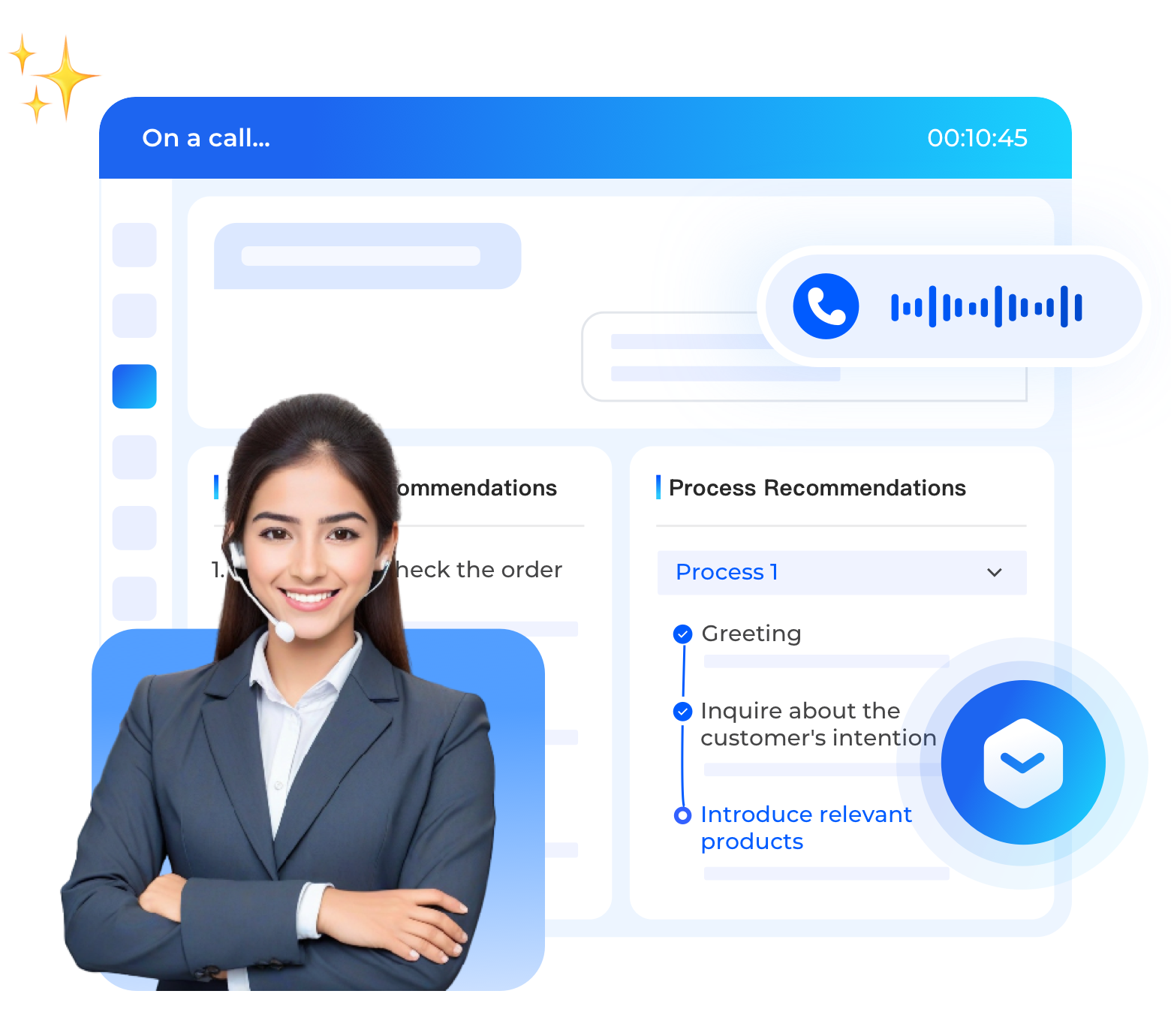
A well-designed Agent Assistant reduces manual work through automated form-filling, surfaces the right information, and accelerates agent proficiency with proactive suggestions. By streamlining the work that happens after a customer engages, it lowers the cost of serving each interaction. And when service costs go down, your overall customer acquisition economics improve.