In today's digital landscape, customers expect immediate, personalized responses across every channel. According to Intercom's 2026 report, 87% of senior leaders plan to invest in AI for customer service. 77% of CS teams say AI meets or exceeds expectations. This shift is driving conversational AI adoption at unprecedented scale.
Voicebot AI solutions have emerged as a game-changing technology. VoiceBot combines large language models with natural conversation to transform customer interactions. Whether for outbound sales, customer service, or follow-ups, voicebots are revolutionizing contact center operations globally.

What is VoiceBot?
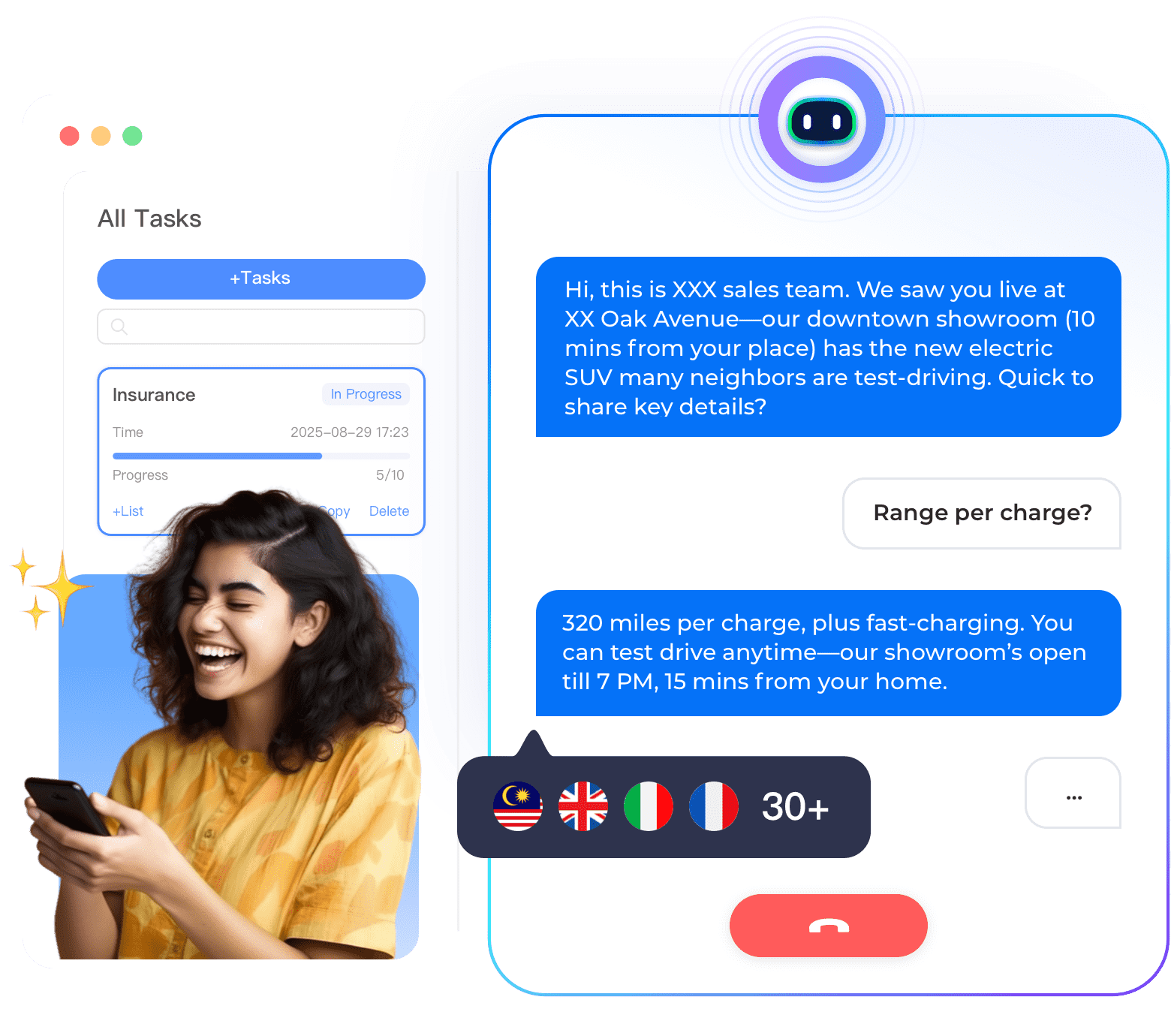
VoiceBot is a multi-language, large-model powered AI bot for automating customer conversations. Unlike traditional IVR with rigid menus, VoiceBot understands natural language and conducts multi-round conversations with human-like emotion.
The technology combines two components: NLP analyzes speech patterns across multiple languages (including Malay and English), and LLM integration provides contextual understanding and real-time personalized responses, learning from each interaction.
How Voicebots Work?
Modern AI voicebots operate through a coordinated architecture:
Speech-to-Text (STT): Converts spoken language to text. Today's models achieve over 90% accuracy even in noisy environments, supporting multiple languages and dialects.
Large Language Model (LLM): The reasoning engine that understands intent and generates responses. It handles simple questions to complex operations like booking systems or payment processors.
Text-to-Speech (TTS): Converts text output to natural speech. Modern TTS delivers sub-200ms time-to-first-byte, keeping conversations fluid.
Orchestration Layer: Coordinates the entire pipeline, managing streaming audio, interruptions, and component synchronization.
Modularity is key — using separate optimized components provides observability, allowing teams to inspect transcripts and continuously improve performance.
Key Use Cases for Voicebots
1. High-Volume Customer Service – The most common entry point. Voicebots handle routine inquiries about orders, accounts, hours, and policies. Hybrid architectures use cost-effective models for frequent questions and sophisticated LLMs for complex ones.
2. Business Transactions – Beyond Q&A, voicebots enable appointment scheduling, order changes, and account updates via backend integration. Success requires deep API connectivity to query databases and execute transactions.
3. Outbound Engagement – Voicebots handle appointment reminders, payment collection, surveys, and marketing. Deployments must include consent verification, opt-outs, and clear AI disclosure.
4. Sensitive Interactions – For complaints or debt collection, voicebots detect emotion from vocal patterns. When thresholds exceed limits, they seamlessly hand off to human agents with full conversation context.
A Solution Example: Instadesk VoiceBot
Organizations using Instadesk report 60% or greater reductions in manual costs while expanding outreach capacity. The platform offers zero-code visual orchestration and ASR/TTS for over 30 languages. Security features include desensitized data storage, call encryption, flexible deployment, and pre-installed compliance — increasing data security by 60% and reducing business violations by 40%. The drag-and-drop interface lets businesses build and iterate voicebots three times faster than traditional approaches.
The Future of Customer Service: AI and Human Collaboration
Conversational AI supercharges customer service, but works best alongside skilled professionals. Instadesk VoiceBot handles routine inquiries and follow-ups, freeing human agents for complex issues requiring empathy and creativity. This combination delivers automation scalability with human nuance. Organizations that thrive will effectively integrate voicebot AI while maintaining the human touch that builds lasting relationships.