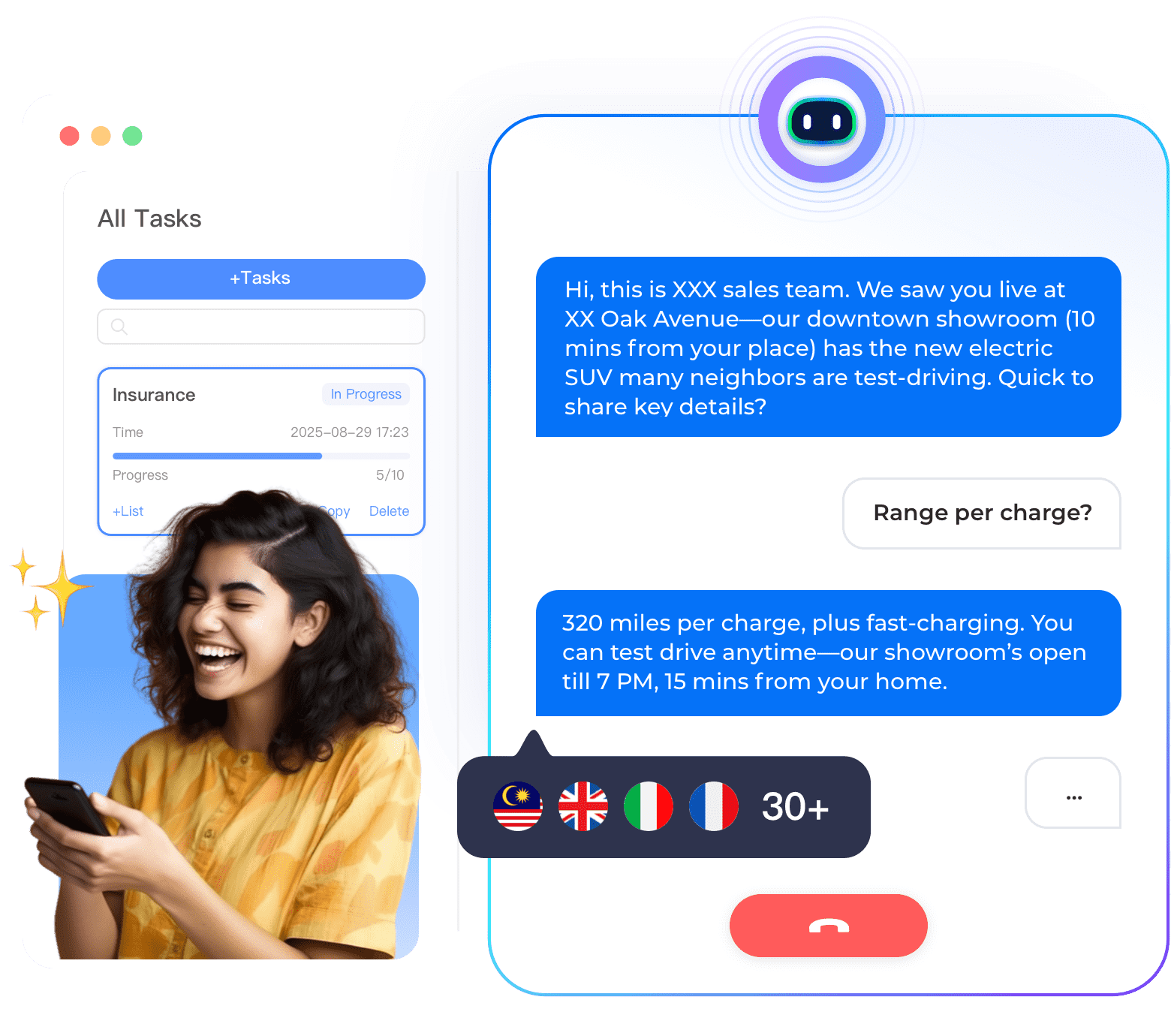
Building VoiceBot That Works: The Three Essential Elements

Building VoiceBot That Works: The Three Essential Elements

2026-03-10 15:33:56 Readership 11

For generations, exceptional customer service has depended on human connection—the ability to listen, understand, and respond authentically. Now, a fundamental shift has occurred: AI systems must step into this role.

Like human team members, voice AI requires ongoing refinement to meet rising expectations. But effective voicebots involve more than simply automating phone lines. A truly exceptional experience rests on three foundational pillars that determine whether callers feel assisted or frustrated.

Let's examine these critical dimensions: Quality, Customization, and Adaptability.

Element 1: Quality—The Voice Must Feel Authentically Human

Few things frustrate customers more than voice interactions that feel mechanical or artificial. When people call a business, they expect natural conversation flow—appropriate pacing, relevant responses, and the sense that someone is actually listening. Systems failing these basic expectations create immediate friction.

Modern consumers easily distinguish between fluid conversation and programmed responses. This raises the bar for businesses deploying voice AI: it must do more than function—it must genuinely communicate.

1. Response Speed Matters
Conversation rhythm depends on timing. When someone speaks, they expect acknowledgment within roughly two seconds. Beyond that, the interaction feels broken. People repeat themselves, speak louder, or simply hang up.
Voice systems must process input, interpret meaning, and generate responses almost instantly. This requires efficient architecture that minimizes processing delays. When voice AI accesses customer data or account information, those backend queries must happen seamlessly without noticeable pauses.

2. Natural Rhythm Builds Comfort
Human speech contains subtle patterns that make exchanges feel natural—brief pauses, pacing variations, and appropriate turn-taking. Robotic systems miss these nuances, delivering responses that feel rushed or awkwardly timed.
Effective voice AI mirrors these patterns. It varies sentence length, inserts appropriate pauses, and avoids monotone delivery that signals automation. When customers hear natural speech patterns, they relax into the conversation rather than tensing up.

3. Emotional Intelligence Changes Everything
Early voice systems completely lacked ability to recognize or respond to emotion. Frustrated callers received the same flat responses as casual inquirers. This emotional blindness created enormous friction.
Modern voice AI detects emotional cues—tension, urgency, frustration, satisfaction—and adjusts accordingly. When someone sounds upset, the system slows down, uses simpler language, and acknowledges the difficulty. When someone expresses excitement, responses mirror that enthusiasm. This emotional attunement transforms mechanical interactions into genuine connection.

Element 2: Customization—Generic Voices Blend Into Background Noise

Every business has a distinct personality that customers recognize. Luxury brands communicate differently than discount retailers. Healthcare providers speak differently than entertainment platforms. Yet many companies deploy voice AI that sounds identical to everyone else's, missing an opportunity to reinforce their unique character.

1. Voice as Brand Expression
Businesses invest heavily in visual branding—logos, colors, imagery. Voice represents an equally powerful channel that shapes how customers perceive each interaction.
A financial institution needs voice conveying stability and trust. A youth-oriented brand might thrive with energetic, casual delivery. Professional services often benefit from measured, articulate communication. The voice itself becomes part of the brand experience, reinforcing identity with every call.

2. Audience Shapes Voice Design
Different customer segments respond to different communication styles. Age, culture, industry, and context all influence what feels engaging. A voice delighting one audience might alienate another.
Smart organizations test multiple approaches to discover what resonates. They experiment with tone, pacing, and voice characteristics, measuring how different styles affect satisfaction. This reveals preferences not obvious from internal assumptions, leading to voice AI that truly connects.

3. Localization Goes Beyond Translation
Global businesses face particular challenges. Translating words is only the most basic adaptation. True localization requires understanding cultural communication norms, regional accents, and local service expectations.
A British customer might find American-accented AI subtly foreign. A Spanish speaker in Madrid interacts differently than one in Mexico City. Voice AI accounting for these nuances builds trust in ways generic multilingual support cannot match. Customers feel the system was designed specifically for them.

Element 3: Adaptability—Static Systems Quickly Become Outdated

The best employees learn from experience, adjust to new situations, and improve over time. Voice AI should demonstrate these same qualities. Yet many deployed systems remain frozen, delivering identical responses regardless of context or history.

1. Real-Time Emotional Reading
Words convey information; tone conveys meaning. "I need help" could express mild inconvenience or desperate urgency depending entirely on delivery. Voice AI ignoring these cues responds to words but misses the actual situation.
Systems with real-time sentiment analysis detect emotional signals and adjust accordingly. They recognize when callers need patience rather than speed, reassurance rather than information, escalation rather than automation. This responsiveness transforms customer experience from transactional to relational.

2. Memory Creates Continuity
Few things frustrate customers more than repeating information across multiple interactions. "What was your account number again?" "What issue did you call about last time?" Each repetition erodes confidence.
Voice AI with contextual memory avoids this entirely. It remembers previous conversations, knows unresolved issues, and understands customer preferences without reminders. This continuity signals respect for the customer's time. It makes each interaction part of an ongoing relationship rather than an isolated transaction.

3. Channel Flexibility
Customers increasingly move seamlessly between communication channels. A voice call might naturally continue via text message. Detailed inquiries might need email documentation. Complex issues might benefit from chat.
Voice AI operating within channel silos frustrates these natural transitions. Adaptive systems recognize when customers would benefit from switching modes and facilitate those moves smoothly. They maintain context across channels, so customers never restart or explain themselves again. This flexibility meets customers where they are rather than forcing them into predetermined paths.

What Success Looks Like in Practice

Organizations embracing these three pillars consistently see stronger results. Marketing campaigns using quality voice AI achieve connection rates well above industry averages, with efficiency that transforms operations. Systems reach hundreds of thousands of customers in days rather than weeks.

Service operations benefit from round-the-clock availability handling routine inquiries, freeing human representatives for complex issues. Customers receive immediate responses instead of waiting in queues. Post-purchase follow-ups that once required massive manual effort now occur automatically at scale—response rates improve, satisfaction increases, and costs decrease simultaneously.

A Final Perspective

The gap between automated and human conversation continues shrinking, but customers want more than technical sophistication. They want to feel understood and respected. They want interactions that flow naturally and resolve efficiently.

Organizations treating voice AI as a static implementation miss the point entirely. Like human team members, voice systems need ongoing refinement—training on new situations, adjustment to changing expectations, and optimization based on performance data. Companies committed to this approach find their voice AI becomes increasingly valuable over time.

The essential insight is simple: voice AI exists to support human connection, not replace it. Systems that prioritize quality, embrace customization, and demonstrate adaptability create experiences customers genuinely appreciate. Those that neglect these pillars frustrate callers and undermine the very relationships they were designed to strengthen.

Because ultimately, successful voice AI doesn't just process calls. It connects with people.

Tags

Instadesk

Instadesk official

Instadesk’s official account, all news and updates of Instadesk are published here.
Explore how we can help you achieve customer success
Get started free

You may also like

Voice Bot vs. Live Chat: Drive Calls, Delight Chats

Modern customer engagement tools that balance proactive outreach and responsive support. Instadesk provides two distinct solutions: the LLM Outbound Voice Bot and the Live Chat platform. Each addresses unique challenges, and understanding their differences is key to elevating customer experience (CX) strategies.

2026-03-09 11:32:17

Voicebot for customer service: what it means and how it helps

AI-powered voicebots automate service, transactions and outreach using NLP and LLMs. They cut costs, boost efficiency and improve CX, while Instadesk VoiceBot offers multilingual support, strong security and fast zero‑code deployment.

2026-03-09 10:42:16

Customer Service Skills Every Modern Support Team Needs in the AI Era

Service ability has become the most important thing of business enterprises in global digitalization. Users want the kind of help that responds very quickly, speaks clearly, and is on call. For those companies in Southeast Asian market, the customer service team usually has to use several languages, different time and questions. 

2026-03-08 22:36:44
Elevate Your Customer Experience. See How Instadesk Can Help.

Get Started in Minutes. Experience the Difference.

Get started free
Experience the AI-Powered CX Transformation Now
Free Trial
Book a Demo
  • 1~100
  • 100~500
  • 500~1000
  • 1000~5000
  • 5000+

By submitting, you agree to our Privacy Policy

Submit