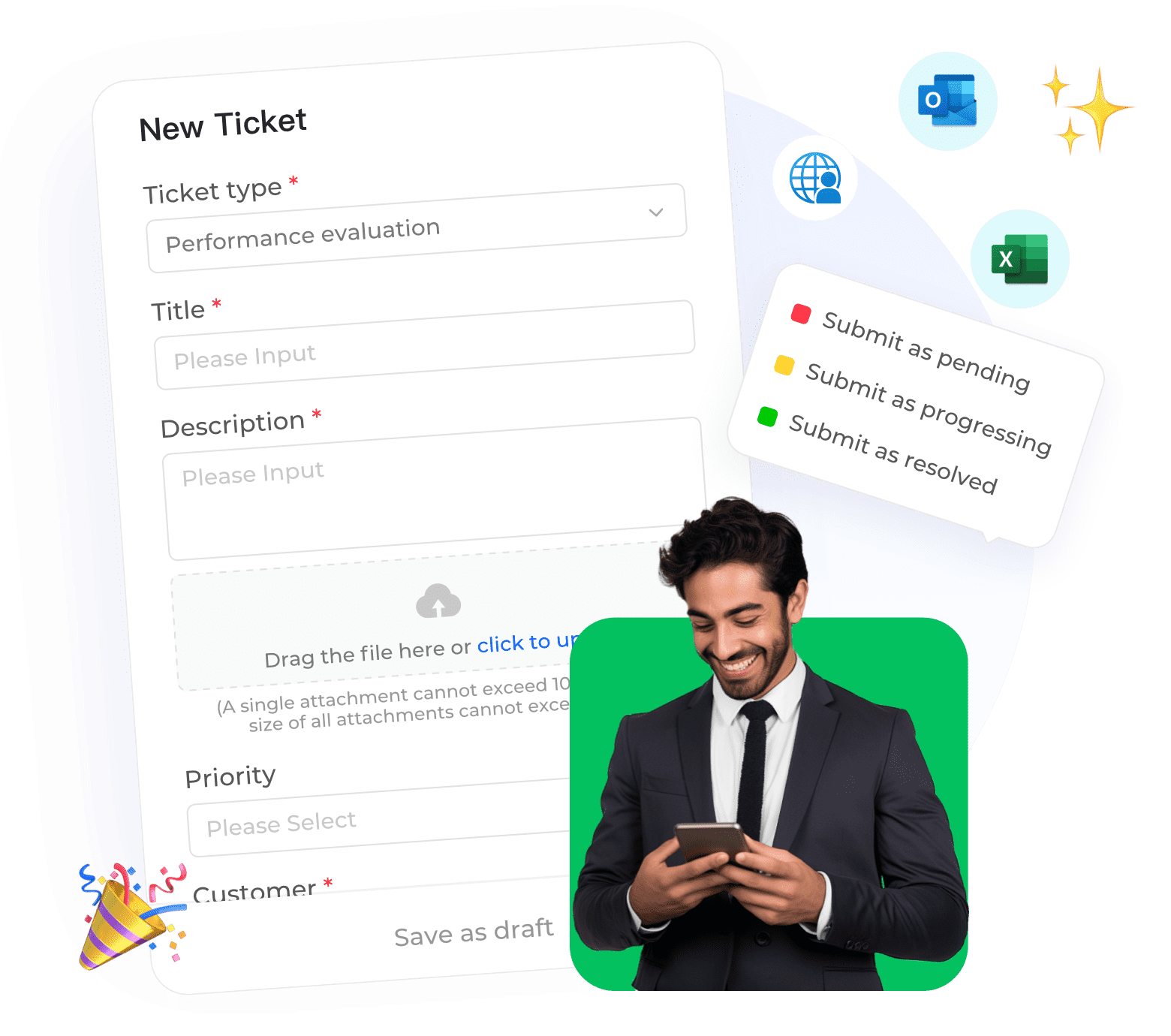
Telecom operators handle millions of customer service tickets annually—ranging from routine billing inquiries to urgent network outage reports. Effective ticket escalation management ensures that critical issues reach the right decision•makers quickly, preventing customer frustration, service level agreement (SLA) breaches, and regulatory penalties. This article explores how enterprise telecom operators can implement robust escalation management processes and the technology that enables them.

What is ticket escalation management?
Ticket escalation management is the process of automatically elevating a customer service ticket to higher levels of support or management when certain conditions are met—such as exceeding response time targets, involving high•value customers, or addressing critical issues like service outages. Escalation ensures that urgent or complex problems receive priority attention before they escalate into customer churn or regulatory complaints.
Why escalation management matters for telecom operators
• SLA compliance:
Telecom operators often have contractual SLAs with business customers—response within 4 hours, resolution within 24 hours. Escalation ensures these targets are met.
• Customer retention:
Prolonged unresolved issues drive churn. Fast escalation prevents frustration.
• Regulatory requirements:
Some issues, like service outages, require immediate escalation to meet regulatory reporting obligations.
• Resource optimization:
Escalation ensures the right expertise is applied to the right issues, not wasted on routine tickets.
• Management visibility:
Escalated tickets highlight systemic issues that need leadership attention.
Types of escalation in telecom
Escalation Type |
Description |
Example |
|
Functional escalation
|
Ticket moves to a higher•skilled support tier
|
Billing inquiry → fraud investigation
|
|
Hierarchical escalation
|
Ticket moves to management for oversight
|
Customer requests supervisor after unresolved issue
|
|
Time•based escalation
|
Ticket auto•escalates after SLA threshold
|
No response within 4 hours → manager notified
|
|
Criticality•based escalation
|
Ticket flagged based on severity
|
Outage affecting 10,000 customers → VP notified
|
How to implement effective escalation management
• Define clear escalation rules:
What triggers escalation? Time thresholds? Customer value? Issue severity? Define these upfront.
• Set multiple escalation levels:
First level: team lead. Second: department manager. Third: executive escalation.
• Automate where possible:
Use ticketing systems to automatically escalate based on rules—no manual intervention required.
• Ensure context preservation:
Escalated tickets must include full conversation history, actions taken, and reason for escalation.
• Track and report:
Monitor escalation rates, resolution times, and outcomes to identify process improvements.
How Instadesk Ticket System enables escalation management for telecom
Instadesk’s ticketing platform includes robust escalation management capabilities:
• Rule•based escalation:
Define custom rules—escalate if ticket exceeds response time, is flagged as “outage,” or involves a high•value account.
• Multilevel escalation:
Configure multiple escalation levels with different targets and recipients.
• Automatic notifications:
Managers receive instant s when tickets escalate, with links to the full ticket details.
• SLA tracking:
Real•time dashboards show tickets approaching SLA limits before they escalate.
• Escalation history:
Complete audit trail of when and why tickets escalated, enabling root cause analysis.
Case study: Telecom operator reduces SLA breaches by 50%
A national telecom operator with 5 million subscribers deployed Instadesk’s ticketing system with automated escalation. Results after 6 months:
• SLA breaches decreased by 50% with automatic time•based escalation.
• High•value account satisfaction improved as critical issues received priority attention.
• Management visibility increased; executives now see escalation trends and address systemic issues.
• Agent productivity improved as managers intervened early, preventing issues from worsening.
Conclusion
Ticket escalation management is essential for enterprise telecom operators to meet SLAs, retain high•value customers, and maintain regulatory compliance. Instadesk’s ticketing platform automates escalation based on time, severity, and customer value, ensuring critical issues receive the attention they deserve.