

Indonesian telecom operators handle millions of customer calls daily for billing questions,technical support,and plan changes.An automatic call distribution (ACD) system is the backbone of any call center–it routes incoming calls to the most appropriate agent based on skills,language,or priority.This guide explains how ACD systems work,why they are essential for telecom operators,and how Instadesk's cloudbased ACD delivers intelligent routing with AI capabilities.

What is an automatic call distribution(ACD)system
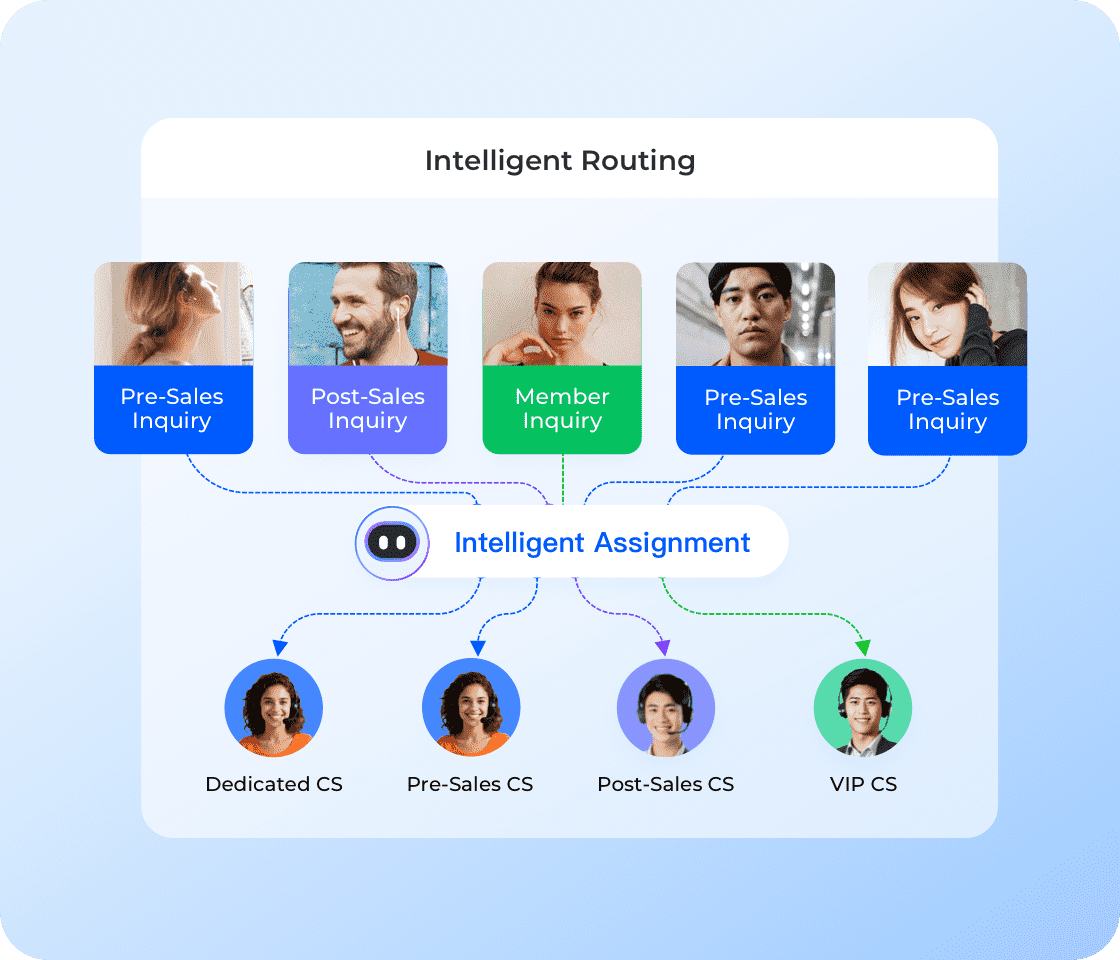
An ACD system is a telephony software that answers incoming calls,plays an IVR menu(if configured),and then routes the call to an available agent based on predefined rules.Unlike a simple hunt group that rings agents in a fixed order,an ACD uses intelligent routing to match callers with the bestsuited agent.
Key ACD routing strategies
•Skillsbased routing–Routes technical support calls to agents with technical training,billing calls to billing specialists.
•Languagebased routing–Routes Bahasa Indonesia callers to Bahasaspeaking agents,English callers to English agents.
•Priority routing–VIP customers or urgent issues skip the queue.
•Least occupied routing–Sends calls to the agent who has handled the fewest calls that day.
•Round robin–Distributes calls evenly among available agents.
Why Indonesian telecom operators need ACD
Telecom call centers have high call volumes and diverse query types.Without ACD,calls would be randomly assigned,leading to:
•Long hold times for customers who need specialized help.
•Frustrated agents receiving calls outside their expertise.
•Dropped calls during peak hours.
•Inefficient use of agent skills.
An ACD system ensures that the right call goes to the right agent at the right time.
How Instadesk's ACD system works for telecom operators
Instadesk's cloud call center platform includes a powerful ACD engine.Key features:
•Skillsbased routing–Define skills(e.g.,“technical”,“billing”,“sales”,“loyalty”)and assign to agents.Calls are tagged with required skills via IVR or AI intent detection.
•Priority queuing–VIP customers(identified by caller ID or account number)jump to the front of the queue.
•Realtime queue visibility–Supervisors see queue length,longest wait time,and agent status on a live dashboard.
•Overflow routing–If wait time exceeds a threshold,calls can overflow to another team or to a voicebot.
•Callback option–Instead of waiting on hold,callers can request a callback when an agent becomes available.
•Integration with AI voicebot–The voicebot can handle routine queries before deciding to route to an agent.
Case study–Indonesian telecom operator reduces wait time by 70%
A regional Indonesian telecom operator with 2 million subscribers had a legacy ACD system that used simple roundrobin routing.Average wait time was 8 minutes;abandonment rate was 35%.The operator deployed Instadesk’s cloud ACD with skillsbased routing and AI voicebot integration.
After 3 months:
•Average wait time dropped from 8 minutes to 2.4 minutes(70%reduction).
•Abandonment rate decreased from 35%to 12%.
•Firstcall resolution increased from 58%to 76%(calls reached the right skill group).
•Agent satisfaction improved–agents no longer received calls outside their expertise.
•The operator saved IDR 1.2 billion annually by reducing agent overtime and callbacks.
How the ACD routing works in this case
•Caller dials the customer service hotline.
•IVR asks:“Untuk bahasa Indonesia tekan 1,for English press 2.Untuk keluhan teknis tekan 3,untuk tagihan tekan 4.”
•Caller presses 3(technical)and 1(Bahasa).
•ACD routes the call to the next available agent in the“technicalBahasa”skill group.
•If no agent is available,the caller hears“Please hold.Your call is important to us.”
•After 2 minutes in queue,the ACD offers a callback:“Would you like a callback instead of waiting?”
•If the caller accepts,the ACD places them in a callback queue and calls them back when an agent is free.
Key ACD metrics for telecom operators
Monitor these metrics to optimize your ACD:
•Average speed of answer(ASA)–Time from when a call enters the queue until an agent answers.
•Service level–Percentage of calls answered within a target time(e.g.,80%within 30 seconds).
•Abandonment rate–Percentage of callers who hang up while in queue.
•Occupancy rate–Percentage of time agents spend on calls vs idle.
How to implement ACD for your telecom operator
•Step 1–Define your skill groups(technical,billing,sales,retention,etc.).
•Step 2–Assign each agent to one or more skill groups with proficiency levels.
•Step 3–Configure IVR menus to capture caller intent and map to skills.
•Step 4–Set queue thresholds and overflow rules.
•Step 5–Train supervisors on realtime dashboard.
Why choose Instadesk's cloud ACD over onpremise
•No hardware–Runs on AWS Indonesia region.No PBX to buy or maintain.
•Scales instantly–Add agents during peak seasons without provisioning new servers.
•AI integration–Voicebot handles Tier1 calls,only routing complex issues to agents.
•Payasyougo–Pay per minute of usage,not per agent seat.
Conclusion
An automatic call distribution system is essential for Indonesian telecom operators to reduce wait times and improve firstcall resolution.Instadesk’s cloud ACD with skillsbased routing and AI integration delivers measurable results.Start a free trial and transform your call center efficiency.