Logistics companies handle thousands of calls daily—tracking shipments, arranging deliveries, resolving issues like delays or damages, and answering customer queries. After each call, agents spend valuable minutes documenting details: typing notes, updating systems, and logging interactions. This after-call work (ACW) consumes 20–30% of their time, reducing availability for new calls and increasing customer wait times. Real-time call transcription and summarization automates this burden, freeing agents to focus on what matters most: solving problems and delighting customers.

The Documentation Burden in Logistics
•High call volume:
Peak seasons can overwhelm agents with back-to-back calls.
•Complex information:
Shipment IDs, delivery addresses, special instructions—all must be captured accurately.
•Multiple systems:
Agents often need to update a transportation management system (TMS), CRM, and internal spreadsheets.
•Manual errors:
Typed notes can miss critical details, leading to repeat calls and mistakes.
Instadesk Agent Assistant for Logistics
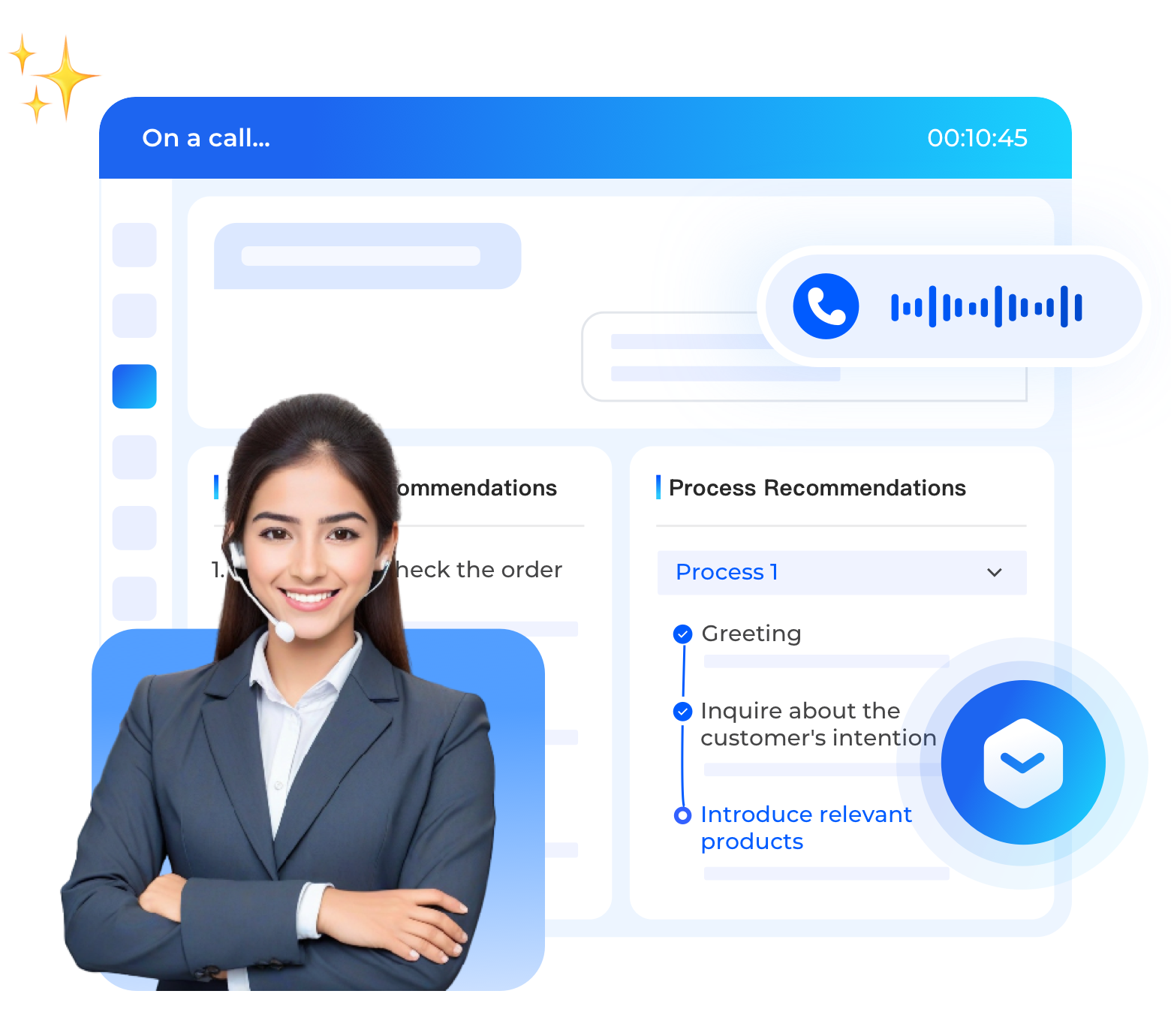
Instadesk's AI-powered Agent Assistant listens to calls (with customer consent) and automatically generates transcriptions and summaries in real time.
•Real-time transcription:
Converts speech to text with >90% accuracy, even with accents, background noise, and industry jargon (e.g., "bill of lading," "proof of delivery").
•Instant summarization:
Creates concise, structured call summaries highlighting key points: issue (e.g., "delayed shipment #12345"), resolution (e.g., "rescheduled for tomorrow"), and follow-up actions.
•CRM/TMS integration:
Automatically logs summaries and full transcripts into your existing systems, eliminating double entry.
•Keyword extraction:
Tags calls with relevant topics (e.g., "damaged goods," "address correction") for trend analysis and reporting.
•Compliance monitoring:
Flags calls for quality assurance or dispute resolution purposes.
How It Works in a Logistics Call
•Call begins:
Agent answers a call from a customer asking about a delayed shipment.
•Real-time transcription:
The conversation appears as text on the agent's screen, with key data highlighted.
•Automatic summarization:
At call end, a summary is generated: Customer: ABC Corp; Issue: Shipment #XYZ123 delayed at sorting facility; Action: Agent escalated to hub manager; will call back within 2 hours.
•
One-click logging: Agent reviews and approves the summary, which is then pushed to the TMS and CRM.
Benefits for Logistics Companies
•30–40% reduction in after-call work:
Agents handle more calls per hour, reducing wait times.
•Improved accuracy:
No more manual note-taking errors; consistent documentation.
•Better insights:
Analyzed call data reveals recurring issues (e.g., frequent delays on a specific route) to improve operations.
•Enhanced compliance:
Full transcripts available for dispute resolution or audits.
•Agent satisfaction:
Less tedious paperwork, more time for meaningful customer interactions.
Case Study: Global Logistics Provider
A global logistics firm with 5,000 agents deployed Instadesk Agent Assistant. Within 2 months:
•
Average after-call work time dropped from 4.5 minutes to 2.5 minutes (44% reduction).
•
Calls handled per agent per day increased by 25%.
•
Customer wait times decreased by 20%.
•
Data entry errors related to shipment IDs fell by 70%.
Conclusion
Real-time call transcription and summarization transform agent productivity in logistics. Instadesk Agent Assistant lets your team focus on solving customer problems, not paperwork. See the difference—book a demo today.