
Introduction
The AI customer service landscape shifted dramatically in the past month. Salesforce launched a new AI agent that charges only when it solves a problem. Singapore released an open-source AI model built specifically for Southeast Asian languages. And the pricing battle between open and closed AI models is reshaping who can afford enterprise-grade customer service automation.
If you're running a customer service operation in Southeast Asia, these changes aren't just industry news — they're decisions you need to make now.
1. The "Pay-for-Resolution" Model: Salesforce Help Agent Changes the Game
Salesforce launched Help Agent in June 2026, built on its Agentforce platform. It deploys across web, SMS, and voice in under 10 steps. The pricing model is the real headline: $2 per resolved issue — not per conversation, not per token, but only when the AI actually solves a customer's problem.
In internal testing, Salesforce processed over 4 million conversations with Help Agent, achieving a 70% resolution rate and a 4.7/5 customer satisfaction score.
This model aligns vendor incentives with customer outcomes. If the bot doesn't resolve the issue, you don't pay. It's a fundamental shift from traditional per-seat or per-minute pricing that forces you to pay regardless of results.
2. The State of AI Customer Service: Not Just Efficiency Anymore
Salesforce's State of Service report reveals that 66% of customer service organizations have now deployed AI agents — a 1.7x increase year-over-year. More importantly, 70% saw measurable value within 60 days of deployment, and the biggest KPI improvement wasn't efficiency — it was customer satisfaction.
This tells us something crucial: the ROI of AI customer service is no longer just about cutting costs. It's about keeping customers happier, faster.
3. Salesforce Summer '26: The Architecture Shift
Salesforce's Summer '26 release represents the company's largest architectural overhaul in 27 years. Three updates matter most:
Multi-Agent Orchestration. Multiple specialized AI agents work together — one entry point for customers, with expert agents automatically assigned and coordinated behind the scenes.
Headless Experience Layer. The entire platform is now "headless" — every capability is exposed through APIs, making AI agents first-class citizens that no longer require a browser interface.
Agentforce Self-Service. Help Agent deploys in 10 steps to websites, portals, or WhatsApp.
The message is clear: the future of customer service is AI-native, not AI-added.
4. SEA-LION v4.5: Southeast Asia's Open-Source Answer
AI Singapore released SEA-LION v4.5 in May 2026 — Southeast Asia's first agentic open-source large language model suite.
Three models were released:
Gemma-SEA-LION v4.5-E2B-IT: A 2B-parameter model optimized for resource-constrained environments.
Qwen-SEA-LION v4.5-27B-IT: A 27B-parameter model with a 262K context window, supporting Burmese, Indonesian, Filipino, Malay, Tamil, Thai, and Vietnamese — all languages that generic models handle poorly.
SpecDecoder Accelerator: Boosts inference speed by up to 6x.
Based on fine-tuned versions of Qwen 3.6 and Gemma 4, the models are open-source and free, capable of running on a 32GB laptop.
This is a watershed moment for Southeast Asian businesses. You no longer have to rely on generic Western models that misunderstand local languages and cultural nuances. You can now run a locally optimized, culturally aware AI model on your own infrastructure — at zero licensing cost.
5. The Geopolitical Reality: Open vs. Closed
Singapore has signed major AI infrastructure deals with OpenAI ($234 million) and Google, embedding closed-source American models into public services and the private sector. This creates a "compute sovereignty" problem — reliance on closed models means dependence on foreign pricing power and policy changes.
Meanwhile, the open-source route — led by Qwen and DeepSeek — is gaining ground in Southeast Asia and the Middle East, with a 35x price advantage over closed alternatives. SEA-LION is Singapore's local open-source effort, but it risks being marginalized by the capital power of US tech giants.
For Southeast Asian businesses, this isn't abstract geopolitics. It's a pricing decision. Do you pay premium rates for closed models that are easier to deploy but lock you in? Or do you invest in open-source models that give you full control and dramatically lower costs?
6. What This Means for Your Customer Service Operation
The pricing model is shifting. Per-resolution pricing is coming. If your vendor still charges per seat or per minute regardless of results, you're overpaying.
Localization matters more than ever. Generic models don't understand Thai, Bahasa, or Tagalog the way native speakers do. SEA-LION's release means there's no excuse for poor multilingual support.
Open source is a viable alternative. The price gap between open and closed models is now 35x. For high-volume operations, that's real money.
AI is becoming infrastructure, not a feature. Salesforce's headless architecture signals that AI agents will be embedded in every customer touchpoint — not just a chatbot widget in the corner.
How Instadesk Fits the Picture
Instadesk was built for exactly this moment. As a customer engagement platform serving enterprises across Southeast Asia and beyond, Instadesk combines:
Flexible pricing. Transparent pay-as-you-go per-minute pricing — no long-term contracts, no seat minimums, no paying for results that don't materialize.
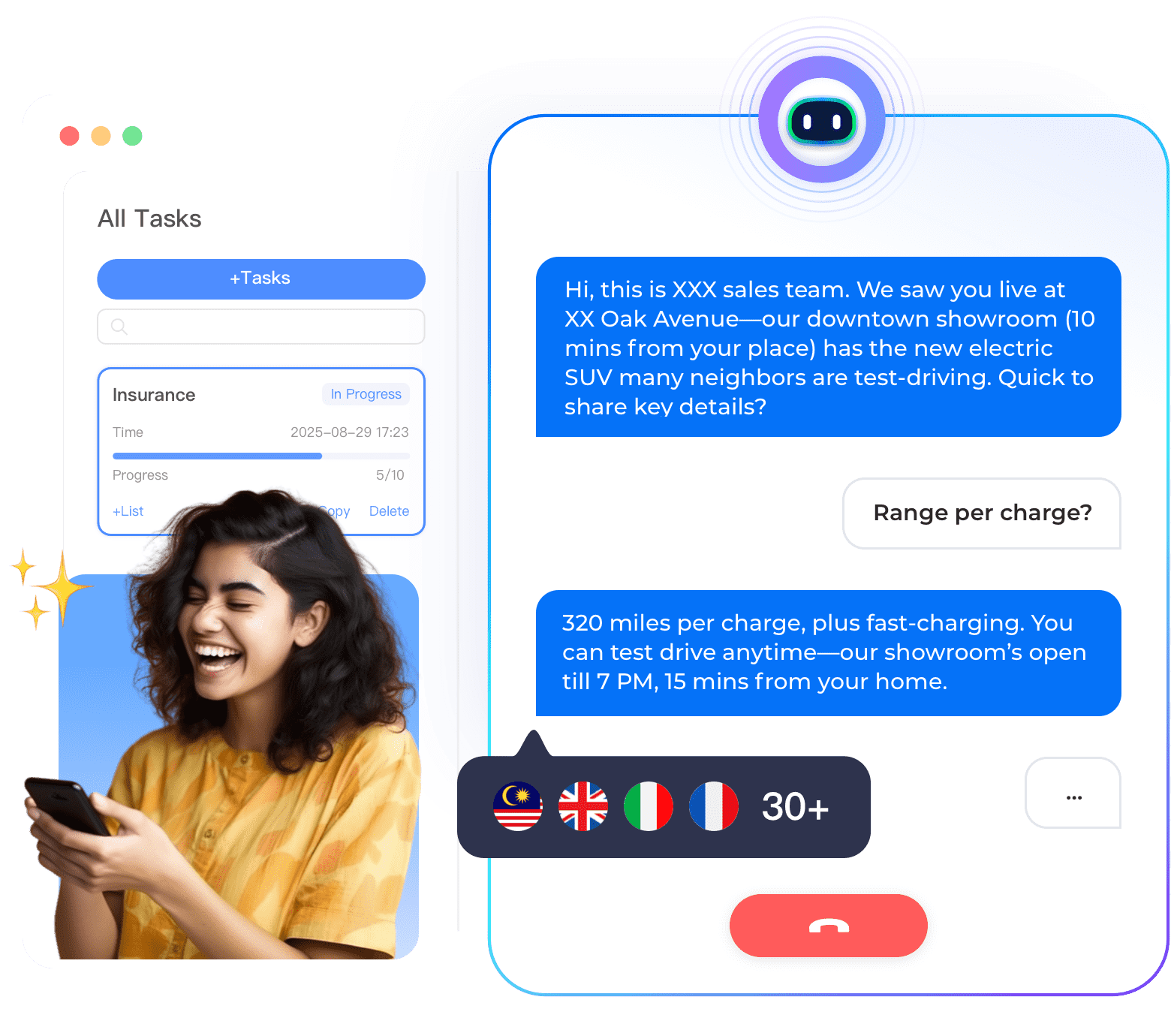
Multilingual AI. Native support for 30+ languages, including Bahasa Malaysia, Indonesian, Thai, Vietnamese, and more — with real-time translation across 20+ channels.
Omnichannel coverage. Voice, WhatsApp, LINE, web chat, and email — all in one platform.
Enterprise-grade security. SOC 2 Type II, ISO 27001, and PCI DSS Level 1 certified.
Proven at scale. Deployed across 180+ countries, serving 3,000+ enterprise clients.
Conclusion
The AI customer service industry is moving in three directions at once: toward outcome-based pricing, toward open-source localization, and toward AI-native architecture. Salesforce is betting on the enterprise closed-source route. SEA-LION is betting on the open-source, region-specific route. Both are accelerating the same outcome: AI customer service is becoming faster, cheaper, and more capable than ever before.
For Southeast Asian businesses, the choice isn't between AI and no AI. It's between which AI, at what cost, and with how much control.