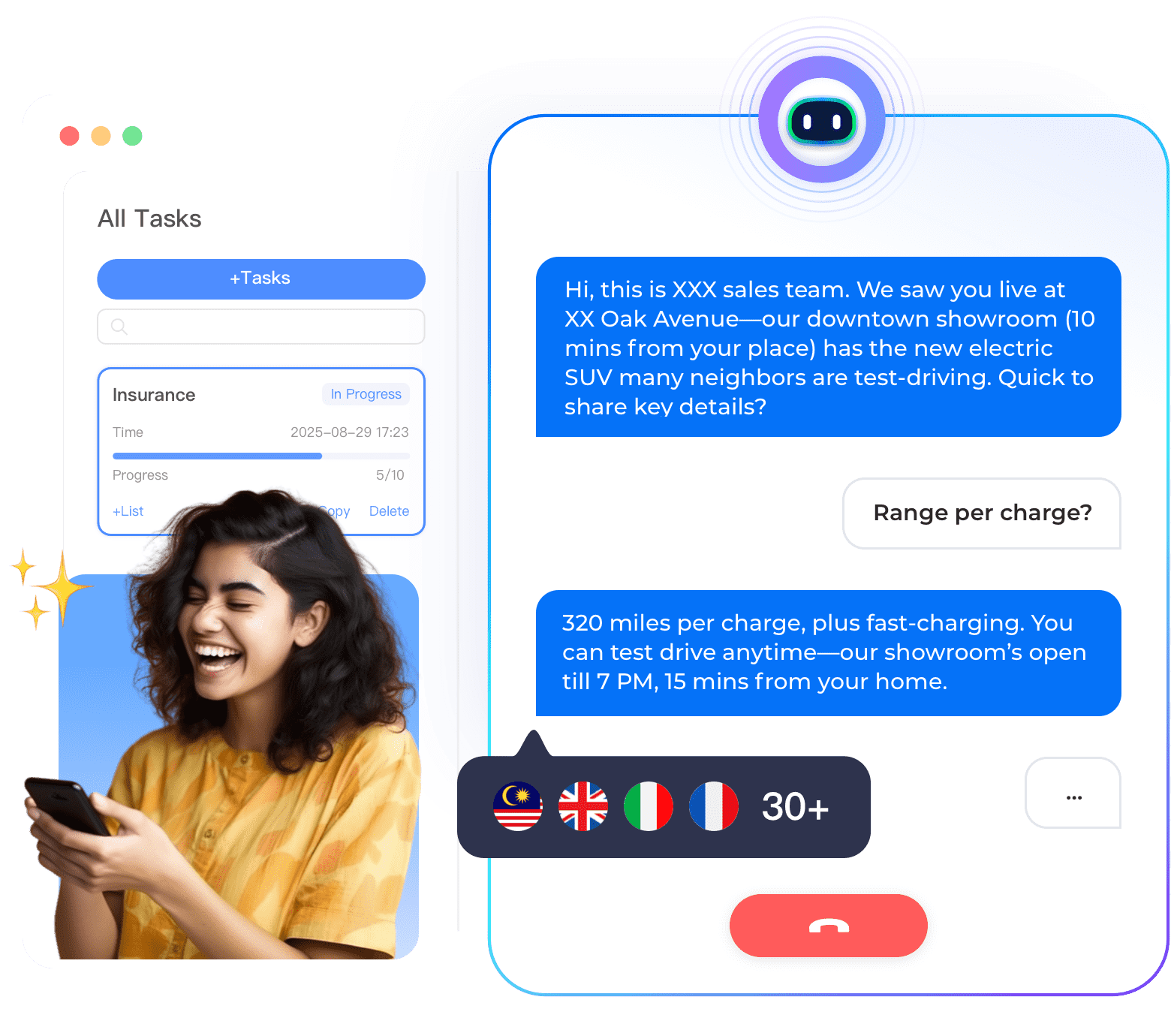
The math of outbound sales no longer adds up. Sales teams spend most of their time on non-selling activities—dialing, logging calls, updating CRMs. Turnover is high. Training takes weeks. And every expansion requires hiring more people.
AI voice technology offers a different approach. It delivers higher conversion rates while driving down costs at the same time. This article explores practical strategies for using AI voice to scale outbound sales, from lead qualification to follow-up automation.

The hidden cost of manual outbound
Traditional outbound calling is expensive and inefficient. A single agent makes 50–80 calls per day but has only 15–20 minutes of actual conversation time. The rest is dialing, waiting for voicemail, and data entry. Performance is inconsistent—some reps convert well, others struggle.
Worse, every time you scale, you hire more people. Training cycles repeat. Turnover resets progress.
How AI voice delivers both higher conversions and lower costs
The old trade-off—higher conversion requires higher cost—no longer holds. AI voice breaks this relationship.
• Conversions that outperform. Teams using AI-driven outbound models consistently see success rates significantly higher than the industry average. In marketing and invitation scenarios, AI voice has helped financial and technology clients increase conversion rates by over 30%.
• Costs that scale with volume, not headcount. AI voice systems run thousands of calls in parallel. When demand spikes, they scale up instantly—no hiring, no training, no management overhead. The cost structure shifts from fixed labor to variable technology spend.
• Consistency that human teams can't match. AI systems don't have bad days. They follow the same script, tone, and timing on every call. No fatigue, no mood swings, no inconsistency.
Four strategies to scale outbound sales with AI voice
Strategy 1: Automate lead qualification and filtering
The most expensive use of a salesperson's time is prospecting. AI voice handles initial outreach automatically, identifying high-intent prospects based on conversation signals. Intelligent customer segmentation based on age, gender, and location improves connection rates.
When a prospect expresses interest, the AI creates sales leads, syncs them with your CRM, and notifies the sales team. Lead processing efficiency increases. Sales follow-up speed improves dramatically.
Strategy 2: Scale marketing invitations and promotions
Marketing campaigns need to reach large audiences quickly. AI voice delivers batch outbound calls 24/7, with intelligent call replay, flash messaging, and automatic redialing that improve connection rates.
In one marketing campaign, an audio content platform reached over 500,000 members in a single outbound call—completed in just two days. Outbound efficiency was 13 times higher than manual efforts.
Strategy 3: Run personalized, natural conversations
Customers hang up on automated calls because they sound automated. AI voice now supports full-duplex conversation with intelligent interruption under 2 seconds, emotion-infused voice that mimics human tone, and real-time personalization.
Voice cloning allows businesses to upload live recordings and mimic specific voice tone for a personalized brand voice. The result is higher sales conversion rates and higher customer satisfaction.
Strategy 4: Deploy in days, not months
Traditional AI projects take months of development. By the time they launch, business needs have changed. Modern AI voice platforms use zero-code visual orchestration—drag-and-drop configuration that business teams can master without engineering support.
Deployment takes one day, with iterations 3x faster. Pre-built industry templates across 40+ sectors accelerate setup. The system automatically tags conversations, extracts customer information, and diagnoses issues for rapid tuning.
Putting it all together
The gap between average and elite outbound performance is no longer about effort—it's about architecture. Teams still relying on manual dialing are competing with one hand tied behind their backs. The technology is mature. The economics are clear.
The question isn't whether AI voice will scale outbound sales. It's how quickly your team will adopt it.