
Thai telecoms are accelerating their AI adoption. True Corporation’s “AI-First Telco-Tech” strategy and AIS’s cognitive transformation have shown that the industry has moved from pilot projects to production-grade automation. The question is no longer whether to adopt AI voice, but how to scale it effectively for outbound campaigns—without overwhelming teams or inflating costs.
An AI voice bot built for telecoms delivers exactly that. It automates massive-scale outbound calling, personalises every conversation, and drives measurable returns. Here’s how it works.

Automating outbound calls at scale
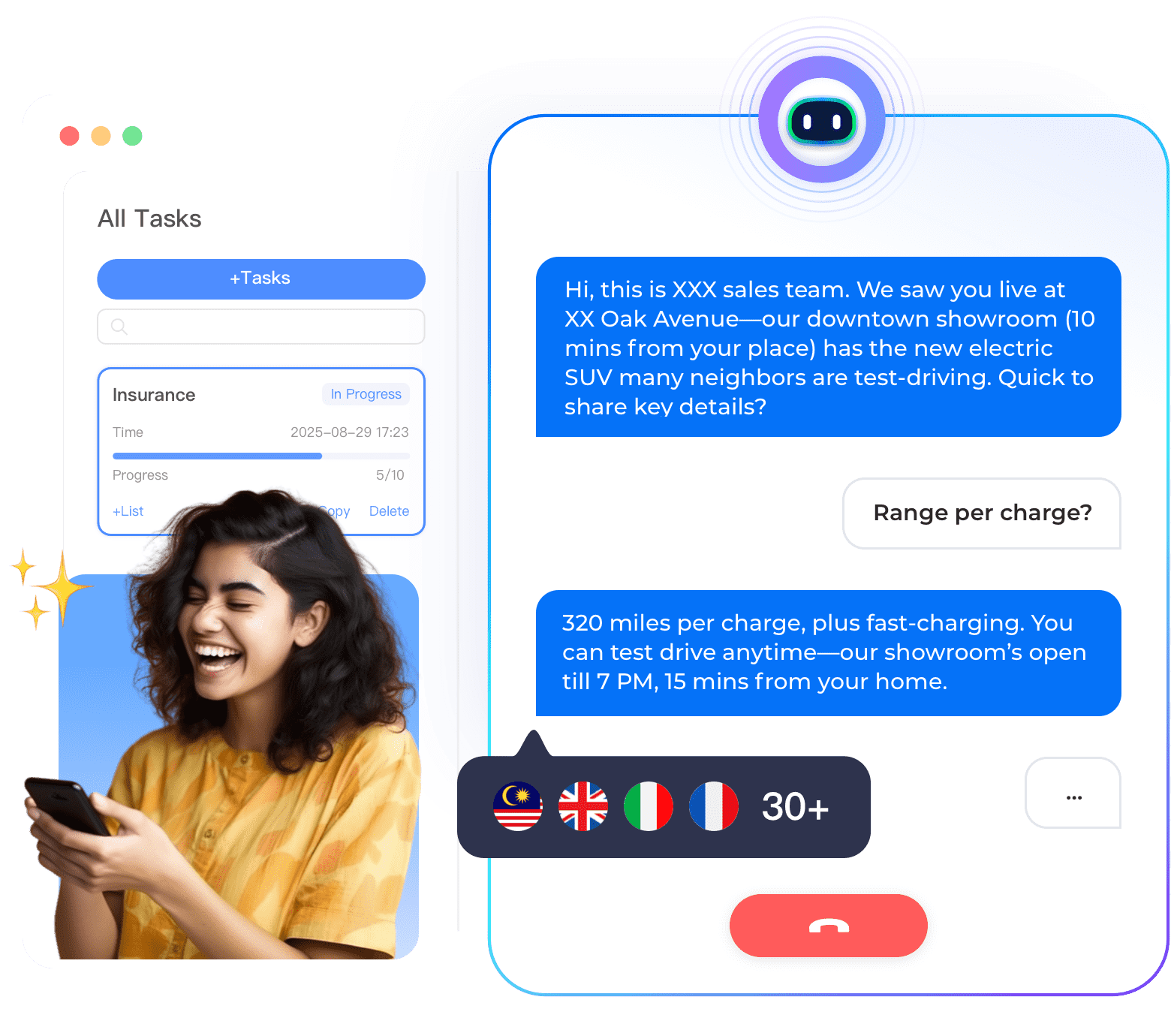
Manual outbound calling is labour intensive. Agents spend hours dialling, leaving voicemails, and updating systems. A single AI voice bot operates 24/7, handling the workload of ten human representatives simultaneously. It can place thousands of calls per day, automatically detect unavailable numbers, and schedule redials during optimal windows.
Intelligent customer segmentation based on age, location and behaviour ensures the right offer reaches the right subscriber. The system also provides intelligent call replay and flash messaging to improve connection rates. For Thai carriers running retention campaigns, promotional blasts or payment reminders, this efficiency directly lowers cost per contact.
With zero code visual orchestration, business teams can build and iterate voice agents without waiting for development sprints. Deployment takes one day, not months, and iteration cycles are three times faster than traditional development. Pre built industry templates for telecom use cases accelerate rollout even further.
Personalizing conversations that feel human
Generic, script driven calls frustrate customers. A modern AI voice bot uses large language models to identify customer intent in real time and adjust conversation content dynamically. When a subscriber hesitates, the bot offers more information; when they interrupt, the system stops, processes the new input and responds naturally — all within two seconds.
This full duplex capability is the difference between a call that feels like a conversation and one that feels like an interrogation. The bot can be trained on dozens of industries, including telecom, and understands customer intent to adjust scripts on the fly. Voice cloning allows brands to upload real voice samples, infusing outbound calls with vivid emotion — friendly for promotions, empathetic for retention, urgent for payment reminders.
The results are measurable: sales conversion rates increase by 40%, customer satisfaction climbs by 65%, and call duration rises, keeping subscribers engaged longer.
Multilingual support for Thai telecoms
Thailand’s customer base is not monolingual. Business conversations often mix English with Thai, and tourists or expatriates expect service in their own languages. An AI voice bot that supports over 30 languages with native ASR/TTS (including real time translation) allows operators to serve diverse subscribers without maintaining separate multilingual teams.
Code switching capability — handling English and Thai in the same conversation — is especially critical for roaming inquiries, device support and cross border usage. When a bot seamlessly follows a language switch, it signals competence and builds trust that static scripts never can.
Data security and PDPA compliance
Thai telecoms process massive amounts of personal data. The Personal Data Protection Act imposes strict rules on how that data is collected, used and stored. AI voice platforms for telecom must be built with compliance as a baseline requirement.
Key safeguards include desensitised data display (plain text numbers never appear in the system), encrypted call links to prevent interception, and private deployment options that combine on premise infrastructure with public cloud scalability. A pre installed compliance quality control system automatically filters non compliant content, reducing business violation rates by 40% and data security risks by 60%.
For telecom operators facing potential PDPA fines, these features are not optional. They protect both the business and the customer.
What the numbers actually show
The business case is straightforward. Operators deploying AI voice outbound see:
• 10x efficiency – one AI agent replaces ten human representatives
• 40% higher sales conversion rates in marketing and invitation scenarios
• 65% higher customer satisfaction through natural, personalised conversations
• 80% shorter launch cycle time with zero code deployment
• 70% lower script optimisation costs through real time tuning
Customer satisfaction rises, call duration increases, and lead processing improves by 50% with automatic CRM synchronisation and instant team notifications.
The bottom line for Thai telecoms
Thai telecoms have already committed to AI at the executive level. True has trained thousands of employees on AI competencies. AIS is building a cognitive technology company powered by digital intelligence. But in the field, many outbound campaigns still rely on manual dialling, static scripts and fragmented follow up.
Closing that execution gap requires an AI voice platform purpose built for telecoms: massive scale automation, personalised two way conversation, native Thai English support, and enterprise grade security.
Instadesk VoiceBot delivers exactly that. With 24/7 batch calling, 30+ languages and code switching, full duplex interruption under two seconds, emotion infused voice, zero code orchestration (one day deployment), and built in PDPA ready compliance, it helps Thai telecoms move from pilot projects to production grade AI outbound. The technology is proven, the ROI is measurable, and the time to act is now.