The Hidden Problem with “AI‑Powered” Software
Walk into any customer service software demo today, and you will hear the same claim: "We have AI."
Look closer, and you often find an old ticketing system with a chatbot bolted onto the side. The AI cannot see the full customer history. It cannot trigger a refund without jumping through custom APIs. It certainly cannot hand off a conversation to a voice bot mid‑call.
That is not AI‑native. That is AI‑wrapped.
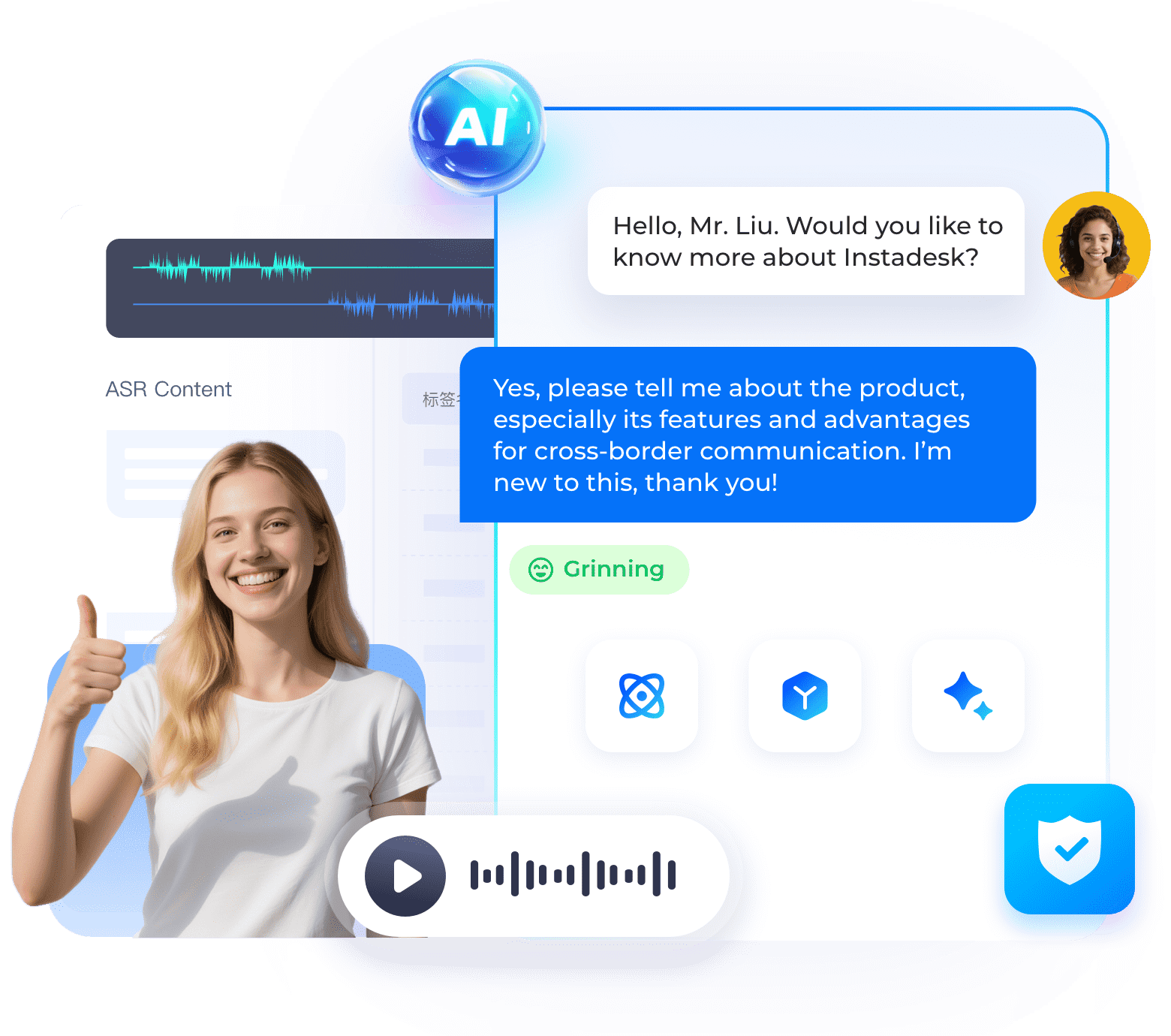
Instadesk took a different path. The company started as an AI technology provider in 2014. Every product built since then – ChatBot, VoiceBot, Call Center, Quality Inspection – was designed around AI as the central nervous system, not as a feature to be added later.
This article explains why traditional software struggles with AI, what an AI‑native architecture actually means, and how Instadesk delivers it.

How Traditional Software Got Here
Most customer service platforms began as ticketing systems or call routing engines. They were built in an era before large language models, before real‑time translation, before AI could understand intent instead of keywords.
Over time, these vendors added AI capabilities. They acquired chatbot companies. They plugged in third‑party NLP. They built “AI layers” on top of decade‑old code.
The result is functional but fragile. The AI can answer a simple FAQ, but it cannot reason across systems. It cannot learn from every conversation because the data is siloed. It cannot orchestrate a return that involves the CRM, the logistics API, and the payment gateway because those systems were never designed to talk to an AI agent.
A Southeast Asia e‑commerce brand experienced this firsthand. Their legacy platform had a chatbot, but it only worked on their website. WhatsApp inquiries still went to email. Response time was 12 hours. The AI could not access order data, so it could not answer “Where is my package?” They eventually replaced the entire stack with Instadesk.
That is the cost of bolted‑on AI.
What an AI‑Native Architecture Looks Like
An AI‑native contact center is built from the ground up with three principles.
First, a unified data layer. Every conversation – chat, voice, email, social – flows into the same data store. Customer history, order records, and past tickets are all accessible to every AI agent. No silos. No “this system does not talk to that system.”
Instadesk ingests data from 20+ channels into a single workspace. Agents see the full thread regardless of where the customer started. AI models train on the complete picture, not fragments.
Second, AI as the orchestrator, not the add‑on. In traditional software, the routing engine decides where to send a ticket. In an AI‑native system, AI agents decide what actions to take.
For example, when a customer asks to return a product, Instadesk’s AI agent checks the order date in the ERP, validates the return policy from the knowledge base, generates a shipping label via the logistics API, and updates the customer via WhatsApp – all without a human touching anything. The agent orchestrates across systems because the platform was built to allow that.
Third, continuous learning by design. Traditional AI models are trained periodically. An AI‑native system learns from every interaction, every hour of every day. Missed intents are caught and corrected. New phrasing is added automatically.
Instadesk’s quality inspection loops every conversation back into model training. The AI gets better at handling "Where’s my stuff?" in Tagalog or "¿Dónde está mi pedido?" in Spanish because it has seen thousands of real examples.
Three Ways Instadesk’s Architecture Differs from Legacy Vendors
1. Voice and chat share the same brain. Many vendors treat voice as a separate product, often acquired from another company. Instadesk’s VoiceBot and ChatBot share the same intent recognition engine, the same knowledge base, and the same customer memory. A customer can start on WhatsApp, switch to a phone call, and the AI does not lose context.
A Thai water utility deployed Instadesk’s voice agent to handle citizen inquiries. The system reduced average wait time from over 30 minutes to immediate response, handling 40+ concurrent calls. The same AI logic powers their web chat for bill payment questions.
2. One platform for inbound and outbound. Traditional setups separate customer service (inbound) from sales outreach (outbound). Instadesk runs both on the same infrastructure. The same voicebot that answers “What is my balance?” can also call customers about overdue payments or new promotions.
A Malaysian real estate developer used Instadesk’s outbound voicebot for lead qualification. The bot increased lead‑to‑appointment conversion to 15%. The same platform handles inbound inquiries for existing tenants.
3. Pay‑as‑you‑go, not per‑seat. Legacy vendors lock you into per‑agent subscriptions. You pay for idle seats during slow seasons. You pay overage fees when call volume spikes.
Instadesk charges per conversation or per minute. No minimum seats. No long‑term contracts. A free trial with 500 minutes is available. A fashion e‑commerce brand using Instadesk saved over $300,000 in first‑year operational costs compared to their previous per‑seat vendor.
What This Means for Your Business
Switching from a traditional platform to an AI‑native one is not just about better technology. It changes what your customer service team can do.
Your agents stop being data entry clerks. They no longer copy‑paste order numbers from one system to another. Instadesk’s agent assistant auto‑fills tickets, suggests responses, and translates conversations in real time.
Your customers stop repeating themselves. Because every channel shares the same memory, a customer can start on WhatsApp, continue on email, and finish on a call without ever saying "I already told the other agent."
Your compliance risk drops. Instadesk’s quality inspection monitors 100% of conversations, not a random sample. A Philippine bank using the platform passed a BSP audit with zero findings.
Your costs become predictable. Pay only for what you use. Scale up during Black Friday, scale down in January. No wasted spend on idle seats.
Real Results from Instadesk Customers
Tineco (smart home appliances): 100% inbound call coverage, 85% AI resolution rate, 93% quality inspection accuracy.
UniUni (logistics): 85% AI self‑service rate, 90%+ multilingual accuracy across 50+ languages, customer service efficiency doubled.
Imou (global smart home): 99.2% SLA compliance, customer satisfaction from 78% to 92%, agent capacity up 120%.
Southeast Asia e‑commerce leader: Response time from 12 hours to 8 minutes, $300,000+ first‑year savings.
Conclusion
Traditional customer service software was not built for AI. It was built for tickets and calls, with AI glued on later.
Instadesk was built as an AI company first. Every product, from chat to voice to quality inspection, shares the same intelligent core.
That is the difference between AI as a feature and AI as the foundation.
Start with a free trial. No credit card required.