You’ve heard it a hundred times. A voicebot picks up, and within three words, you know it’s a machine. The cadence is off. The tone never changes. There’s no warmth, no hesitation, no sense that anyone is actually listening.
Most customers don’t hang up because the bot couldn’t answer their question. They hang up because the voice itself feels wrong. It’s not just about information—it’s about connection.

What Is Emotional Voice AI?
Emotional voice AI is the technology that gives voicebots human-like inflection, rhythm, and emotional expression. It’s not just converting text to speech. It’s understanding when to pause, when to sound reassuring, when to inject urgency—and when to simply say “uh-huh” to show someone is listening.
Traditional text-to-speech sounds like a GPS: clear, efficient, mechanical. Emotional voice AI sounds like a person: imperfect, responsive, present.
The difference is subtle but unmistakable. One feels like a tool. The other feels like a conversation.
The Shift from TTS to Emotional AI
Traditional voice systems work in a straight line: words in, audio out. The voice never changes based on context, customer tone, or conversation flow. A frustrated customer hears the same flat delivery as someone who’s just made a purchase.
Emotional voice AI changes this. It builds from recordings of real human speech, learning the natural rhythm of conversation—the small pauses, the shifts in tone, the emotional color that makes spoken language human.
Some systems go further. With voice cloning technology, businesses can upload recordings of real sales reps, customer service agents, or even brand ambassadors. The AI learns their voice—their pacing, their warmth, their signature way of speaking—and uses it to represent the brand across every call.
Instadesk VoiceBot supports this capability. Clients can record and upload live voice samples. The system mimics the tone and intonation, creating a personalized voice that carries real emotion into every conversation. The result isn’t just a bot that answers questions. It’s a voice that represents the brand.
The Business Case for Sounding Human
Emotional voice AI isn’t a nice-to-have. It directly affects how customers respond.
When conversations feel human, customers stay engaged longer. They don’t rush to hang up. They listen. They trust. And that trust translates into measurable outcomes.
In marketing and invitation scenarios, businesses using emotionally intelligent voicebots see:
• 40% higher conversion rates—customers are more likely to respond positively when the voice feels familiar and trustworthy
• 65% higher customer satisfaction—people rate their experience higher when the interaction doesn’t feel automated
Longer conversations also drive results. When a customer stays on the line, they’re more engaged. More questions get answered. More objections get handled. More deals close.
Platforms like Instadesk VoiceBot pair emotional voice AI with full-duplex conversation and real-time personalization—creating interactions that don’t just sound human, but behave human too.
What Emotional Voice AI Makes Possible
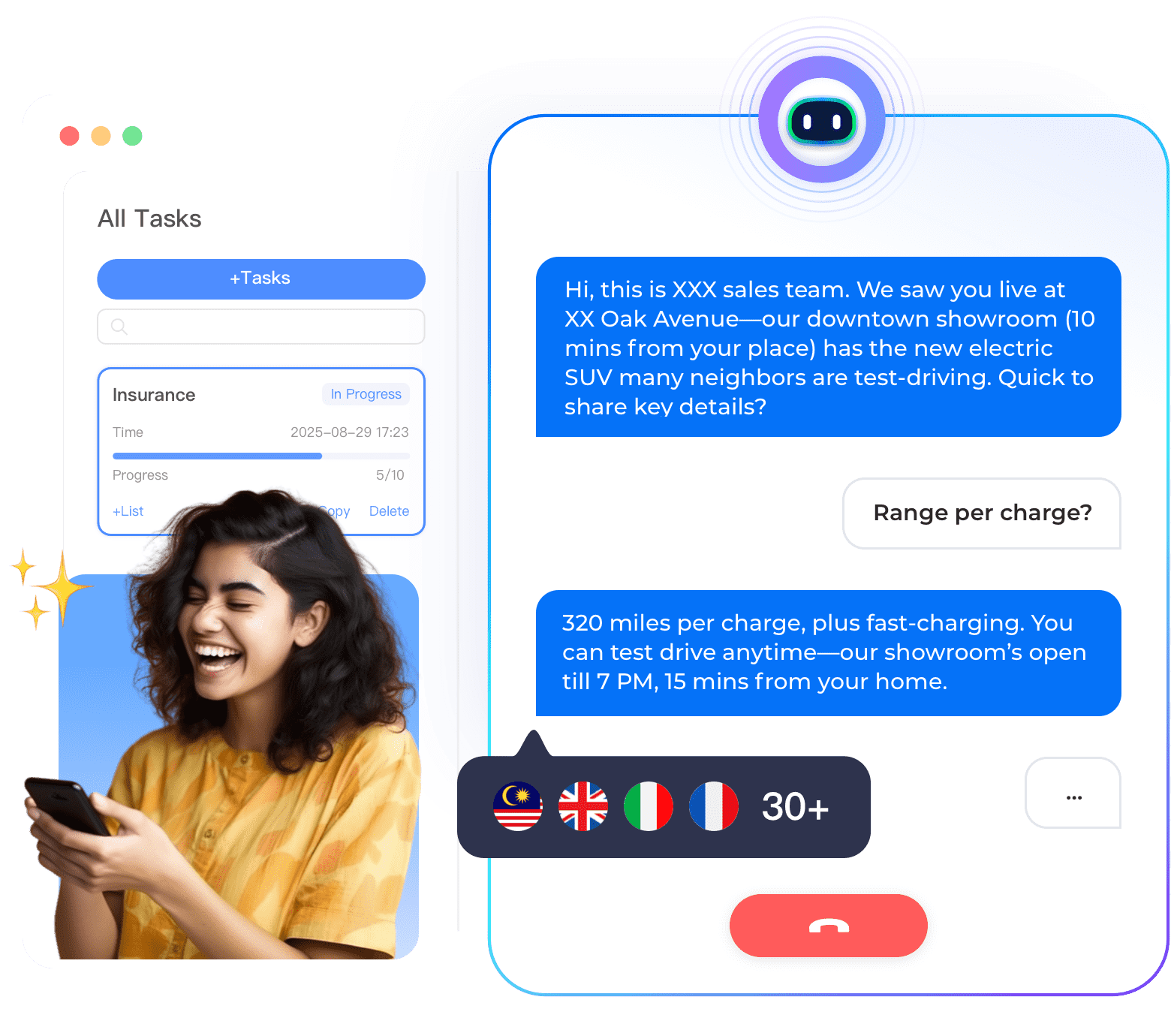
A marketing call. The bot reaches a customer who’s been browsing but hasn’t purchased. The voice is warm, conversational, slightly enthusiastic. The customer stays on the line, asks questions, and completes the purchase.
A service call. A customer calls with a billing issue, frustrated. The AI detects the tone and adjusts—calmer, slower, more empathetic. The customer’s frustration eases. The issue gets resolved.
A follow-up. After a purchase, the AI calls to satisfaction. The voice matches the brand’s friendly tone. The customer feels valued, not surveyed.
In each case, the voice itself is doing work. It’s building trust. It’s smoothing friction. It’s representing the brand in a way that feels genuine.
A Voice That Sounds Like You
Every brand has a personality. Some are friendly. Some are efficient. Some are warm. Whatever yours is, your AI voice should reflect it.
With emotional voice AI, brands can move beyond generic, mechanical voices and create something that sounds like them. Not just a voice that works—a voice that fits.
The technology is here. The data proves the impact. The question is whether your voicebot still sounds like one.