Voicebot for Call Centers
Every call your team can't answer fast enough is a customer who hangs up, calls a competitor, or opens a complaint ticket. Legacy IVR and understaffed queues can't scale with demand, so wait times grow and CSAT drops exactly when volume spikes. instadesk's voicebot answers every call instantly, resolves the routine ones without an agent, and hands the rest to your team with full context — live on your call center in days.
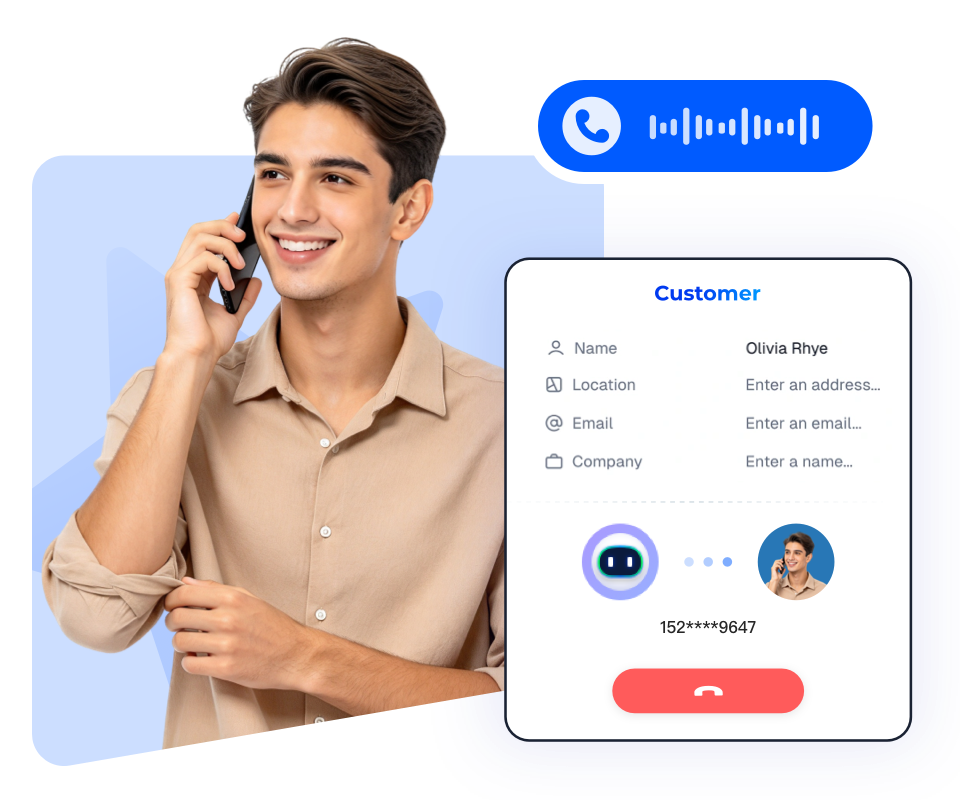
The Problem With Understaffed, Menu-Driven Call Centers
Call volume rarely arrives evenly; it spikes around promotions, outages, and peak seasons, right when staffing is already stretched thin. Because agent headcount can't flex up and down with demand, queues grow, hold times climb, and callers start abandoning before anyone picks up. That's the cause. The effect: lower CSAT, higher complaint volume, and revenue quietly lost to competitors who answered faster
Why Hiring More Agents Doesn't Scale With Call Volume
Adding agents to handle spikes means paying for idle capacity during quiet periods, so most call centers understaff for average volume instead of peak volume. That decision looks efficient on a budget sheet but breaks down the moment volume exceeds average — which is exactly when customers need help most. The fix is capacity that scales instantly with volume, not headcount that scales slowly with hiring cycles.
Hidden Cost of Long Hold Times and Abandoned Calls
Most call centers track average handle time closely but rarely calculate what abandoned calls actually cost in lost sales, renewals, or churned customers. Because that number stays invisible, the case for fixing it never gets urgent until CSAT scores or churn reports make the damage visible after the fact. Measuring abandonment rate against revenue is the first step to justifying automation before the damage shows up in quarterly numbers.
What Is a Voicebot for a Call Center?
A voicebot for a call center is AI software that answers or places phone calls, understands what the caller says in natural speech, and resolves the request directly — or hands it to an agent with full context if it can't. Because it plugs into your existing call center stack rather than replacing it outright, it adds capacity without forcing a rip-and-replace of your infrastructure.
Voicebot vs. IVR vs. Live Agent — Where Each One Fits
IVR only understands keypresses, so it can route calls but can't resolve anything beyond the simplest requests. A live agent can resolve almost anything but costs more per call and can't scale instantly with volume. A voicebot sits between the two — resolving routine requests at IVR-level cost with live-agent-level understanding, and escalating only what genuinely needs a human. That's why it doesn't replace agents, it filters what reaches them.
How a Voicebot Plugs Into an Existing Call Center Stack
Ripping out your ACD, CRM, or telephony system to add AI would be too risky and too slow for most call centers, so a voicebot has to work with what's already running. instadesk's voicebot connects directly to your existing ACD, CRM, and telephony/SIP setup, so it adds capacity on top of your current stack instead of requiring a full migration. That means go-live happens in days, not through a multi-month infrastructure overhaul.
See Your Call Center's Savings Before You Buy
Generic industry stats about AI voice bots don't tell you what your specific call center will save, because every center's call mix, volume, and handle time is different. instadesk's savings estimate uses your actual call volume and average handle time to project a realistic containment rate and cost impact — not a borrowed industry benchmark. That gives you a number you can actually take to your finance team, not just a marketing claim.
Estimated Containment Rate Based on Your Call Volume
The more repetitive and predictable your call types are — order status, balance checks, appointment changes — the higher the share of calls the voicebot can resolve without an agent. Tell us your monthly call volume and top call reasons, and we'll estimate what percentage instadesk can contain based on real deployment data from similar call centers. That number becomes your baseline for measuring ROI after go-live.
Projected Agent Hours Freed Per Month
Every call the voicebot resolves is agent time freed up for calls that actually need human judgment — but most teams never quantify that hour-by-hour. Based on your call volume and estimated containment rate, we calculate the agent hours reclaimed per month, translated into cost savings or reallocated capacity. That's the number that turns "AI sounds interesting" into a budget-approved decision.
How instadesk's Voicebot Works in Your Call Center

Inbound Call Handling — Answers, Understands, Resolves, or Escalates
When call volume spikes past what agents can handle, calls queue up and wait times climb regardless of how skilled your agents are. instadesk's voicebot answers every inbound call instantly, understands the request in natural speech, and resolves it directly when possible — no queue, no hold music. Calls that need a human are escalated immediately instead of bouncing through additional menus.
Try VoiceBot — Inbound Call
Outbound Campaigns — Reminders, Collections, Lead Qualification at Scale
Manually dialing reminder calls, collections follow-ups, or lead-qualification outreach doesn't scale past a certain volume, so most of it gets deprioritized or skipped entirely. instadesk's voicebot places these calls automatically at a volume no manual team could sustain, at consistent quality every time. That turns outbound campaigns from a resource bottleneck into a scheduled, automated workflow.
Try VoiceBot — Outbound Call
Warm Transfer With Full Context — Agents Never Ask "Can You Repeat That?"
When a bot-to-agent handoff loses context, the customer has to repeat everything they already said — which is one of the fastest ways to erode trust in automation. instadesk passes the full conversation history and detected intent to the agent at the moment of transfer, so the agent picks up mid-conversation instead of starting over. That single detail is often the difference between a smooth escalation and a frustrated customer.
Try Intelligent Ticket SystemReal Business Results From Real Companies
Response Time Cut From 12 Hours to Under 8 Minutes
A high-volume e-commerce support line couldn't keep up with order-status and return calls during peak season, stretching response times past half a day.
After deploying instadesk's voicebot, average response time dropped to under 8 minutes because routine queries were resolved instantly, without waiting for agent availability. That drop happened without adding a single seasonal hire.
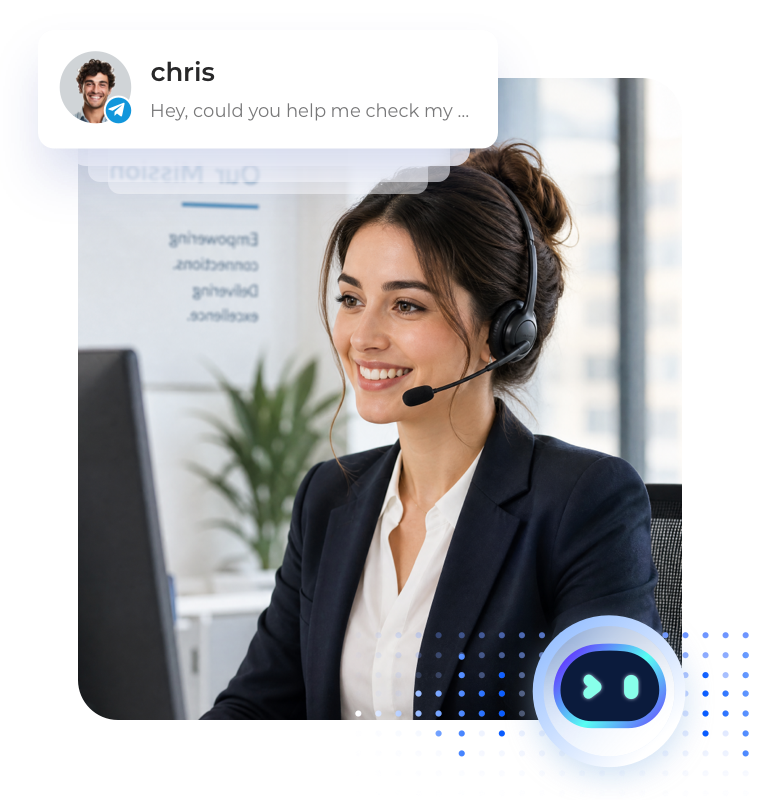
60% of Pre-Trip Inquiries Resolved Without an Agent
Repetitive pre-trip questions — baggage limits, check-in times, booking changes — consumed a disproportionate share of a travel call center's volume.
With instadesk resolving 60% of those inquiries automatically, agents were freed to focus on complex rebookings and complaints instead of routine questions. Call center capacity effectively grew without adding headcount.
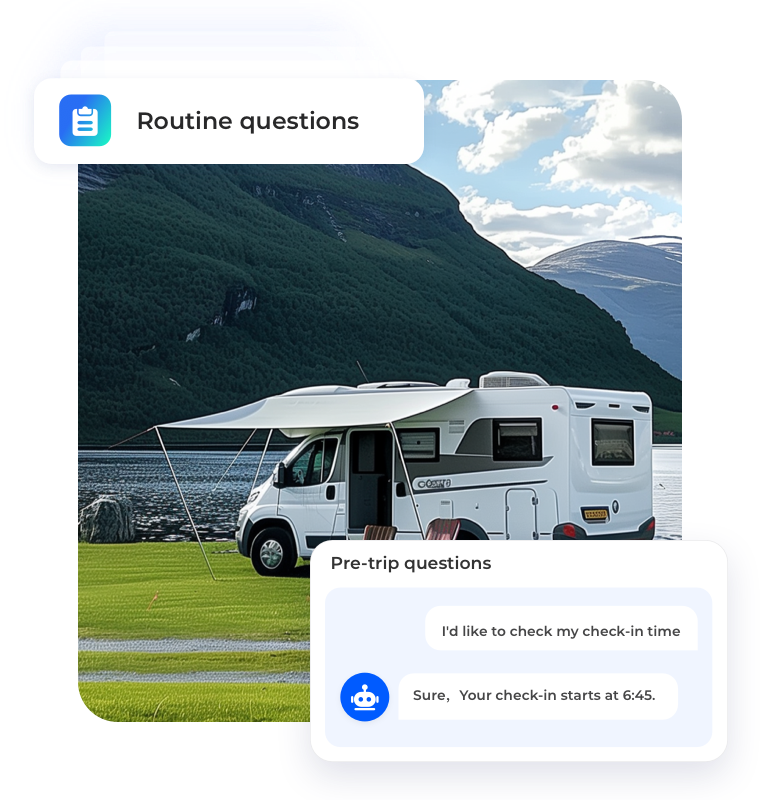
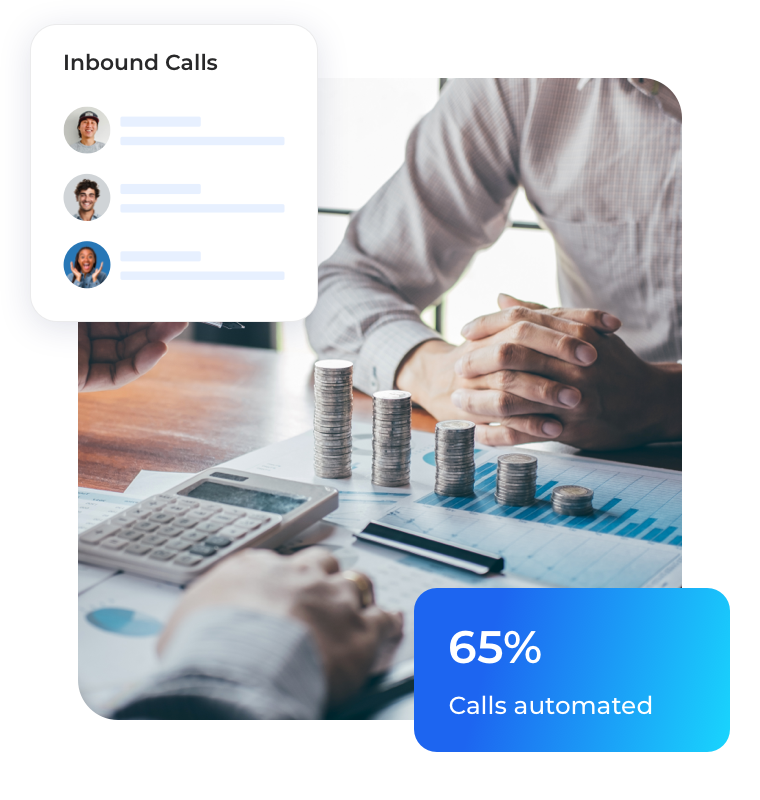
65% of Inbound Calls Fully Automated, Handling Time Cut 50%
A bank's call center was overwhelmed by balance checks, card-status calls, and routine service requests, driving up average handling time and queue length.
instadesk automated 65% of inbound calls end-to-end, cutting average handling time in half. That freed human agents to focus specifically on fraud cases and disputes that actually require judgment.
Voicebot vs. Traditional IVR vs. Live-Agent-Only Call Centers
| Factor | Traditional IVR | Live-Agent-Only | instadesk Voicebot |
|---|---|---|---|
| Understands free speech | No — keypress only | Yes | Yes |
| Cost per call | Low | High | Low to moderate |
| Scales instantly with volume | Yes, but limited logic | No — bound by headcount | Yes |
| Deployment speed | Days | Weeks to months (hiring) | Days |
| Error handling on complex requests | Poor — loops or drops call | Strong | Strong, with context-aware escalation |
| Availability | 24/7 | Business hours or shift-dependent | 24/7 |
Because IVR is cheap but can't actually resolve complex requests, and live agents resolve anything but can't scale instantly or cheaply, most call centers end up over-relying on one or the other. A voicebot removes that trade-off by combining IVR's cost structure with live-agent-level understanding — which is exactly why it fits between the two instead of replacing either outright.
Go Live in Days, Not Months
Connect Your Existing Telephony, CRM, and ACD
Without a direct connection to your current systems, the voicebot can't pull real customer data or route calls correctly — so integration comes first, not last. instadesk connects to your existing telephony, CRM, and ACD setup through a guided integration process, so the bot works with accurate, live data from day one.
Design Call Flows With Visual, No-Code Orchestration
Generic, one-size-fits-all call scripts don't match how your specific callers actually phrase requests, so an off-the-shelf bot underperforms from day one. instadesk's no-code visual orchestration builder lets your team map real call flows and intents without writing code, so the bot reflects how your call center actually operates.
Test, Launch, and Monitor With Real-Time Analytics
Launching a voicebot without visibility into how it's performing means problems go unnoticed until customers or agents flag them. instadesk gives you real-time call analytics from day one, so you can catch and correct gaps in containment or accuracy before they affect more callers.
Built for Regulated, High-Volume Call Centers
Security and Compliance
Call centers in finance, healthcare, and telecom handle sensitive personal and financial data on every call, and mishandling that data creates real legal and reputational risk. instadesk applies GDPR-aligned data handling and regional compliance controls across every deployment, so you can automate calls without introducing new compliance exposure. That means security is built into the platform, not something you have to bolt on afterward.
99.2% SLA Compliance Rate at Scale
Downtime on a call center's phone system means missed calls and lost revenue in real time, not a delayed dashboard metric. instadesk maintains a 99.2% SLA compliance rate even during high-volume periods, so your voicebot stays available exactly when call volume — and customer patience — is under the most pressure.
Frequently Asked Questions
A voicebot for a call center is AI software that answers or places phone calls, understands natural speech, and resolves requests directly instead of routing callers through fixed keypress menus. Because it plugs into your existing telephony and CRM, it adds capacity without replacing your current infrastructure. That's why it works alongside your agents rather than requiring a full system overhaul.
Your IVR can only match keypresses to pre-built paths, so any request outside that path stalls the call and drives callers to abandon. instadesk's voicebot understands free speech and resolves multi-step requests directly, which cuts abandonment instead of causing it. That difference is why it functions as a full IVR replacement, not just an add-on.
Containment rate depends on how repetitive and predictable your call types are, so results vary by call center — but similar deployments typically see 40–65% of inbound calls fully automated. Because that number is specific to your call mix, we calculate a custom estimate based on your actual volume and top call reasons. That gives you a realistic number instead of a generic industry average.
Pricing depends on call volume, the number of languages needed, and integration complexity, so costs vary by call center size and use case. Rather than guessing from a flat rate card, book a demo to get a custom estimate matched to your actual call volume and requirements.
Yes — instadesk's voicebot runs outbound campaigns for reminders, collections, and lead qualification on the same platform as inbound call handling. Because both directions share the same customer data and context, outbound calls can reference details from previous inbound interactions automatically. That keeps every customer touchpoint connected instead of siloed.
instadesk applies GDPR-aligned data handling and regional compliance controls across every deployment, since call centers handle sensitive personal and financial data by default. That means compliance is built into the platform architecture, not added as an afterthought, which reduces your risk as call volume scales.
Because setup uses no-code visual orchestration and guided integration with your existing telephony, CRM, and ACD, most call centers go live in days rather than months. The faster your systems are connected, the faster the voicebot starts handling real call volume with accurate data.
When a request falls outside the voicebot's scope, it escalates immediately to a live agent and passes the full conversation history and detected intent along with the transfer. That means your agent picks up mid-conversation instead of asking the customer to repeat everything, keeping the escalation smooth instead of frustrating.
Get Started in Minutes. Experience the Difference.



 English


WhatsApp Us Now !