
Introduction
Remember the last time you called a customer service line and heard "Press 1 for billing, press 2 for technical support"? You pressed buttons, waited on hold, repeated your account number, and finally reached a human who asked you to repeat everything again.
Those days are ending.
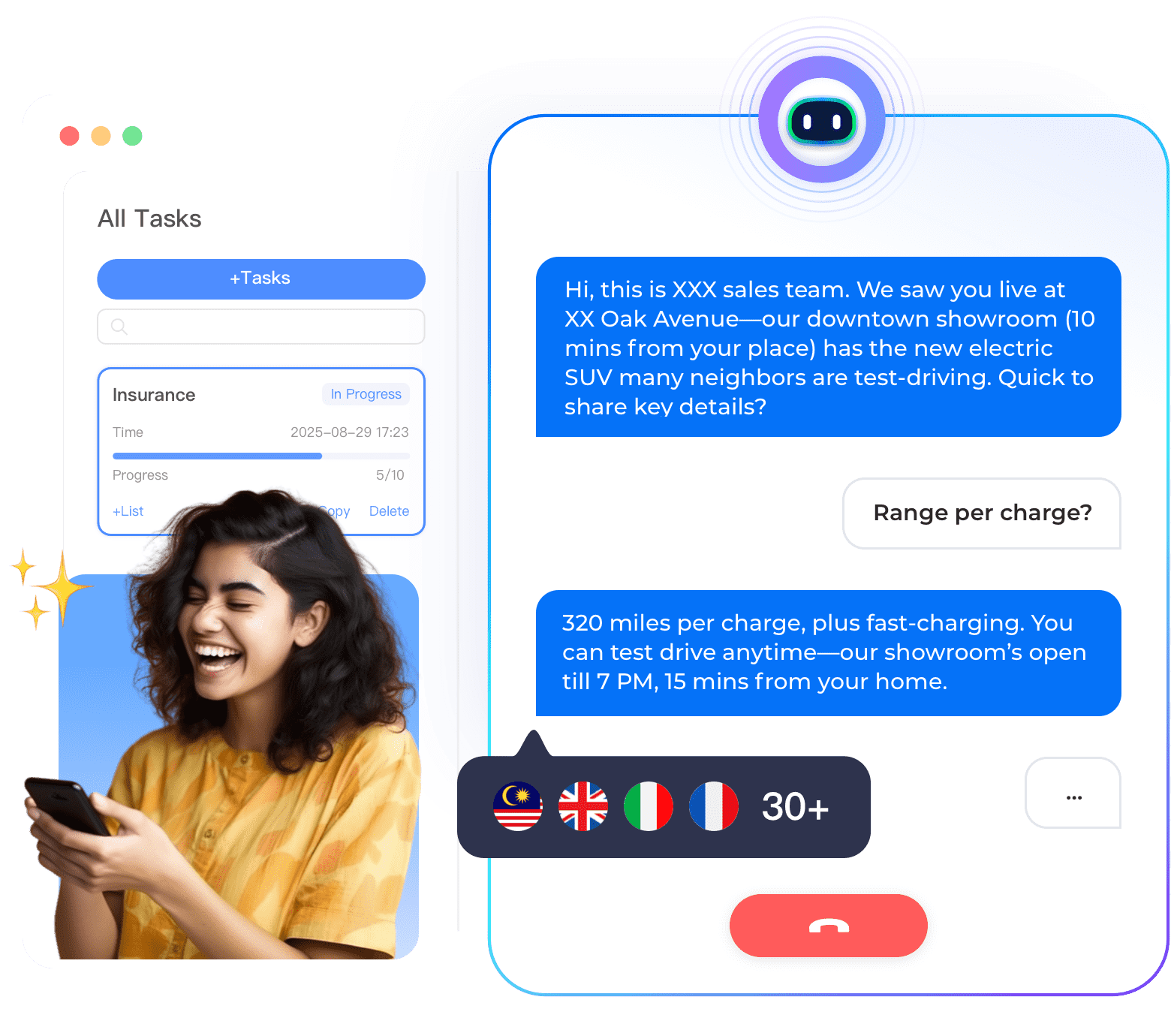
In 2026, the voice bot has evolved from a menu-reading IVR into an autonomous conversational agent. It doesn't just route your call — it solves your problem. It authenticates you, checks orders, processes returns, updates accounts, and even negotiates payment plans. All without transferring you to a human.
The numbers explain why this shift is accelerating. Gartner predicts conversational AI will reduce contact center labor costs by 80 billion by the end of 2026. Voice AI now handles calls for as little as 0.07–0.15 per minute,compared to 0.50–1.75 for human agents. A4−minute call costs 0.50–1.75 for human agents. A4−minute call costs 0.28–0.60 with AI versus$3–7 with a human.At scale,that gap transforms P&L statements. At scale, that gap transforms P&L statements.
But the real breakthrough is not cost — it's capability. Modern voice bots understand natural speech, maintain context across interruptions, detect emotion, and take action across business systems. They are no longer menu readers. They are digital workers.
What Makes a 2026 Voice Bot Different
The gap between traditional IVR and modern voice bots is structural, not incremental.
Conversational, not menu-driven. An IVR follows decision trees. Say "I want to buy something" works, but "I'm thinking about upgrading" fails. A modern voice bot understands intent, not just keywords. It handles paraphrasing, follow-ups, and mid-sentence changes.
Contextual memory, not zero-state. An IVR forgets everything once you move to the next menu. A voice bot remembers — you already authenticated, you mentioned a damaged item. It carries context across the whole conversation and even across channels.
Action-oriented, not information-only. An IVR can tell you your order status. A modern voice bot can check status, identify delays, offer a refund or replacement, process your choice, update the order, and send ation — all autonomously.
Natural synthesis, not robotic voice. Early TTS sounded like a computer reading a manual. Modern TTS uses neural networks to generate natural prosody, pauses, and even emotion. Customers often cannot tell they are talking to AI.
Where Voice Bots Deliver the Highest ROI
Not every call type is equally suited for voice AI. The highest ROI use cases share high volume, predictable structure, and clear action paths.
- Order and delivery status is the largest category for e-commerce and logistics. These questions are repetitive and perfectly suited for a voice bot integrated with tracking systems. One retailer reduced "Where is my order?" calls by 70% within two months.
- Authentication and verification consumes disproportionate agent time. Voice bots can handle this end-to-end using voice biometrics, then transfer verified customers to humans. Agents skip security questions and focus on problem-solving.
- Appointment scheduling and reminders for healthcare, automotive, and professional services. A voice bot that checks availability, books slots, sends invites, and handles cancellations pays for itself within weeks.
- Payment reminders and collections for financial services, telecom, and utilities. A voice bot can call customers, offer payment options, process payments via secure link, and update account status. Institutions report contact rate improvements of 30–50% with AI-led collections.
- Returns and refunds – the voice bot verifies purchase date, checks policy, generates a shipping label, sends it via SMS or WhatsApp, and updates inventory. Return processing time drops from minutes to seconds.
The Integration Imperative
A voice bot is only as good as the systems it connects to. It must integrate with order management, CRM, payment gateways, ticketing systems, and calendars. Platforms with pre-built connectors to Shopify, Salesforce, HubSpot, Zendesk, and others deliver faster time-to-value.
Why Voice Bots Fail (And How to Prevent It)
Three common failure modes.
- The bot is dropped onto broken knowledge. The single biggest predictor of success is the quality of your underlying knowledge. If product info is outdated or return policies have contradictions, the bot will confidently deliver wrong answers. Fix the knowledge base first.
- The bot can talk but cannot act. A voice bot that only answers questions reduces some volume but doesn't eliminate the need for humans. The ROI leap comes when the bot can act — process returns, update accounts, issue refunds. Invest in integrations before launching.
- No graceful handoff to humans. Customers don't mind talking to a bot — until the bot cannot solve their problem and has no way to get them to a person. Every deployment must include a fast, low-friction path to a human agent, with full conversation context preserved.
Instadesk Voice Bot: Built for Action
For enterprises ready to move beyond menu-driven IVR, Instadesk offers a modern voice bot platform designed for action.
Native omnichannel integration. The same voice bot works across phone calls, WhatsApp voice notes, and web-based voice interactions. Customers switch channels without losing context.
Agentic capabilities. Instadesk's voice bot doesn't just answer questions — it takes action. Integrated with order management, CRM, and payment systems, it can check status, process returns, issue refunds, book appointments, and update records autonomously.
Multilingual support. For enterprises operating across Asia, the bot handles English, Mandarin, Bahasa Malaysia, Thai, Vietnamese, and Tamil — including code-switching and regional dialects.
Real-time quality inspection. Every call is transcribed, analyzed, and scored against compliance and quality rules in real time. Supervisors receive s when a bot or human agent deviates from policy.
Local data residency. For regulated industries, Instadesk offers on-premise deployment and private cloud nodes in Singapore and Malaysia — keeping call recordings and transcripts within national borders.
Proven results. An e-commerce client reduced order status inquiries by 70% within two months. A logistics provider cut return processing time from eight minutes to under one minute, with 60% of returns handled entirely by the voice bot. A financial services client increased after-hours lead capture by 40% using proactive outbound voice campaigns.
Conclusion
The voice bot has grown up. The menu-reading IVR that frustrates customers is being replaced by autonomous agents that solve problems. The technology is ready, integrations are clearer than ever, and ROI is measurable within weeks, not months.
The question is no longer whether to deploy a voice bot, but what kind — a conversational FAQ machine that can only talk, or an autonomous agent that can act. That decision will determine whether your customers thank you or curse you.