Your customer starts on WhatsApp. When they don't get an immediate resolution, they send an email. Later, they call your support line. Three interactions, three channels—but for them, it's one problem. For your team, it's three disconnected tickets and a customer who has to repeat themselves every time.
This is the difference between multichannel and omnichannel. Multichannel means you're present on many channels. Omnichannel means those channels are connected—so the customer never has to start over.
An omnichannel AI agent unifies every customer touchpoint into a single, intelligent workspace. It remembers context across email, chat, social messaging apps, and voice.Every interaction feeds into the same history.

Core capabilities to look for
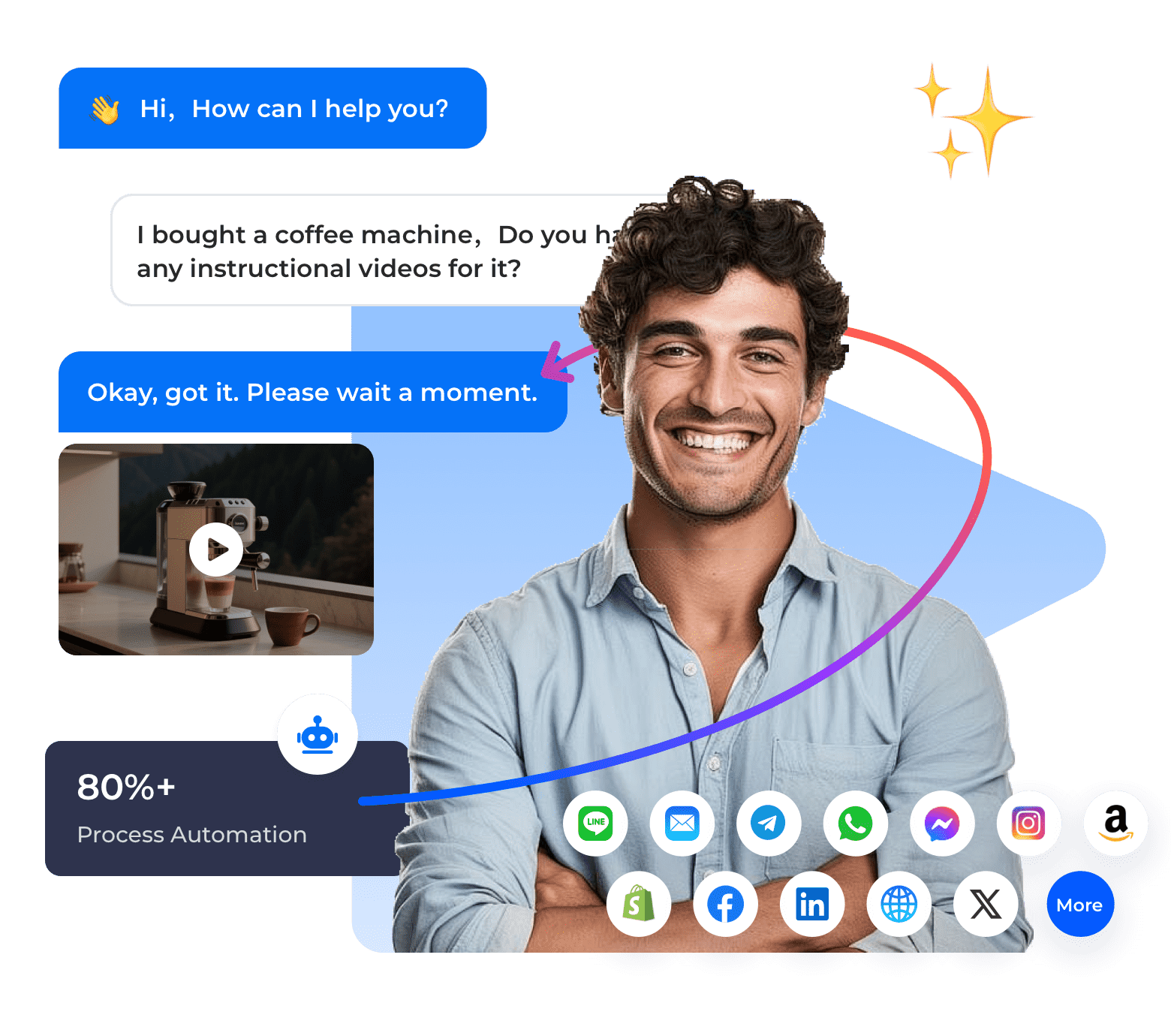
1. Channel coverage. The agent must connect to the channels your customers actually use: WhatsApp, Facebook Messenger, Instagram, Line, WeChat, email, live chat, and voice. A true omnichannel platform unifies 20+ major channels into one dashboard.
2. Real time translation. Serving customers in their native language isn't optional. The best agents provide real time translation across 100+ languages, handling mixed language conversations naturally.
3. Deep system integration. Seamless integration with your CRM and ERP lets the AI agent check order status, initiate returns, update inventory, and sync lead data. When this works, 80% or more of routine inquiries can be resolved without human intervention.
4. Multimodal understanding. Customers send screenshots, photos of damaged products, scans of receipts. A text only bot fails immediately. Modern agents can easily extract information from both textual and visual inputs.
5. Continuous learning. Once deployed, the agent shouldn't sit still. Robot operations automatically flag when training materials need updates, perform online knowledge disambiguation, and surface performance gaps. The system improves with every conversation.
How to deploy in days, not months
Traditional AI projects take months because they require custom development and IT backlogs. Modern platforms change that.
1. Start with pre built templates. Industry specific templates trained on real customer data—for manufacturing, e commerce, finance, or education—accelerate the journey from zero to one.
2. Use visual orchestration. Drag and drop interfaces let business teams design conversation flows without writing code. No waiting for developers.
3. Connect your systems. Pre built connectors link your CRM and ERP, giving the AI access to order histories and customer profiles so it can act, not just talk.
4. Test and iterate. Deploy to a small segment, monitor performance, and adjust. Changes take hours, not sprints. Within days, the agent handles real inquiries, learns, and improves.
Our philosophy
That's the philosophy behind our platform. When channels are unified, systems are connected, and agents learn continuously, customer service stops being a cost center and starts driving growth. At Instadesk, this is exactly how we approach customer service automation.