Conversational AI VoiceBot
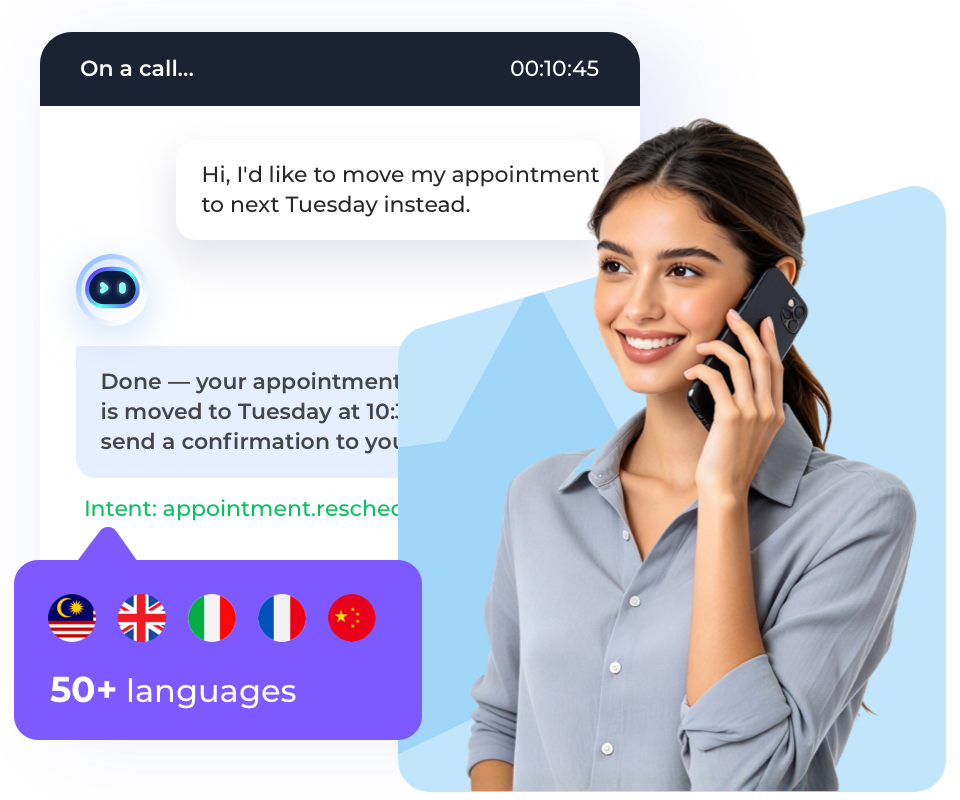
Every abandoned call from a frustrated IVR menu is a customer you almost lost. Legacy phone systems can't understand free speech — they force people through rigid button menus until they give up and hang up. instadesk's conversational AI voice bot listens, understands real intent, and responds like a trained agent — on inbound and outbound calls, in 50+ languages, live on your lines in days, not months.
The Problem With Traditional Phone Support
""Press 1 for billing, press 2 for support" was never designed for how people actually talk. When a caller's request doesn't fit a fixed menu tree, the system has no way to understand them — so it loops them back to the start or drops them into a hold queue. That's the cause. The effect: rising call abandonment, frustrated customers, and support tickets that should have taken 30 seconds instead taking three transfers.
Why "Press 1 for Billing" Fails Modern Customers
Rigid IVR menus can only match keypresses to pre-built paths, so any request slightly outside that path breaks the flow. The result is customers repeating themselves to multiple agents or giving up entirely. Fix it by replacing keypress logic with a system that understands what the caller actually says, the first time.
The Real Cost of Missed and Abandoned Calls
Every missed or abandoned call is a lead, renewal, or support case that quietly walks away — and most businesses never measure how much revenue that adds up to. Because there's no visibility into the cost, the problem stays invisible until churn or lost sales show up in the numbers. Measuring abandoned-call rate is the first step to justifying the fix.
What Is a Conversational AI Voice Bot?
It's software that holds a real, spoken conversation with a caller — understanding free-form speech, reasoning about intent, and replying in a natural voice instead of forcing them through a keypress menu. Because it understands language rather than button sequences, it resolves multi-step requests in a single call instead of routing callers through multiple systems.
Keypresses and fixed phrases
An IVR only recognizes keypresses or a narrow set of fixed phrases, so it breaks the moment a request gets complex. It gives you phone access without understanding.
Text understanding, no voice
A chatbot understands typed language but can't hold a live spoken conversation on a phone call. It gives you understanding without a voice.
Speech + real-time reasoning
A conversational AI voice bot combines speech understanding with real-time reasoning, so it carries an entire phone conversation the way a trained human agent would. That's why it replaces IVR instead of just supplementing it.
The 5-Step Voice Pipeline
When a customer speaks, each step happens in real time — the caller experiences it as one smooth conversation rather than a chain of separate systems. That's what makes the interaction feel human instead of robotic.
ASR
The bot converts the caller's spoken speech into text
NLU
It interprets what the caller actually means
LLM
A large language model reasons through the right response
TTS
The response is converted back to natural, human-like speech
Action
It triggers the right action — updating a CRM record or booking a slot
How instadesk VoiceBot Works

24/7, Human-Like, No Agent Required
When a customer calls outside business hours or during a spike in volume, there's normally no one to pick up — so the call is lost. instadesk's inbound voice bot answers every call instantly, day or night, and resolves common requests without waiting for a human to be available.
Fewer missed calls and consistent service regardless of time zone or call volume.

Automated Calls, Reminders, and Lead Qualification at Scale
Manual outreach—dialing hundreds of leads or sending reminders one by one—doesn't scale, so it gets skipped or pushed onto overworked agents. Instadesk's outbound voice bot automatically handles reminders, collections, and lead qualification at a volume no human team can match
Frees your team to focus only on the calls that actually need a person.

Smart Routing + Auto-Ticket Creation
Not every call should be fully automated — when the bot detects a request outside its scope, it needs to hand off cleanly instead of trapping the caller in a loop. instadesk automatically routes the call to the right agent and creates a ticket with full conversation context attached. That means your agents pick up exactly where the bot left off, with zero repeated information from the customer.
Agents pick up exactly where the bot left off, with zero repeated information.
Core Voice Technology Under
the Hood
Book a Demo Speech Synthesis With Near-Human Voice Cloning
Robotic-sounding voice bots erode trust before the conversation even starts, because customers instinctively distrust a voice that sounds synthetic. instadesk's text-to-speech engine scores 4.2 on the Mean Opinion Score (MOS) scale, close to natural human speech quality. That means callers stay engaged and complete the interaction instead of asking to be transferred to "a real person."
50+ Language Speech Recognition
Global businesses lose customers the moment their support can't understand a caller's language or accent. instadesk recognizes speech across 50+ languages at 90%+ accuracy, so a customer in Karachi, Dubai, or Manila gets the same quality of understanding. The result is one voice bot deployment instead of separate systems per region.
Multi-Turn Intent Recognition
Basic bots forget what was said two sentences ago, forcing customers to repeat themselves. instadesk's bot tracks context across the entire call, so if a caller says "actually, change that to next Tuesday," it updates the right detail without restarting the conversation. That context-awareness is what separates a real conversational AI voice bot from a scripted phone tree.
Real Business Results From Real Companies
Response Time Cut From 12 Hours to Under 8 Minutes
A growing e-commerce brand couldn't keep up with order-status and returns calls during peak season, so response times stretched past half a day.
The voice bot handled routine queries instantly, 24/7. Average response time dropped to under 8 minutes because the bot resolved queries instantly — without the brand hiring seasonal call staff. Customers got faster answers without the brand hiring seasonal call staff.
60% of Pre-Trip Inquiries Automated, Agent Turnover Dropped 35%
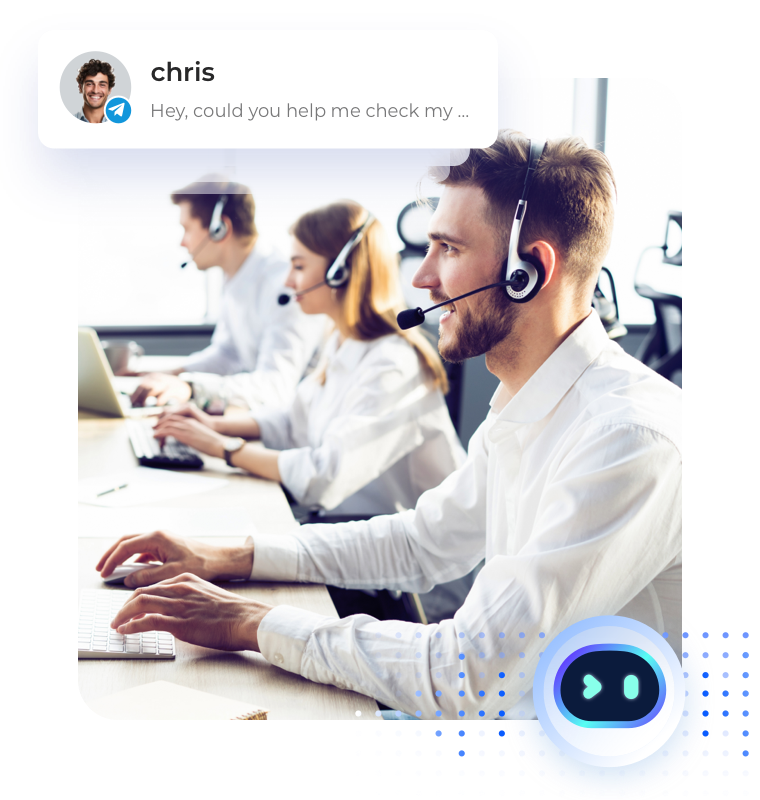
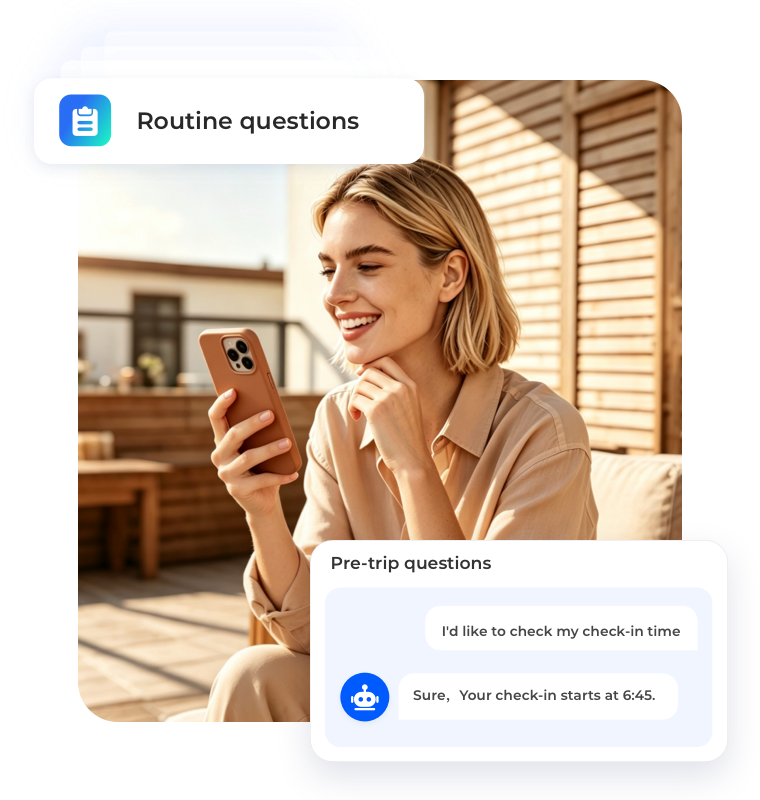
Repetitive pre-trip questions — baggage limits, check-in times, booking changes — were burning out a travel company's support team, driving high agent turnover.
With instadesk's voice bot handling 60% of those inquiries automatically, agents were freed to handle complex cases only, and turnover dropped 35%. Fewer repetitive calls meant a more sustainable support team.
65% of Inbound Calls Fully Automated, Handling Time Cut 50%
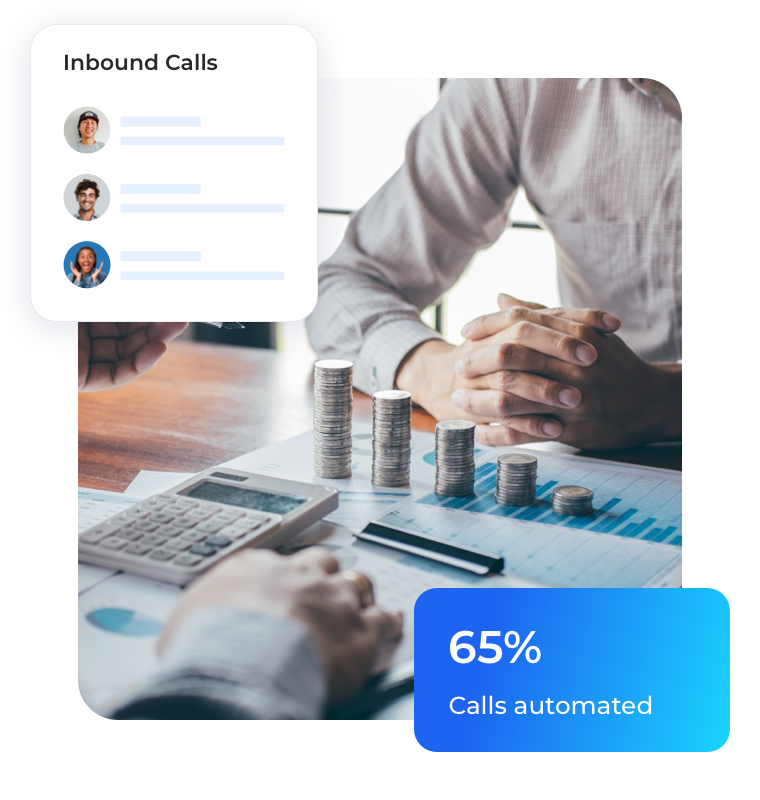
A bank's call center was overwhelmed by balance checks, card status, and routine service calls, driving up handling time and wait queues.
instadesk automated 65% of inbound calls end-to-end, cutting average handling time in half. That freed human agents to focus on fraud cases and complex disputes that actually need judgment.
Conversational AI Voice Bot vs. IVR vs. Basic Chatbot
| Capability | Traditional IVR | Basic Chatbot | instadesk AI Voice Bot |
|---|---|---|---|
| Understands free speech | No — keypress only | Text only, no voice | Yes — full natural speech |
| Works on phone calls | Yes, but rigid | No | Yes |
| Holds multi-turn context | No | Limited | Yes |
| Language coverage | Usually 1–2 | Varies | 50+ languages |
| Escalates with full context | No | Rarely | Yes — auto ticket + context handoff |
| Available 24/7 | Yes, but limited logic | Yes | Yes, with human-level understanding |
Because IVR and basic chatbots each solve only half the problem — either phone access without understanding, or understanding without voice — most businesses end up stitching together multiple tools. A conversational AI voice bot removes that gap by handling both in one system.
Where Conversational AI Voice Bots Deliver the Most Value
Order Tracking, Returns, Peak-Season Overflow
Seasonal spikes overwhelm support teams right when customers need answers fastest, causing exactly the delays that drive complaints. The voice bot absorbs that overflow instantly, so peak-season volume no longer means peak-season wait times.
Balance Inquiries, Fraud Triage, Compliance Calls
Routine balance and card-status calls consume agent time that should go to fraud and dispute cases needing real judgment. Automating the routine calls means fraud and compliance calls get faster, more focused human attention.
Booking Changes, Delivery Updates
Booking changes and delivery-status questions spike unpredictably around weather events, holidays, and delays, which floods phone lines exactly when customers are most anxious. The voicebot absorbs that spike instantly, keeping wait times flat even during disruptions.
Plan Changes, Tech Support Triage
Plan-change requests and basic tech troubleshooting make up a large share of telecom call volume, but rarely need a specialist. Automating the triage step routes only the calls that truly need an engineer, cutting resolution time for everyone.
Getting Started — From Setup to Live Calls
Three steps from connection to production — no rip-and-replace, no multi-month overhaul.
Connect Your Phone Lines and CRM/ERP
Without a direct connection to your existing systems, the bot can't pull real customer data or update records — so integration comes first. instadesk connects to your phone lines and CRM/ERP in a guided setup, so the bot works with live, accurate data from day one.
Design Call Scripts and Intent Flows
Generic scripts don't match how your specific customers ask questions, so a one-size-fits-all bot underperforms. instadesk's visual orchestration builder lets your team map real call flows and intents without writing code, so the bot reflects how your business actually talks to customers.
Test, Launch, and Monitor
Launching without visibility means problems go unnoticed until customers complain. instadesk gives you real-time call analytics from day one, so you can catch and fix gaps in the bot's responses before they affect more customers.
Security, Compliance & Reliability
Data Handling and Regional Compliance
Customer call data includes sensitive personal and financial details, and mishandling it creates real legal and trust risk. instadesk handles data with GDPR-aligned practices and regional compliance controls, so you can deploy confidently across markets with different regulatory requirements.
99.2% SLA Compliance Rate
Downtime on a phone system means missed calls and lost revenue in real time, not just a delayed dashboard. instadesk maintains a 99.2% SLA compliance rate, so your voice bot stays available exactly when your customers are calling.
Your Questions, Answered
A conversational AI voice bot is software that understands spoken language and holds a real phone conversation, instead of relying on keypress menus. Because it processes speech and intent directly, it can resolve complex, multi-step requests in one call. That makes it a direct replacement for rigid IVR systems, not just an add-on.
IVR only understands keypresses or a narrow set of fixed phrases, so it breaks down the moment a caller's request doesn't match a pre-built path. A conversational AI voice bot understands free speech and reasons about intent in real time, so it handles unpredictable requests without forcing the caller into rigid menus. That's why it reduces abandoned calls where IVR increases them.
Yes — instadesk's voice bot answers inbound calls 24/7 and can also place outbound calls for reminders, collections, and lead qualification. Because both directions run on the same platform, your call data and customer context stay unified. That means outbound follow-ups can reference details from a previous inbound call automatically.
instadesk's voice bot recognizes speech across 50+ languages at 90%+ accuracy. Because language coverage is built in rather than added per region, you can deploy one system globally instead of managing separate tools per market.
Pricing depends on call volume, languages needed, and integration complexity, so costs vary by business size and use case. Rather than guessing from a generic rate card, book a demo to get a plan matched to your actual call volume and requirements.
Because setup uses a no-code visual orchestration builder and guided CRM/phone integration, most businesses can go from setup to live calls in days rather than months. The faster you connect your systems, the faster the bot starts handling real calls with accurate data.
instadesk handles customer call data with GDPR-aligned practices and regional compliance controls built into the platform. That means sensitive information is protected by design, not bolted on afterward, reducing your compliance risk as you scale.
When the bot detects a request outside its scope, it automatically escalates to a human agent and creates a ticket with the full conversation context attached. That means your agent picks up exactly where the bot left off, so the customer never has to repeat themselves.
Get Started in Minutes. Experience the Difference.



 English


WhatsApp Us Now !