Voice Bot with 30+Language Support:Reaching Global Gaming Audiences
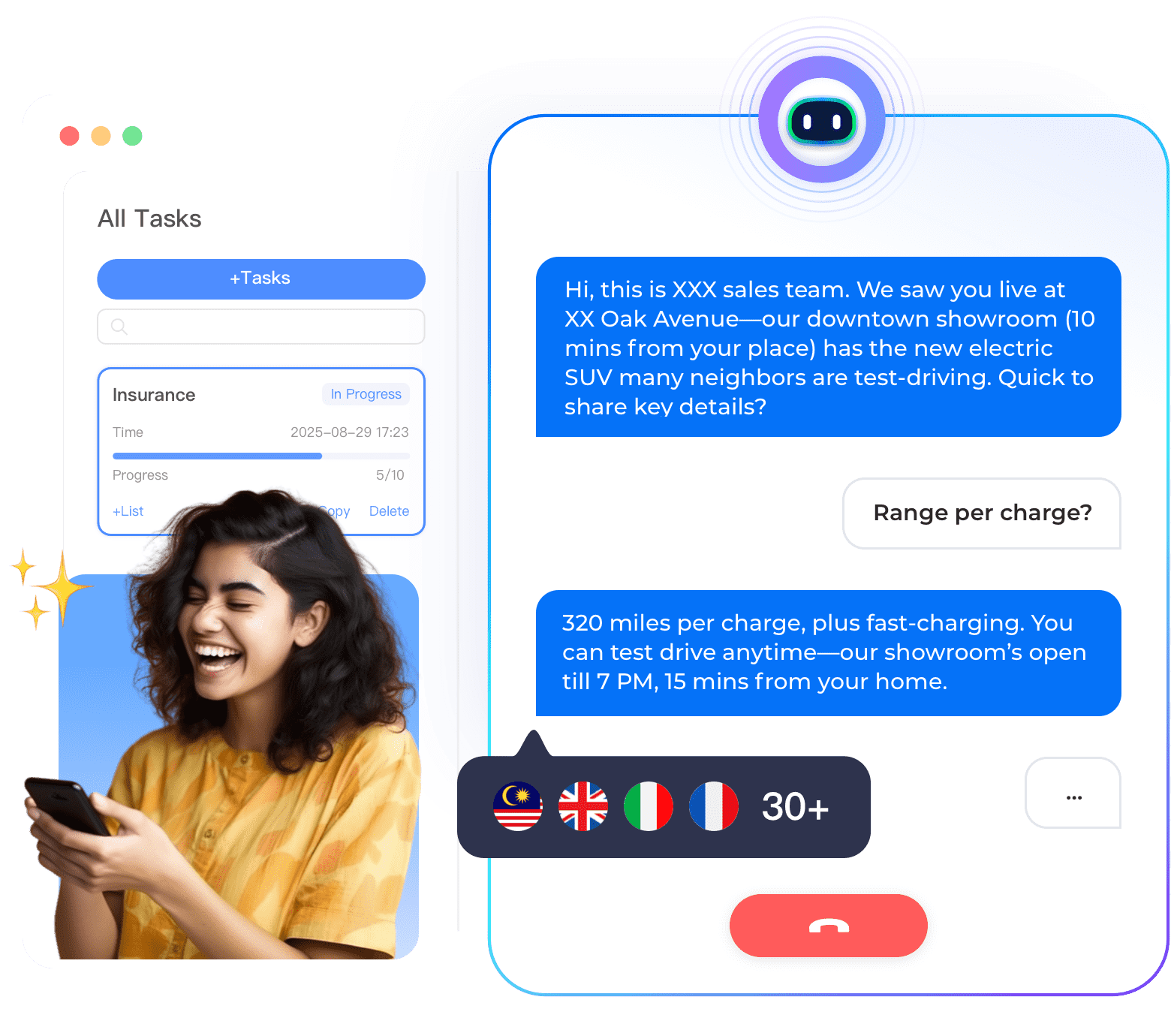
Gaming companies operate in a global market where players speak dozens of languages.A voice bot that supports 30+languages enables developers and publishers to engage players in their preferred language–whether for customer support,account recovery,or in-game assistance.This guide explores why multilingual voice bots are essential for global gaming and what to look for in a solution.

Why Gaming Needs Multilingual Voice Support
The gaming audience is inherently global.A single title may attract players from Asia,Europe,North America,and South America–each expecting support in their native language.
· Player satisfaction: Players are more satisfied and loyal when they can communicate in their own language.Language barriers create frustration and churn.
· Support efficiency: Multilingual voice bots handle inquiries in multiple languages without requiring multilingual agents,reducing staffing costs and wait times.
· Market expansion: Entering new regions becomes seamless when your support infrastructure already speaks the local language.
· Competitive advantage: Many gaming companies still limit support to English or a few major languages.Multilingual support differentiates your brand.
Key Capabilities to Look For
· Comprehensive language coverage: 30+languages including major gaming markets–English,Spanish,Mandarin,Japanese,Korean,German,French,Portuguese,Arabic,and more.
· Regional variations: Support for regional dialects(European vs.Brazilian Portuguese,Latin American vs.European Spanish)ensures natural conversations.
· Accurate speech recognition: Understand spoken language accurately across different accents and speaking styles.
· Natural text-to-speech: Voices should sound natural,friendly,and engaging–not robotic.
· Consistent intent recognition: The same player intent(e.g.,"I lost my account")must be recognized accurately across all supported languages.
· Seamless escalation: When complex issues require human agents,transfer should preserve language context.
How Multilingual Voice Bots Serve Gaming Companies
| Use Case | Benefit |
|---|---|
| Customer support | Instant help in player's language, reducing tickets |
| Account recovery | Language-appropriate verification flows reduce friction |
| In-game assistance | Voice commands in native language enhance gameplay |
| Outbound promotions | Reach players in their language for new game announcements |
| Surveys and feedback | Gather authentic feedback from global players |
Use Case Benefit
· Customer support Instant help in player's language,reducing tickets
· Account recovery Language-appropriate verification flows reduce friction
· In-game assistance Voice commands in native language enhance gameplay
· Outbound promotions Reach players in their language for new game announcements
· Surveys and feedback Gather authentic feedback from global players
How Instadesk's Voice Bot Delivers 30+Language Support for Gaming
· 30+languages covered: All major gaming markets–English,Spanish,Mandarin,Japanese,Korean,German,French,Italian,Portuguese,Arabic,Hindi,and more.
· Regional variations: Distinguishes between European and Latin American Spanish,European and Brazilian Portuguese,and other variants.
· Gaming-trained AI: Models understand gaming terminology–level,loot,raid,patch,lag,server,account–in every supported language.
· Natural voice quality: Text-to-speech voices are natural and engaging,suitable for immersive gaming experiences.
· Real-time translation: Agents can assist players in any language with automatic translation,even if they don't speak it.

Case Study: Global Game Studio Expands to 12 New Markets
A mobile game developer with 50 million downloads deployed Instadesk's multilingual voice bot to support players across Asia,Europe,and the Americas.Results after 6 months:
· Support tickets decreased by 35% as players self-served in their language.
· Player satisfaction among non-English speakers increased by 40%.
· Market expansion accelerated–entered 12 new markets without hiring local support staff.
· Retention improved by 20% among players who used the multilingual voice bot.
Implementation Considerations
· Start with high-volume languages:Deploy initially for languages your players use most,then expand.
· Test with native speakers:Verify naturalness and accuracy before full deployment.
· Monitor language-specific metrics:Track satisfaction and resolution rates by language to identify additional training needs.
· Plan for cultural nuance:Language is more than words–cultural expectations around tone and formality vary.Train models accordingly.
Conclusion
For global gaming companies,a voice bot with 30+language support delivers higher player satisfaction,lower support costs,and faster market expansion.Instadesk's purpose-built solution combines gaming-trained AI,natural voice quality,and seamless integration.Start with a free trial.