Telecom operators rely on automated systems to handle high call volumes efficiently. Two common technologies are Interactive Voice Response (IVR) and voicebots. While both automate phone interactions, they operate very differently—in capability, customer experience, and business impact. Understanding the difference helps operators choose the right tool for their customer service strategy.

What is IVR?
Interactive Voice Response (IVR) is a menu-based system that allows callers to interact with a computerized phone system using touchtone keypad inputs or simple voice commands. IVR directs callers to the appropriate department or provides basic information through prerecorded messages.
What is a voicebot?
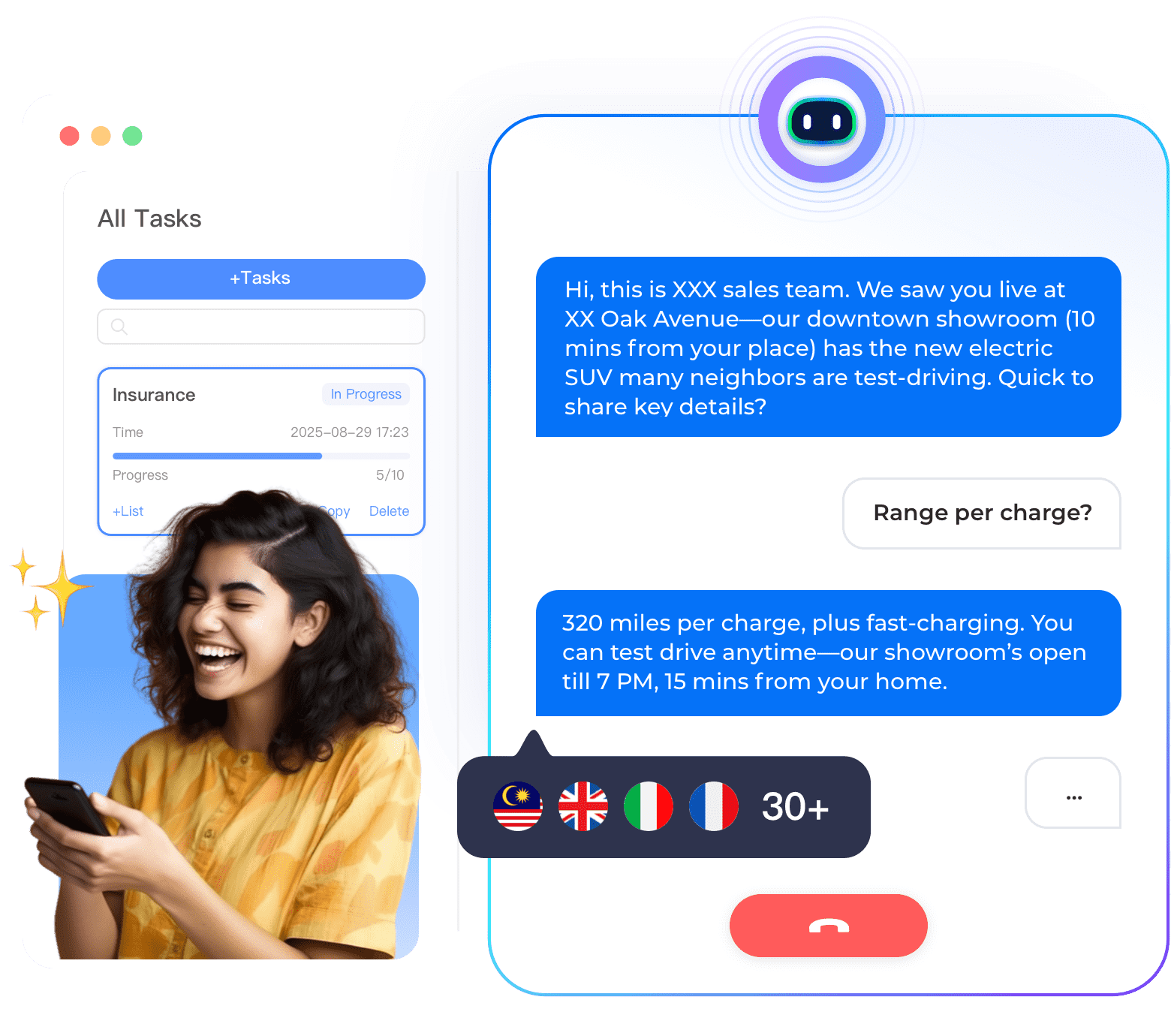
A voicebot is an AI-powered conversational agent that uses natural language processing (NLP) to understand spoken language, interpret intent, and conduct two-way conversations. Voicebots can answer complex questions, complete transactions, and handle multi-turn conversations—all through natural speech.
Key differences between IVR and voicebot
Aspect |
IVR |
Voicebot |
| Interaction style | Menu-based; caller selects options | Conversational; caller speaks naturally |
| Understanding | Limited to menu options | Understands intent, handles variations |
| Capabilities | Basic routing, simple information | Complex inquiries, transactions, multi-turn conversations |
| Customer experience | Can be frustrating—"Press 1 for billing" | Natural, engaging—"I need to check my bill" |
| Flexibility | Rigid; requires menu updates for changes | Flexible; adapts to how customers speak |
| Technology | Touchtone, basic speech recognition | NLP, machine learning, generative AI |
| Implementation | Simple, well-established | More complex, but increasingly accessible |
When to use IVR
IVR remains useful for simple, predictable use cases:
Department routing:
Direct callers to the right team—sales, support, billing.
Basic information:
Provide store hours, account balance, payment due date.
Self-service options:
Allow callers to pay bills or check order status via automated menus.
After-hours coverage:
Offer limited options when agents are unavailable.
When to use voicebots
Voicebots are better suited for more sophisticated interactions:
Complex inquiries:
Answer questions about plan details, billing explanations, technical issues.
Multi-turn conversations:
Handle back-and-forth without forcing callers to repeat themselves.
Transaction completion:
Process payments, change plans, schedule appointments.
Personalized service:
Reference account data to provide tailored answers.
Emotional detection:
Detect frustration and adjust tone or escalate appropriately.
Can they work together?
Yes. Many telecom operators use both in a hybrid approach:
IVR handles initial routing: “Press 1 for billing, 2 for technical support.”
Voicebot handles the conversation: Once routed, a voicebot conducts natural conversation to resolve the issue.
Escalation to human: If the voicebot can’t help, transfer to a human agent with full context.
How Instadesk delivers voicebot capabilities for telecom
Instadesk’s voicebot platform is purpose-built for telecom operators:
Natural conversation:
Customers speak naturally—no menus, no “press 1.”
Telecom-trained AI:
Understands industry terminology—data plans, roaming, throttling, outages.
Integration with billing systems:
Access real-time account data for personalized answers.
Seamless handoff:
When needed, transfer to human agents with full conversation context.
24/7 availability:
Voicebots handle calls anytime, reducing after-hours support costs.
Conclusion
IVR and voicebots serve different purposes in telecom customer service. IVR is effective for simple routing and basic self-service, while voicebots enable natural, conversational interactions for complex inquiries. Many operators find success combining both—using IVR for initial routing and voicebots for deeper engagement. Instadesk’s voicebot platform delivers the advanced capabilities telecom operators need to meet rising customer expectations.