
The Old Playbook Is Worn Out
For years, customer service followed a simple rhythm. Wait for the phone to ring. Pick it up. Solve whatever came in.That rhythm worked when customers had fewer choices. Now they have endless alternatives.
People expect more. They want fast answers. They want personal treatment. They want to feel like the business already knows them.They definitely do not want to repeat themselves. They do not want to wait in digital lines. And they do not want to do the heavy lifting when the company already has all their information.
A clear pattern is emerging. Service leaders are realizing that waiting for customers to complain is a losing strategy.The question is no longer "How fast can we respond?" It is "Why didn't we catch this earlier?" Instadesk helps businesses answer that second question.
How Most Service Teams Still Operate
Walk into most customer service operations today. The pattern looks familiar.
A customer runs into an issue. They reach out through email, chat, or phone. Someone responds. If that response misses the mark, the case moves to another person or another queue.The team works through the pile. One call at a time. One ticket after another.
This approach has obvious flaws.
The customer has to notice something is wrong before anyone helps. Agents spend hours on the same basic questions. Issues drift between departments, losing context with every transfer. Fast resolution depends on luck as much as skill.
Even when this model runs smoothly, it is still designed around waiting for breakdowns.A home appliance company called Tineco felt this pain directly. As their business grew, so did their call volume. Their old system had no AI support. Agents handled everything manually. Response times dragged. Customers grew frustrated.
The reactive model was creaking under pressure.

Why the Old Way Is Failing
This is not just about internal inefficiency. Customer expectations have changed.
People now compare every service experience to the best ones they have had. A slow, repetitive call center feels ancient next to an app that predicts what they need.Service teams are stuck in the middle. Call volumes spike without warning. Agent turnover stays high. Training new people eats up weeks or months.
An e-commerce company in Southeast Asia lived this reality. Before automation, their average response time stretched to 12 hours. Customers abandoned questions. Agents burned out on endless tracking requests.
The reactive model simply could not keep up.When service only starts after a customer asks for help, it is always behind. Teams can sprint, but they cannot get ahead of the incoming wave.
What a Proactive Model Looks Like
Proactive service flips the script.
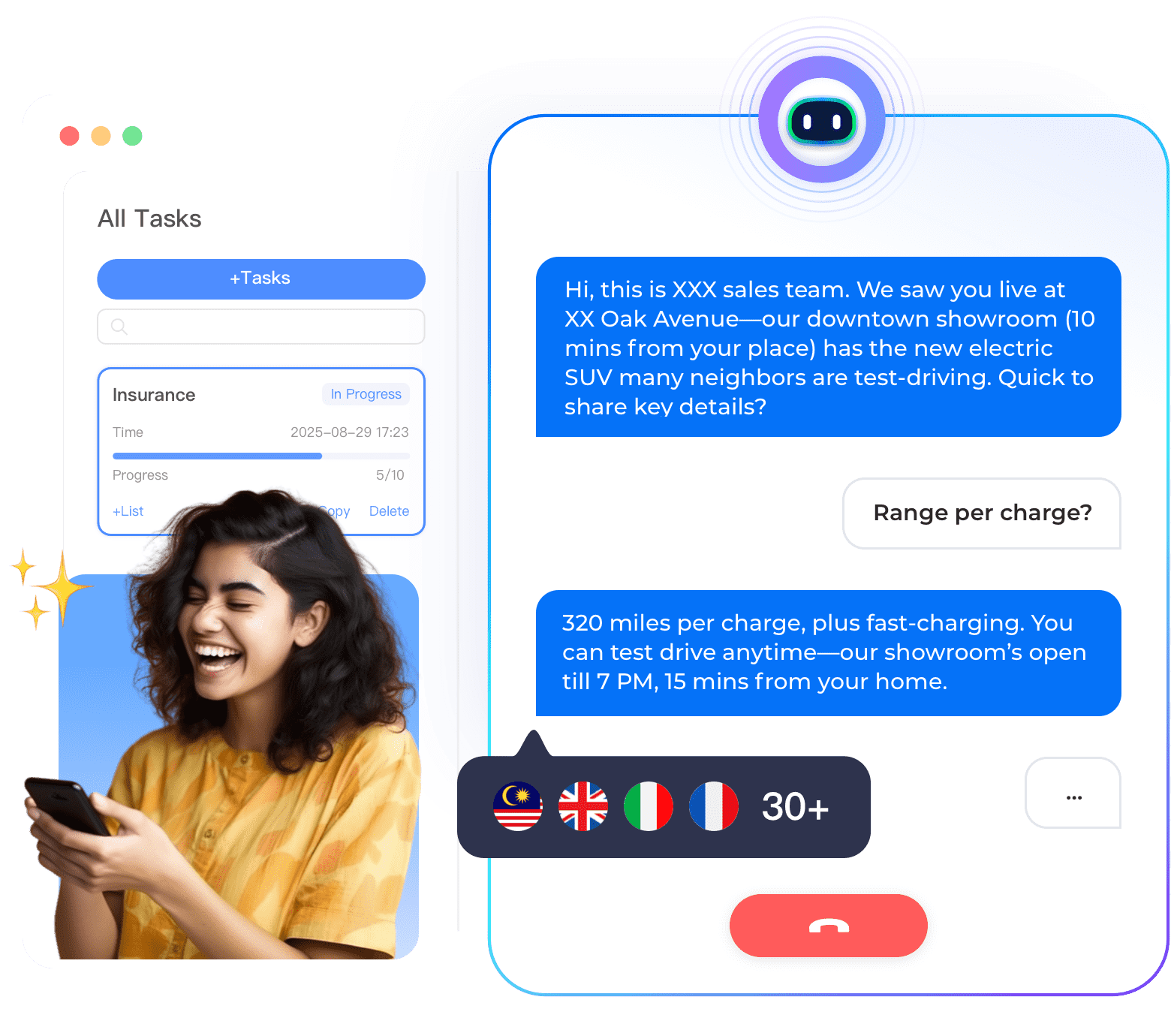
Instead of waiting for customers to raise their hands, AI watches for signals. It learns what usually goes wrong. It steps in before small issues become big problems.
Tineco saw this transformation. After deploying Instadesk's AI voicebots, every incoming call got answered. No busy signals. No endless ringing. Routine questions got handled without agents touching them.
This shift changes several things.
Prediction replaces waiting. AI can spot patterns across thousands of conversations. It knows which questions are coming before they arrive. It can surface answers before customers even ask.
Action replaces routing. Traditional systems move work around. Proactive AI actually does the work. Fewer handoffs. Less back and forth. Faster outcomes.
Context replaces templates. Because AI pulls from customer history and system data, responses fit the moment. The same customer gets treated like the same person.
Prevention replaces reaction. The biggest change is cultural. Teams stop putting out fires and start preventing them.
The system was ready before customers needed to complain.
What This Means for Service Teams
This is not only about cutting costs. Though costs do drop.
When routine work disappears, teams get something more valuable. Time.
Time to handle complicated cases. Time to talk to upset customers with patience. Time to think about how to make things better instead of just keeping up.
Leaders can redesign workflows around actual resolution instead of queue management. Knowledge stops sitting in static documents and starts flowing through conversations. Service becomes something that builds loyalty instead of just fixing problems.
Instadesk's platform helped Tineco achieve over 85% routine inquiry resolution without human help. Quality scores climbed past 90%. Agents focused on real problems instead of repetitive scripts.
Proactive AI does not just make service faster. It makes service smarter.
What This Means for Customers
Customers notice the difference immediately.
The best service feels like nothing happened. Not because nothing was done, but because the right thing happened without any struggle.Proactive AI takes the work off the customer's plate. No searching for answers. No repeating information. No waiting for someone to figure out what is going on.
The e-commerce company that cut response time from 12 hours to 8 minutes saw this clearly. Customers stopped waiting. They started getting instant answers. The company saved over $300,000 in the first year.That changes how customers feel about the brand. Service stops feeling like a chore and starts feeling like help.
A logistics provider that went proactive saw similar results. AI handled 85% of routine tracking requests. Customers got updates in their own language without waiting for a human. Satisfaction went up. Costs went down.
What Leaders Should Do Now
Nobody needs to tear everything down overnight. But leaders should start asking different questions.
Which questions come up over and over again? Where do customers do work that the company could do for them? What would change if AI could spot problems before customers reported them? How should humans and AI divide up the work?
The goal is not to replace people. It is to let people do what they are best at while AI handles the repetitive load.
Instadesk builds for this balance. AI voicebots answer routine calls. Smart routing gets customers to the right place. Quality inspection catches problems before they spread. Agents handle the cases that need a human touch.
The Shift Is Already Happening
This is not some future prediction. Companies are making this shift right now.
Tineco did it. The e-commerce leader did it. The logistics provider did it.They stopped waiting for customers to complain. They started solving problems before they grew.The teams that embrace this shift will do more than answer questions faster. They will change what service can accomplish.
Because service is no longer just about responding.
It is about resolving. Before the customer even has to ask.