A customer service agent finishes a 10-minute call. The customer is satisfied. The issue is resolved. But the agent's work isn't done. Now comes the paperwork—filling ticket fields, documenting the conversation, updating the CRM. Five more minutes. Multiply that across 20 calls a day, and agents lose hours to manual data entry.
This is the hidden cost of customer service. Not the calls themselves, but what happens after. Agents spend as much time documenting interactions as they do handling them. They toggle between screens, copy-paste information, and hope they didn't miss anything important.
Real-time agent assistance changes this. It captures conversations as they happen, fills forms automatically, and lets agents focus on what they do best: helping customers.

What Is Real-Time Agent Assistance?
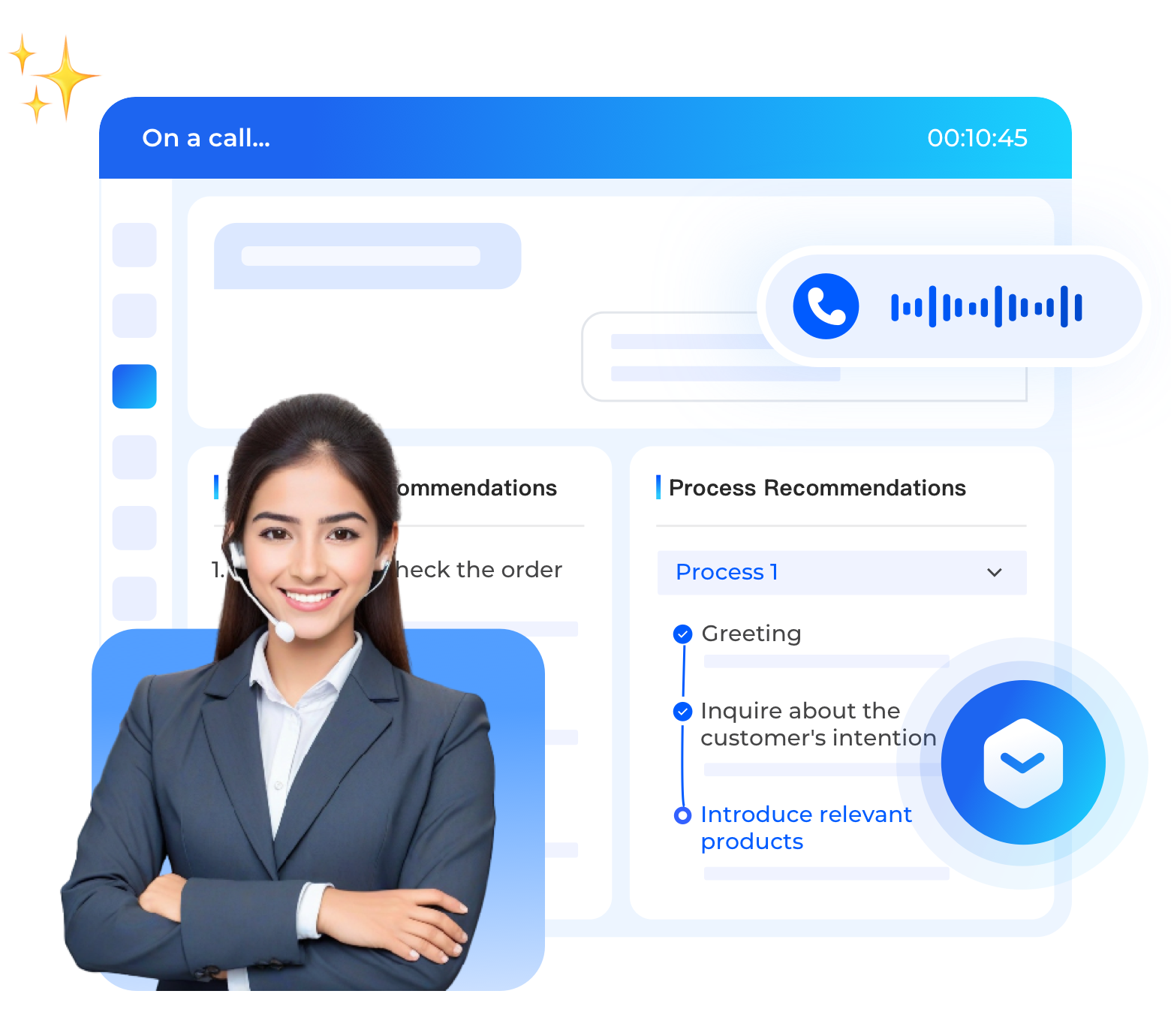
Real-time agent assistance is AI technology that works alongside customer service agents during live interactions. It listens, transcribes, analyzes, and acts—all in real time—so agents don't have to.
Instead of typing notes while a customer speaks, the AI handles the documentation. Instead of searching for knowledge base articles, the AI surfaces relevant content automatically. Instead of remembering what happened in previous interactions, the AI provides historical context instantly.
The result is a seamless workflow where agents focus entirely on the customer. The technology handles the administrative burden that traditionally consumes 30-50% of their time.
How It Works
1. Automated Form-Filling and Summarization
When a customer calls, the AI transcribes the conversation in real time. It extracts key information—order numbers, account details, issue descriptions—and automatically populates ticket fields. When the call ends, the system generates a concise summary of what was discussed and resolved.
Agents no longer type notes during calls. They don't spend minutes after each interaction filling forms. The work happens automatically, in the background, leaving agents available for the next customer immediately.
2. Real-Time Transcription and Intent Recognition
As the conversation unfolds, the AI analyzes customer sentiment and intent. Is the customer frustrated? Confused? Ready to buy? The system detects these signals and surfaces them to the agent, along with suggested responses or next steps.
An agent handling a frustrated customer sees a sentiment and a recommendation for de-escalation language. An agent on a sales call gets real-time s about upsell opportunities based on what the customer is saying.
3. Proactive Knowledge Recommendations
Most agents spend significant time searching for information—policies, procedures, product details. Real-time assistance eliminates this. As the customer speaks, the AI identifies relevant knowledge base articles, past solutions, and business module data, displaying them directly in the agent's workspace.
The knowledge base transforms from a passive repository into an active guide. Agents get answers before they even ask.
4. Intelligent QA and Real-Time Alerts
Quality monitoring typically happens after the call—too late to fix mistakes. Real-time assistance changes this. Supervisors can set customizable ing rules that trigger when anomalies occur: a compliance violation, a prolonged silence, an escalating tone.
When an fires, supervisors can monitor the interaction in real time and intervene if needed. This proactive approach catches issues before they damage customer relationships.
Why Agents Need This Now
Customer service has become more complex. Channels multiply. Customer expectations rise. The information agents need to access grows. Yet the tools they use haven't kept pace.
Traditional agent desktops are collections of disconnected systems. Agents juggle multiple tabs, manually transfer data, and spend more time on administration than actual service.
Real-time assistance consolidates and automates. It pulls data from across systems, fills forms automatically, and surfaces intelligence when and where agents need it. The result is a workspace where agents can focus entirely on the conversation.
What This Means for Business Outcomes
Organizations deploying real-time agent assistance see measurable improvements:
• Operational efficiency increases by over 80% as manual work disappears
• Agent availability improves because post-call work no longer consumes time
• Service quality becomes consistent across all agents, regardless of experience
• Customer satisfaction rises when agents are fully present during interactions
Platforms like Instadesk Agent Assistant deliver these results through modular architecture that connects to existing tech stacks. Real-time transcription, automated form-filling, and proactive recommendations work together to transform the agent experience—not by replacing agents, but by making them more effective.
From Manual Work to Strategic Focus
The real value of real-time agent assistance isn't just efficiency. It's what efficiency enables. When agents aren't buried in paperwork, they can focus on customers. When they have real-time intelligence, they can solve problems faster. When they feel supported, they perform better.
Customer service has always been about human connection. Technology shouldn't get in the way. Real-time assistance ensures it doesn't—by handling the administrative work so agents can handle what matters.