Every "best AI outbound calling platform" list online compares the same eight or nine vendors on voice quality and latency,and almost none of them explain the part that actually determines whether a campaign survives past month one:compliance.A dialer that connects fast but abandons more than 3% of calls,or skips DNC scrubbing,isn't a productivity tool,it's a lawsuit waiting on a spreadsheet.This guide covers what AI outbound calling actually automates,the compliance rules that apply whether you know them or not,and how to evaluate a platform against your actual operating model instead of a demo.
What AI outbound calling actually means
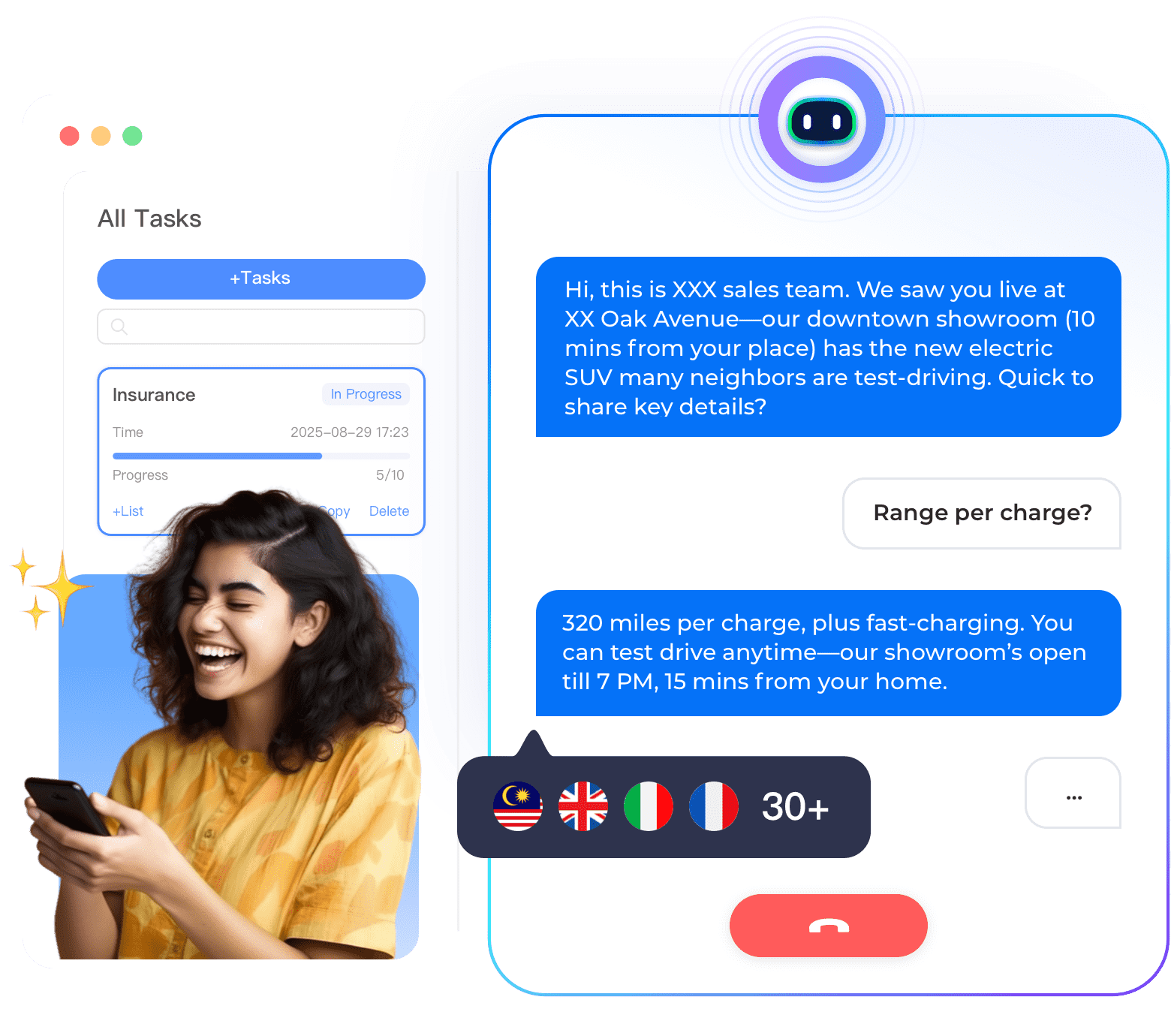
AI outbound calling is a system where an AI voice agent,not a human rep,places the call and conducts the conversation,from the opening line through qualification and either resolution or a warm transfer to a human.
●How this differs from a predictive dialer
A predictive dialer speeds up how fast a human agent gets connected to a live answer.It calls ahead of the agent's availability,filters out voicemails and busy signals,and drops the agent in right when someone picks up.An AI voice agent replaces the human on that call entirely.These are two different categories doing two different jobs,not a faster version of the same thing,and a lot of vendor marketing blurs that line on purpose.
●What's the difference between a predictive dialer and an AI voice agent?
A predictive dialer connects a human agent to more live answers per hour by dialing ahead of them.An AI voice agent skips the human connection step and has the entire conversation itself.If a platform's pitch is "your agents talk to more people,"that's a dialer.If the pitch is "our AI talks to people instead of your agents," that's a voice agent.
Is AI outbound calling legal?
Yes,when it follows the same rules that already apply to any outbound telemarketing call:consent requirements under the TCPA,an abandon rate under the FCC's 3% ceiling,Do Not Call list scrubbing,and calling-window restrictions that vary by state.AI doesn't get a legal exemption just because a person isn't dialing.Every dialed call,AI-placed or not,is a potential violation if these rules aren't followed,and TCPA litigation hit 2,788 filed cases in 2024 with average settlements around $6.6 million,according to figures Retell AI cited in its own published testing.
●The abandon rate rule,explained simply
Parallel dialing connects a human or AI agent to a live answer only some of the time,because some calls go to voicemail,get disconnected,or simply ring out.Calls that go unanswered by an agent within the required window after someone picks up count as "abandoned."Cross too many abandoned calls within a 30-day rolling window and the campaign crosses the compliance line,regardless of how good the AI's actual conversations are.
●State-level rules stack on top of federal ones
Florida,Oklahoma,Texas,and Oregon all have stricter "mini-TCPA" laws with a private right of action,meaning individuals in those states can sue directly rather than waiting on a regulator.A campaign that's fully compliant under federal TCPA rules can still be non-compliant the moment it touches a list with numbers in one of these states,which is exactly why list-level compliance checks matter as much as the dialer's own settings.
●A real caution worth knowing
Air AI was a well-known name in earlier"best AI calling platform"roundups.It became the subject of an FTC enforcement action over deceptive business claims.This doesn't mean AI calling itself is risky.It's a concrete reminder to check a vendor's regulatory standing and talk to real reference customers before signing a contract,not just watch their demo.
What actually happens on an AI outbound call
●Detecting a live answer vs. voicemail
Dead air after a beep wastes the call and sounds obviously wrong if the AI keeps talking to an empty voicemail box.Accurate answering-machine detection is what decides whether the rest of the call happens correctly at all,since everything downstream—the greeting,the qualification questions,the transfer logic—assumes a live person is actually on the line.
●Holding the conversation
Speech-to-text turns what the person says into text.A language model decides how to respond.Text-to-speech turns that response back into audio the person hears.The gap between when the person stops talking and the AI starts responding,called latency,is what makes a call feel natural or awkward.Top platforms in this space report figures between roughly 600 and 700 milliseconds,which is close enough to normal human response time that most callers don't consciously notice a delay.
●Qualifying and handing off
The AI works through a defined set of qualification questions and scores the answers as the call goes.If the lead qualifies,it either resolves the call itself or transfers to a human closer with the full conversation history attached,so the human isn't starting the conversation from zero and asking questions the caller already answered.
Why your caller ID reputation matters more than your dialing speed
A fast dialer calling numbers that get flagged "Spam Likely" is worse than a slow one that doesn't,because once a number gets flagged,answer rates on that number can drop 15-40% regardless of how good the AI conversation would have been.This is a compounding problem:bad list data leads to more unanswered and wrong-number calls,which leads to more spam flags,which leads to lower answer rates on every future call from that same number.A platform can have the best-sounding AI in the industry and still underperform badly if the numbers it's dialing from are already flagged before the call connects.
●What actually protects a number
Branded caller ID,carrier-verified numbers,and active number rotation when a number gets flagged all help,but the key is doing this proactively rather than waiting to notice a slow decline in connect rate weeks later.By the time a manual review catches a reputation problem,the damage to that number is usually already done.
●How do I know if my outbound numbers are getting spam-flagged?
Watch for a sudden,unexplained drop in connect rate on a specific number with no change in your list quality or calling hours.Platforms with active reputation monitoring flag this automatically and rotate you to a fresh number before the problem compounds.Without that monitoring,most teams only notice after weeks of quietly declining answer rates that get blamed on the script or the list,not the number itself.
How to evaluate a platform against your actual operating model
Not every business asking "what's the best AI outbound calling platform" needs the same answer,because the honest answer depends on whether your team has engineers,needs compliance handled for you,or just wants to speed up a small sales team's dialing.

●You have engineers and want full control
A developer-first platform with API access and bring-your-own model support fits here.Your team gets to choose the exact language model,voice provider,and telephony stack,but your team also owns the compliance and telephony workflow build-out,which is real engineering work,not a checkbox.
●You want the compliance and deliverability workflow handled for you
A fully managed AI calling service that includes consent workflows,DNC scrubbing,and number-health monitoring as part of the service fits regulated,high-volume outbound like insurance,solar,or lending,where the compliance overhead alone would otherwise need a dedicated hire.
●You run a large existing contact center
An enterprise CCaaS platform that bolts AI onto existing infrastructure makes sense if you already have that infrastructure in place and a multi-month deployment timeline is acceptable.Ripping out an existing system to switch to a leaner AI-native platform rarely makes sense purely for the AI feature alone.
●You need multilingual,code-switching conversations
This is the one clear gap across nearly every English-market-first platform reviewed in the current listicle landscape.A platform needs native multi-language support,not translation bolted onto an English-first script,for markets where customers mix languages mid-conversation,which is common across Southeast Asia,the Middle East,and South Asia.Instadesk's VoiceBot platform is built for exactly this case,supporting more than 30 languages with code-switching handled natively rather than as an afterthought.
A rollout sequence that avoids the most common failure points
1. Validate your list quality before you validate the dialer
A dialer running against a list with 40% disconnected or wrong numbers will look broken no matter how good the AI conversation script is.Clean the data first.Blaming the platform for a bad list wastes weeks that should go toward actually improving the script and the offer.
2. Start below the abandon-rate ceiling,then optimize
Launch pacing conservatively and adjust upward once you have real connect-rate data,rather than starting aggressive and hoping compliance holds.It's much easier to speed up a cautious campaign than to walk back one that's already generated complaints.
3. Track cost per live conversation,not cost per seat
A $250-a-seat platform that produces four times more live conversations per hour can be cheaper per outcome than a $49-a-seat platform that doesn't.Compare the number that actually reflects what you're paying for,which is conversations that happen,not licenses that exist.
Frequently asked questions
1. Can AI voice agents actually replace human sales reps on outbound calls?
For the repetitive first-touch qualification work,largely yes.Testing across the industry consistently shows AI handling 60-80% of top-of-funnel qualification calls without a human involved.Complex,multi-stakeholder B2B deals still tend to close better with a human,so the practical model most teams land on is AI qualifying and a human closing,not a full replacement of the sales function.
2. How much does AI outbound calling cost per minute?
Pricing across the market runs roughly $0.07 to $0.35 per connected minute all-in once provider and telephony fees are included.Usage-based developer platforms sit at the lower end,and fully managed services sit higher because they bundle compliance and deliverability work into the price rather than charging for it separately.
3. How does an AI outbound dialer stay compliant with the abandon rate rule?
Compliant platforms use pacing algorithms that throttle dialing volume against real-time agent or AI availability,keeping the percentage of calls that go unanswered within the required window under the FCC's 3% ceiling across a rolling 30-day window.A platform that dials faster than it can actually connect calls to an available agent will blow past this ceiling regardless of intent.
4. What's the real cost of running AI outbound calling at scale for a year?
This varies enormously by model.A self-hosted,open-source setup can run a few thousand dollars a year in infrastructure alone.A per-seat managed dialer can run $60,000 to $120,000 or more annually before usage fees.A per-minute AI voice agent platform scales directly with call volume instead of seat count,so the annual cost depends entirely on how many calls actually get made.
5. How do I know if my outbound numbers are getting spam-flagged?
Watch for a sudden,unexplained drop in connect rate on a specific number with no change in your list quality or calling hours.Active reputation monitoring catches this automatically and rotates you to a fresh number before the problem compounds across your whole campaign.