Most voice AI comparisons rank vendors by a feature checklist and stop there.They rarely tell you whether the bot survives an actual phone call—background noise,a customer who changes their mind mid-sentence,or a question the script never anticipated.That gap costs real money.A voice agent that breaks under real conditions doesn't cut call center costs.It adds abandoned calls and angry callbacks on top of the ones you already had.
This guide compares 12 voice AI platforms on what actually decides whether a deployment survives contact with real customers:latency,architecture,compliance,and integration depth.It ends with a test plan you can run before you sign anything.
Before you use this list:voice AI pricing,latency benchmarks,and vendor capabilities change quickly as new models ship.Confirm every number against the vendor's current documentation before you make a final decision or publish a comparison with exact figures.
What is an AI voicebot and how does it work?
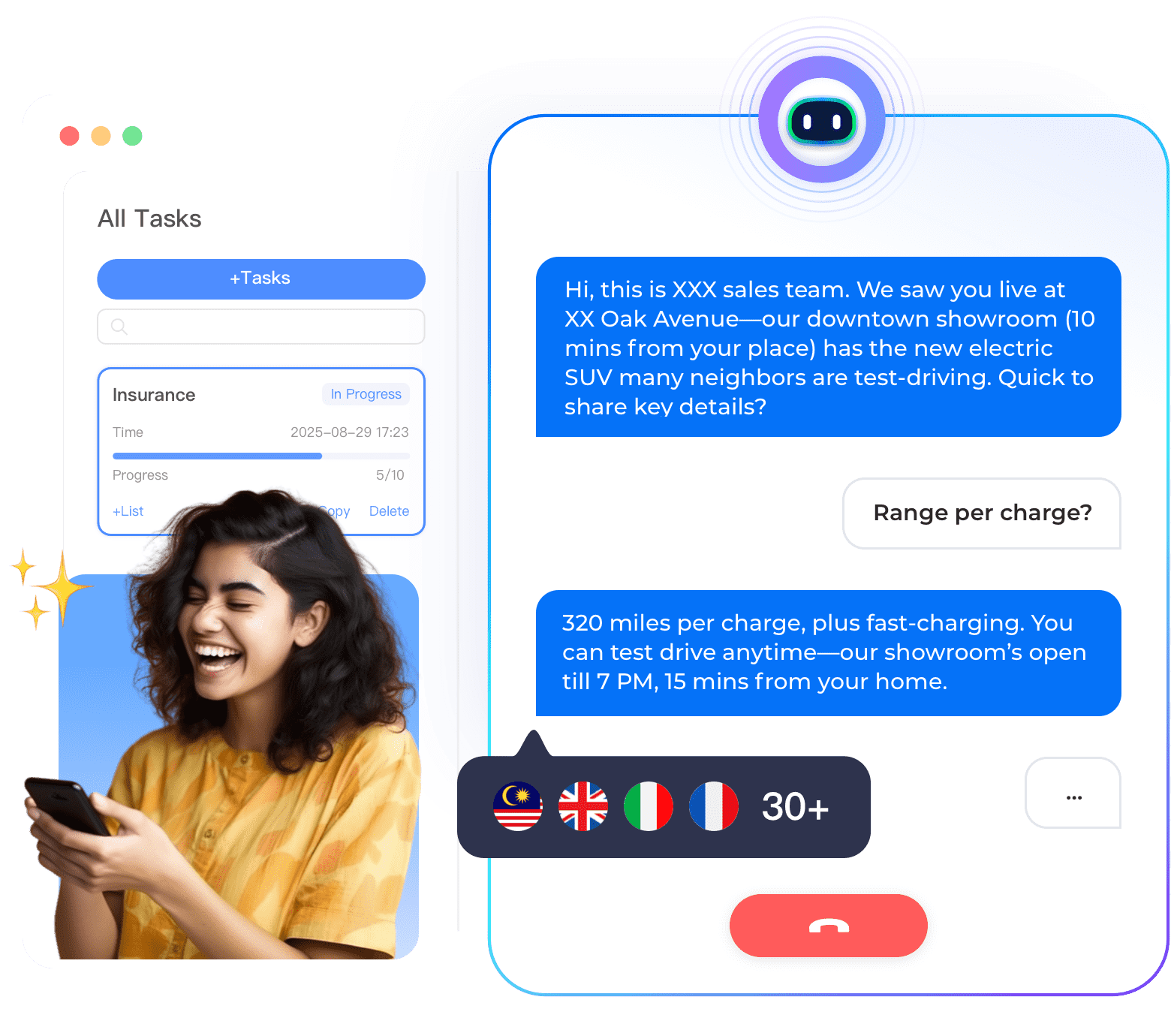
An AI voicebot,also called a voice AI agent,is software that answers or makes phone calls,understands what a caller is asking using speech recognition and language models,and responds out loud in a way that sounds close to a natural conversation.Some handle the entire call end to end.Others handle the first part of the conversation and hand off to a human agent when the request gets too complex or too sensitive.

How the conversation loop actually works
A call moves through four stages,and where it breaks down usually tells you which vendor category you're really evaluating.
1.The caller speaks,and a speech-to-text system converts the audio into text in near real time.
2.A language model reads that text,figures out the intent,and checks whatever data it has permission to access—an order status,an account balance,an appointment calendar.
3.The system generates a response and converts it back into speech through a text-to-speech engine,ideally fast enough that it doesn't feel like a delay.
4.If the request is too complex,the caller is upset,or the AI's confidence is low,the call is transferred to a human agent,ideally with the conversation history attached.
Step three is where most of the noticeable problems live.If the gap between the caller finishing a sentence and the AI starting its response feels even slightly off,the call stops feeling like a conversation and starts feeling like a walkie-talkie exchange.
AI voicebot vs.a traditional IVR: what's actually different
An IVR(interactive voice response)system is the "press 1 for billing,press 2 for support" menu you've been navigating for two decades.It works from a fixed decision tree.Say the wrong thing,or say the right thing in an unexpected order,and it doesn't understand you—it just repeats the menu.
An AI voicebot is built to handle open-ended speech.You can say "I need to change my delivery address for an order I placed last week" in one sentence,and a well-built voice AI system can extract the intent,ask a clarifying question if needed,and act on it—without you ever hearing a numbered menu.
| Traditional IVR | AI voicebot | |
| Input style | Fixed menu options (press 1, say "billing") | Natural, open-ended speech |
| Handles interruptions | No — usually restarts or ignores | Should recover mid-sentence |
| Understands context across turns | No | Yes, in a well-built system |
| Best for | Simple routing to the right department | Full conversations, including account-specific tasks |
| Failure mode | Caller gets stuck in a loop | Caller gets an inaccurate or robotic answer if the model or data access is weak |
Why voice AI adoption is accelerating in 2026
Contact centers are caught between two trends pulling in opposite directions.Customers expect faster phone support than ever,while support teams face high agent turnover and rising cost per call.That tension is the cause.The effect is straightforward:businesses either automate the repetitive front line of phone support,or they keep absorbing higher cost-to-serve and burnout on a team that's already stretched.The action this calls for isn't complicated—treat voice AI as a fix for a measurable operational problem,not a novelty feature to bolt onto your phone system.
●The real cost of long hold times
A caller placed on hold for several minutes doesn't necessarily wait it out.Many just hang up,and a meaningful share of those callers don't call back—they either give up on the request entirely or move to a competitor who answers faster.That's the quiet cost of long queues:it rarely shows up as a formal complaint,but it shows up in lost revenue and repeat contacts that never get traced back to the hold time that caused them.
●Why voice AI took longer to mature than chat-based AI
Text-based AI chat had a head start for a simple reason:it doesn't have to handle the physics of a real-time audio conversation.A chat AI can take a full second or two to compose a good answer and the user barely notices.A voice AI doesn't have that luxury—human conversation has an expected rhythm,and a noticeable pause after you stop talking reads as either confusion or a broken system.
What changed is that response generation and speech synthesis both got fast enough,in the last two years,to close that gap for a growing number of use cases.That's why 2026 is the year voice AI stopped being an experimental pilot for large enterprises and started showing up in mid-market contact centers as a practical,budgeted line item.
Bundled vs. unbundled voice AI: the architecture decision that determines your real cost
This is the single most consequential decision in a voice AI purchase,and it's usually buried in technical language most buyers skip past.Understanding it in plain terms will save you from a confusing bill and a confusing support call six months into a deployment.
●What "bundled" means
A bundled platform means one vendor provides the speech-to-text engine,the language model,the voice output,and the phone line itself,all under one contract and one bill.If something breaks,there's one company to call,and they can't blame a sub-vendor for the problem.
●What "unbundled" means
An unbundled setup means a company(sometimes a smaller AI startup)builds an orchestration layer on top of separate vendors for each piece—a speech-to-text company,a language model provider,a text-to-speech company,and a telephony carrier,all stitched together.This is common among newer,more flexible platforms aimed at developers who want to swap components.
●Why this matters to your total cost and your support experience
Cause: an unbundled stack usually means more flexibility to pick best-in-class components.Effect: it also means more places for something to quietly break,and more finger-pointing when a call drops or an integration fails,because your problem might sit between three different vendors' support teams instead of inside one company's responsibility.What to do: ask any vendor directly which parts of their stack they own versus license,and ask what your support experience looks like when the failure isn't clearly theirs.
The 12 best AI voicebot and voice AI platforms compared
This table is a starting shortlist,not a final answer.Confirm exact pricing,compliance certifications,and current features directly with each vendor—this is a fast-moving category and public information changes often.
| Platform | Best for | Architecture | Typical compliance focus | Pricing model |
| Instadesk | Industry-specific enterprise voice automation with fast deployment | Bundled | Verify current certifications with vendor | Custom/quote-based |
| Retell AI | Engineering teams building custom voice agents | Unbundled, developer-first | Varies by configuration | Usage-based |
| Telnyx | Carrier-grade, single-vendor infrastructure at high volume | Bundled, owns telephony | Enterprise-grade, verify per plan | Per-minute |
| Parloa | Regulated, high-volume enterprise contact centers | Bundled, enterprise-managed | Strong enterprise governance focus | Custom/quote-based |
| PolyAI | Voice-first IVR replacement in banking, telecom, hospitality | Bundled | Enterprise-grade, industry-specific | Custom/quote-based |
| Sierra | Outcome-based automation across support channels | Bundled | Verify per plan | Outcome/resolution-based |
| Decagon | Fast, no-code setup with high automated resolution | Bundled | Verify per plan | Custom/quote-based |
| Ada | Omnichannel coverage across regulated verticals | Bundled | Broad compliance coverage, verify specifics | Custom/quote-based |
| Cognigy (NICE) | Teams already using NICE CXone | Bundled within NICE ecosystem | Enterprise-grade | Custom/quote-based |
| CloudTalk | Phone system and AI voice agent in one platform | Bundled, owns telephony | Standard business compliance, verify specifics | Per-seat plus usage |
| Vapi | Developer prototyping with a flexible component stack | Unbundled, developer-first | Varies by configuration | Usage-based |
| Bland AI | Self-hosted, on-premise, or air-gapped deployments | Configurable/self-hosted | Suited to strict data-residency needs, verify specifics | Custom/quote-based |
The 12 platforms in detail
1. Instadesk—best for industry-specific enterprise voice automation with fast deployment
Instadesk is worth evaluating closely if your priority is getting a working,industry-tuned voice agent live in a matter of weeks rather than committing to a long custom-build engineering project.A bundled architecture is generally the right fit for a team that wants one vendor accountable for the full call experience,from speech recognition through to the phone line itself,rather than managing several vendor relationships to run one voice agent.
The right way to evaluate it is the same way you'd evaluate any vendor on this list:ask for a live pilot using your own call scripts,your own background-noise conditions,and your own escalation paths,not just a clean demo call in a quiet room.
Watch-out: current compliance certifications,published latency figures,and per-minute or per-resolution pricing directly with Instadesk's team,since these details shift as the platform and its underlying models evolve.
2. Retell AI—best for engineering teams building custom voice agents
Retell AI is aimed at teams that want to build a highly customized voice agent and are comfortable choosing their own language model and configuring the pipeline themselves.That flexibility is valuable for a company with in-house engineering resources who wants control over exactly how the agent behaves.
It's a weaker fit for a business that wants a mostly turnkey solution with minimal internal engineering involvement—the tradeoff for flexibility is that more of the integration and tuning work sits with your own team.
Watch-out:because it's a more developer-oriented,configurable platform,ask specifically who is responsible for uptime and quality across the different components in your particular configuration.
3. Telnyx—best for carrier-grade,single-vendor infrastructure at high call volume
Telnyx owns its own telephony network rather than reselling someone else's,which matters for a company running very high call volumes where infrastructure reliability and per-minute cost predictability are the priority.Owning the phone line end of the stack can mean fewer points of failure and a more direct line of accountability if call quality issues appear.
This is a stronger fit for a technically sophisticated buyer comparing infrastructure-level details than for a small team that just wants a voice agent running quickly with minimal setup.
Watch-out:carrier-grade infrastructure options can involve a steeper setup process than a fully packaged,no-code voice AI product.Budget technical time for the integration.
4. Parloa—best for regulated,high-volume enterprise contact centers
Parloa is positioned toward large enterprise contact centers,particularly in regulated industries where governance,auditability,and lifecycle management of the AI agent matter as much as how natural the voice sounds.A large enterprise with existing compliance obligations often needs a vendor that treats governance as a core product feature,not an afterthought.
A smaller business without those regulatory demands may find this level of enterprise process heavier than necessary for its current needs.
Watch-out:enterprise-oriented platforms can come with a longer sales and implementation cycle.Ask for a realistic timeline from contract to a live pilot,not just to a signed agreement.
5. PolyAI—best for voice-first IVR replacement in banking,telecom,and hospitality
PolyAI is frequently evaluated by companies in banking,telecom,and hospitality that are specifically trying to replace an aging,frustrating IVR system with something that can hold a real conversation.Those industries share a common pattern:high call volume,repetitive account-related questions,and strict expectations around data handling.
Watch-out:industry specialization can be a strength or a limitation depending on how closely your use case matches its core focus areas.Ask for reference examples from your specific industry rather than a generic case study.
6. Sierra—best for outcome-based pricing tied to resolved conversations
Sierra is worth a look if your team is drawn to a pricing model tied to outcomes—paying based on conversations actually resolved rather than a flat per-minute or per-seat fee.That model can align vendor incentives with your actual goal,which is fewer unresolved calls,not just more automated ones.
Watch-out:understand exactly how"resolved"is defined and measured in the contract.A loosely defined resolution metric can end up costing more than a simpler pricing model if it's generous to the vendor's own reporting.
7. Decagon—best for fast,no-code setup with high automated resolution
Decagon is commonly shortlisted by teams that want to get a voice agent running without a lengthy engineering project,prioritizing quick setup and a high rate of calls resolved without human involvement.That's attractive for a support team under pressure to show fast results.
Watch-out:a fast,no-code setup can mean less granular control over edge-case behavior.Test it specifically against your hardest,least common call types,not just your most common ones.
8. Ada—best for omnichannel compliance coverage across regulated verticals
Ada's appeal is coverage across both voice and other support channels under one compliance-conscious platform,which matters for a regulated business trying to keep a consistent policy and audit trail across every channel a customer might use.
Watch-out:omnichannel breadth is only valuable if your business actually needs voice and chat and email handled consistently.If voice is your only real use case right now,a more voice-specialized vendor might be a simpler fit.
9. Cognigy(NICE)—best for teams already using NICE CXone
If your contact center already runs on NICE CXone,Cognigy's position inside that ecosystem can reduce the integration burden significantly,since your agent workflows,reporting,and customer data are already living in that environment.
Watch-out:this advantage disappears if you're not already a NICE customer.Evaluate it on its own technical merits,not just ecosystem convenience,if you're starting from scratch.
10. CloudTalk—best for teams that want the phone system and the AI voice agent in one platform
CloudTalk's pitch is consolidation:the business phone system and the AI voice layer live in the same product,which can simplify billing,support,and setup for a team that doesn't want to manage a separate telephony vendor and a separate AI vendor.
Watch-out:a combined product can mean the AI voice capability is less deep than a company that focuses purely on voice AI.Test the actual conversation quality directly rather than assuming feature-parity with specialized competitors.
11. Vapi—best for developer prototyping with a flexible component stack
Vapi is aimed at developers who want to quickly wire together a voice agent using a mix of language model,speech-to-text,and text-to-speech providers of their choosing.This is a strong fit for a technical team experimenting with different model combinations before committing to a production architecture.
Watch-out:this flexibility comes with the unbundled tradeoffs discussed earlier—more components,more potential points of failure,and more of the integration work sitting with your team.
12. Bland AI—best for self-hosted,on-premise,or air-gapped deployments
Bland AI is relevant for organizations with strict data-residency or security requirements that rule out a fully cloud-hosted,multi-tenant voice AI product.That's a narrow but real need for certain government,healthcare,or financial services use cases.
Watch-out:self-hosted or highly controlled deployments typically require more internal infrastructure work than a standard cloud SaaS product.Confirm your team has the resources to maintain it before committing.
How to evaluate a voice AI vendor's claims,not just their pitch
Every vendor's sales page will tell you their platform is fast,accurate,and secure.The way to find out if that's true before you sign a contract is to ask questions that a marketing page won't answer for you.
●Ask for the sub-vendor list
Ask directly which company provides the speech-to-text engine,which provides the language model,which provides the voice output,and which company owns the actual phone line.If a vendor is vague about this,that's worth noting—it often means you're looking at an unbundled stack,which isn't automatically bad,but it changes what you should ask about support and reliability.
●Ask what happens on a failed call
Every voice AI system will eventually mishandle a call.The important question isn't whether that happens—it's what happens next.Ask where the audit log of that failed call lives,who reviews it,how quickly you can find out it happened,and who you actually call when it does.
What features should I look for in a voice AI platform?
The essentials are accurate speech recognition that handles interruptions and background noise,a language model that keeps context across multiple turns in a conversation,integration with your CRM or scheduling system so the agent has real data to work with,a reliable and well-documented handoff to a human agent,and clear compliance documentation relevant to your industry.
Feature count matters less than whether these core pieces work reliably together on a real,imperfect phone call—not just a clean demo.
●Request the compliance certificates directly
Don't take a vendor's compliance claims from a marketing page at face value.Ask for the actual certificates or audit reports—SOC 2,HIPAA attestations,or whatever is relevant to your industry—and check the date on them.A certification from two product versions ago doesn't necessarily reflect the system you'd actually be deploying today.
●Testing a voice AI platform before you sign a contract
A polished sales demo tells you almost nothing about how a voice agent performs on a real customer call.Run these tests before committing to a contract.
●The interruption test
Call the trial system and deliberately talk over it mid-sentence,the way a real customer might when they've heard enough or want to correct themselves.Check whether the system stops,listens,and responds appropriately,or whether it barrels through its scripted response regardless of what you just said.
●The noisy-environment test
Make a test call from a car with the window down,a busy street,or a room with background conversation.Real customers rarely call from a silent office.If the speech recognition falls apart the moment there's ambient noise,that's a serious production risk,not a minor inconvenience.
How much latency is too much for a voice AI call?
Human conversation has a natural rhythm:people typically expect a response within a few hundred milliseconds of finishing a sentence,and a longer pause starts to feel awkward or broken rather than thoughtful.This is well documented in research on human turn-taking in conversation,not just a marketing benchmark voice AI vendors invented.
In practice,this means a voice AI system with a barely noticeable delay reads as almost normal,while one with a longer pause after every response starts to feel like a bad phone connection or a robot that's struggling to keep up.When you test a vendor,don't just ask for their published latency number—listen for whether the pause actually feels natural in a real back-and-forth exchange,especially when you ask a question that requires the system to look something up.
●The handoff test
Deliberately create a situation that should trigger an escalation to a human—express frustration,ask for something outside the bot's obvious scope,or directly ask for a person.Then check two things:does the handoff actually happen,and does the human agent receive the full conversation context,or does the caller have to repeat everything from scratch?
●Chrome and dashboard test
If the platform includes a web-based dashboard for reviewing call logs,analytics,or configuring call flows,open it in Chrome and check how quickly it loads and how usable it is day to day.A voice AI product with a slow,clunky admin dashboard creates ongoing friction for whoever on your team has to manage it,even if the calls themselves sound great.
Evergreen criteria vs. this year's model upgrades
Some things about a vendor are stable and worth weighting heavily:who owns the telephony infrastructure,what their compliance posture actually is,and how their support process works when something breaks.Other things move fast and should be treated as current-state observations,not permanent facts:exact voice realism,published latency benchmarks,and specific automated-resolution rates,since these shift every time a vendor adopts a newer underlying model.Weight your decision more heavily toward the stable factors,and re-verify the fast-moving ones close to your actual purchase date.
Frequently asked questions
1. What is the best AI voicebot for customer service?
The right platform depends on your call volume,your compliance requirements,and whether you want a fully bundled,single-vendor product or a more flexible,developer-configurable stack.Instadesk is worth evaluating for industry-specific deployments with a fast setup timeline,Telnyx and Parloa suit high-volume or regulated enterprise contact centers,and Retell AI or Vapi fit teams with in-house engineering resources who want to build a custom configuration.
Test your shortlist against your own real call conditions before deciding,since a platform that's ideal for a banking IVR replacement may be the wrong fit for a small e-commerce support line.
2. How much does voice AI cost?
Pricing models vary:some vendors charge per minute of call time,others charge per seat plus usage,and some use outcome-based pricing tied to resolved conversations rather than raw call volume.Because most enterprise-tier vendors quote custom pricing based on your specific volume and requirements,get a quote based on your actual expected call volume rather than comparing headline numbers across vendors with different pricing structures.
3. Is voice AI secure and compliant?
Security and compliance depend entirely on the specific vendor and how the system is configured,not on the category as a whole.Ask for current compliance certificates relevant to your industry—such as SOC 2 or HIPAA documentation—and what data the system stores,for how long,and who can access it.
4. Can voice AI handle multiple languages?
Many platforms support multiple languages,but quality varies significantly between languages and between vendors.Test your actual priority languages directly,including regional accents and common phrasing in your customer base,rather than assuming a vendor's language list guarantees consistent quality across all of them.
5. How long does it take to deploy an AI voice agent?
Deployment time depends heavily on how customized the agent needs to be and how many systems it needs to integrate with.A narrowly scoped,no-code setup can be faster than a fully custom build with deep CRM and internal-system integration,so ask each vendor for a realistic timeline based on your specific use case rather than a generic industry average.
6. Can AI voicebots handle complex or emotional calls?
Most well-built systems are designed to recognize frustration,confusion,or complexity and escalate to a human agent rather than attempting to push through a difficult call on their own.The safer approach for any business is to plan for that handoff explicitly rather than expecting full automation to work for every type of call,especially ones involving sensitive account issues,complaints,or emotionally charged situations.
Final checklist before you choose
Shortlist three vendors,not ten.Run the interruption test,the noisy-environment test,and the handoff test on each one using your own real call scenarios,not a clean scripted demo.Confirm compliance certificates and sub-vendor architecture directly rather than trusting a features page.The platform that holds up under those conditions is the one worth a real pilot—not the one with the most polished sales deck.