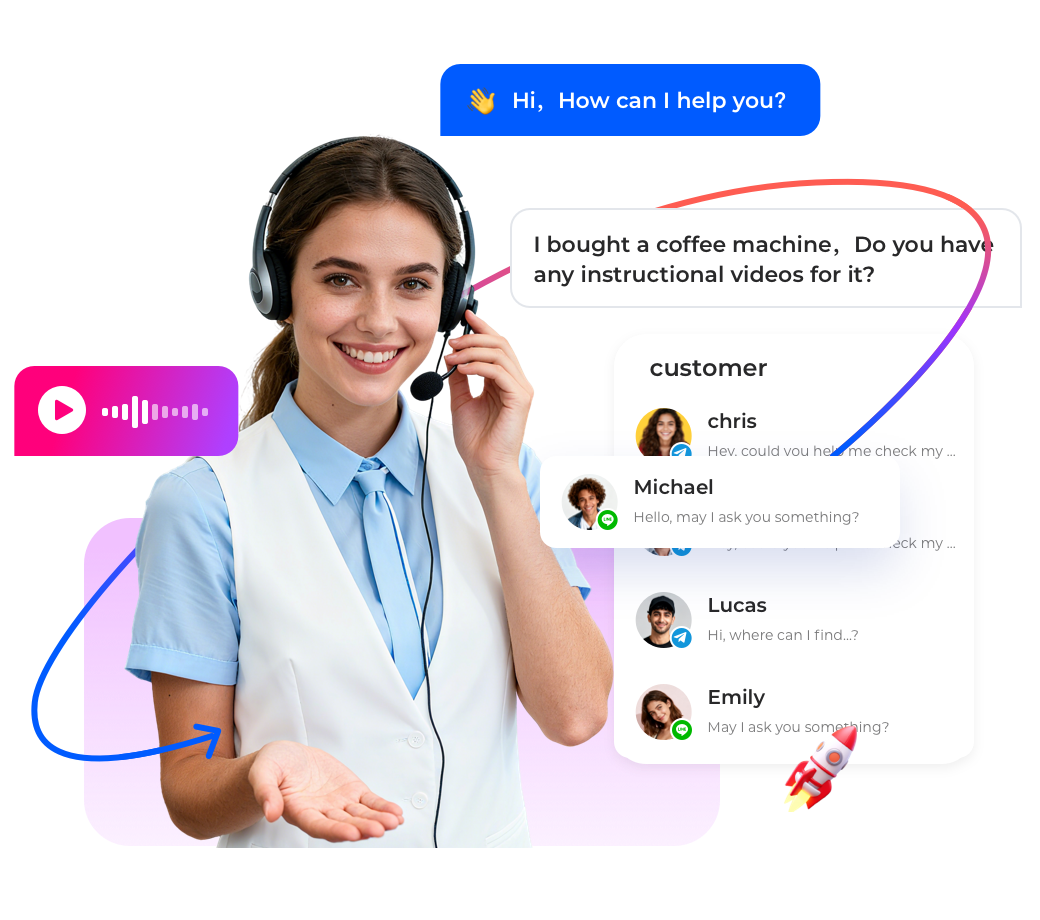
Utility companies,including natural gas providers,face unique customer service challenges:emergency reporting,billing inquiries,service activation,and outage notifications.Customer service automation has emerged as a critical tool to handle these high-volume,repetitive tasks efficiently while maintaining safety and compliance.Below are real-world examples of how automation is transforming customer service in the utility sector.

Example 1:Automated Outage Reporting and Status Updates
A major gas utility deployed an AI voice bot to handle outage calls.When customers call to report a gas leak or service interruption,the voice bot collects the necessary information,generates a service ticket,and provides estimated restoration times.This automation reduced average call handling time by 60 percent and ensured emergency calls were prioritized correctly.The system also sends proactive SMS updates to affected customers,reducing inbound inquiries by 40 percent.
Example 2:Billing Inquiry Automation
Natural gas companies receive thousands of billing-related inquiries each month.By implementing a chatbot that integrates with the billing system,customers can check their current balance,view payment history,and request payment arrangements without speaking to an agent.One utility reported a 40 percent reduction in billing-related calls after automation deployment.The chatbot also provides multilingual support,serving diverse customer bases in their preferred language.
Example 3:Service Activation and Transfer
When customers move to a new address,they often need to activate or transfer gas service.An automated system that guides customers through identity verification,address validation,and scheduling significantly reduces administrative workload.A regional gas provider automated 75 percent of service transfer requests,cutting processing time from days to minutes.The system integrates with CRM to ensure accurate account updates.
Example 4:Proactive Notifications via Live Chat
Using live chat automation,utilities can proactively notify customers of planned maintenance or service interruptions.Customers receive messages through their preferred channel—website,SMS,or app—and can receipt or request additional information.This approach improved customer awareness and reduced inbound inquiries during maintenance events by 50 percent.
How Instadesk Enables Utility Automation
Instadesk’s Live Chat and VoiceBot solutions are designed to handle the specific needs of utility companies.With omnichannel coverage and integration capabilities,utilities can automate workflows across phone,web,and mobile channels.Real-time translation supports diverse customer bases,while intelligent routing ensures emergency calls reach the right agents instantly.The platform’s visual orchestration tools allow utility teams to build and modify automation flows without coding,enabling rapid adaptation to changing conditions.

Key features for utility companies include:
•Outage Management Integration:Connect with outage management systems to provide real-time restoration estimates.
•Emergency Call Routing:Detect urgent keywords(leak,outage,fire)and prioritize calls for immediate agent attention.
•Multilingual Support:Serve non-English-speaking customers with real-time translation in 30+languages.
•Proactive Alerts:Automatically send outage updates,billing reminders,and safety notifications via SMS,email,or chat.
•Analytics Dashboard:Track call volume,resolution rates,and customer sentiment to identify improvement areas.
Conclusion
Customer service automation is transforming how utility companies manage high-volume,critical interactions.By implementing AI-powered voice bots,chatbots,and proactive notification systems,utilities can improve response times,reduce operational costs,and enhance customer satisfaction.Instadesk provides a comprehensive platform tailored to utility needs,enabling seamless automation across emergency response,billing,and service management.