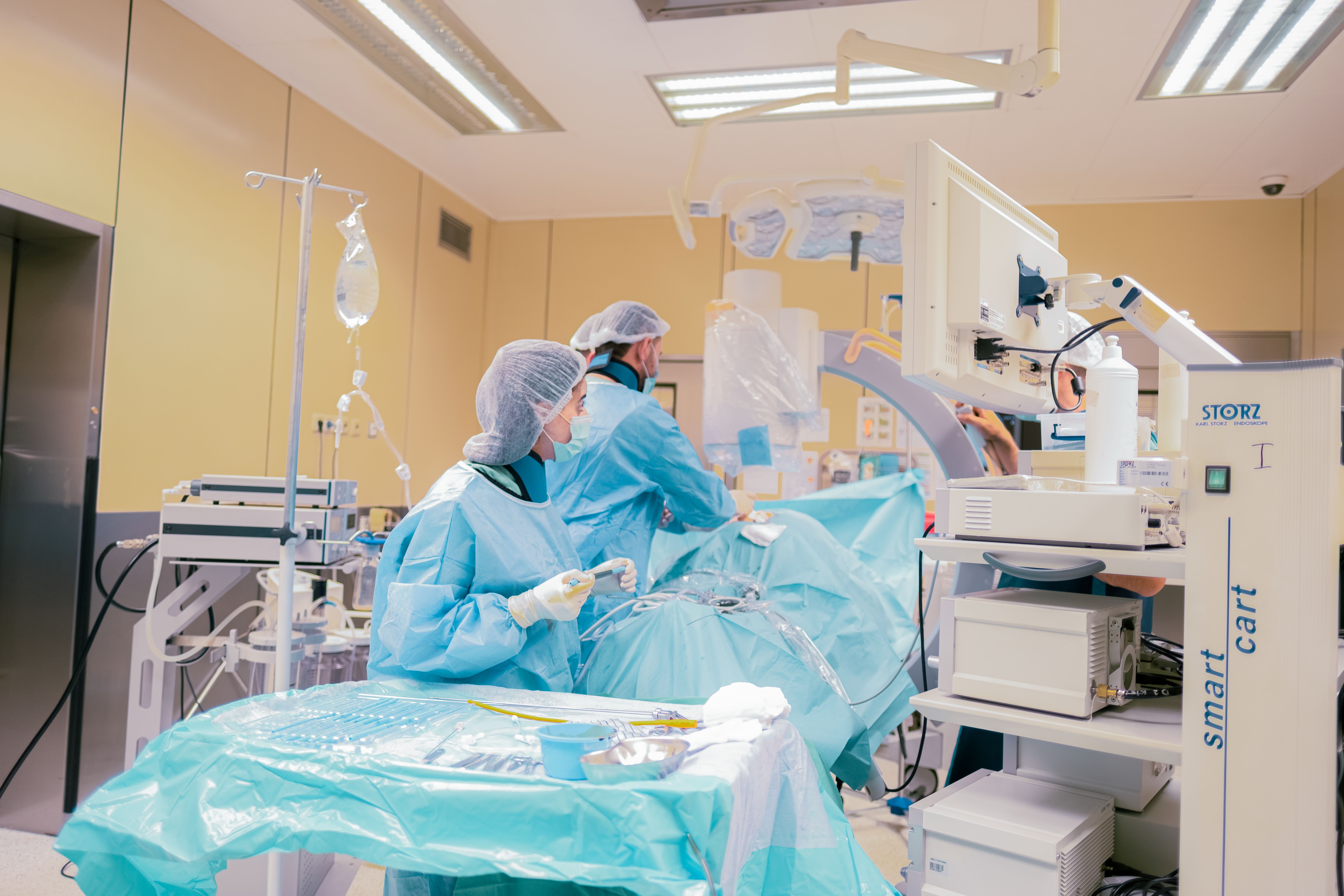
Healthcare organizations today face a perfect storm:surging patient volumes,complex treatment protocols,and an urgent need for consistent,high-quality patient communication.Traditional training methods cannot scale to meet these demands.The result?New clinicians struggle through long onboarding cycles.Patient experience scores stagnate.And critical soft skills, such as empathy,active listening,and adaptive communication, remain underdeveloped.
Instadesk Intelligent Training reimagines healthcare workforce development.Purpose-built for the rigor of clinical environments,it combines generative AI with proven adult learning principles to deliver personalized,scenario-based training that closes the gap between theory and real-world practice.
Core Pain Points in Healthcare Workforce Training
1. High-Stakes Communication,Insufficient Practice
In healthcare,conversations can be a matter of life and death.Yet communication skills are often taught through lectures,not practice.Traditional role-play with standardized patients is effective but expensive and logistically constrained,limiting the frequency and diversity of practice opportunities.
2. Lengthy & Costly Onboarding
New nurses,physicians,and support staff typically require 4 to 8 weeks of supervised training before achieving full productivity.This extended ramp-up strains experienced preceptors,delays patient access,and inflates labor costs—all while exposing patients to interactions with unseasoned clinicians.
3. Inconsistent Quality & Service Standards
Without a scalable way to reinforce best practices,communication quality varies widely across shifts,departments,and individual providers.One clinician may deliver empathetic,comprehensive patient education;another may rush through explanations,leaving patients confused and dissatisfied.This inconsistency drives up complaint rates and undermines patient trust.
4. Training That Doesn't Translate to Live Performance
Traditional e-learning modules check a compliance box but fail to build practical skills.Clinicians who pass written exams often falter when facing a real patient's fear,skepticism,or confusion.Training effectiveness is rarely measured against actual clinical performance,leaving organizations with no clear picture of team readiness.
How Instadesk Intelligent Training Solves These Challenges
1. AI Curriculum Development: From Weeks to Minutes
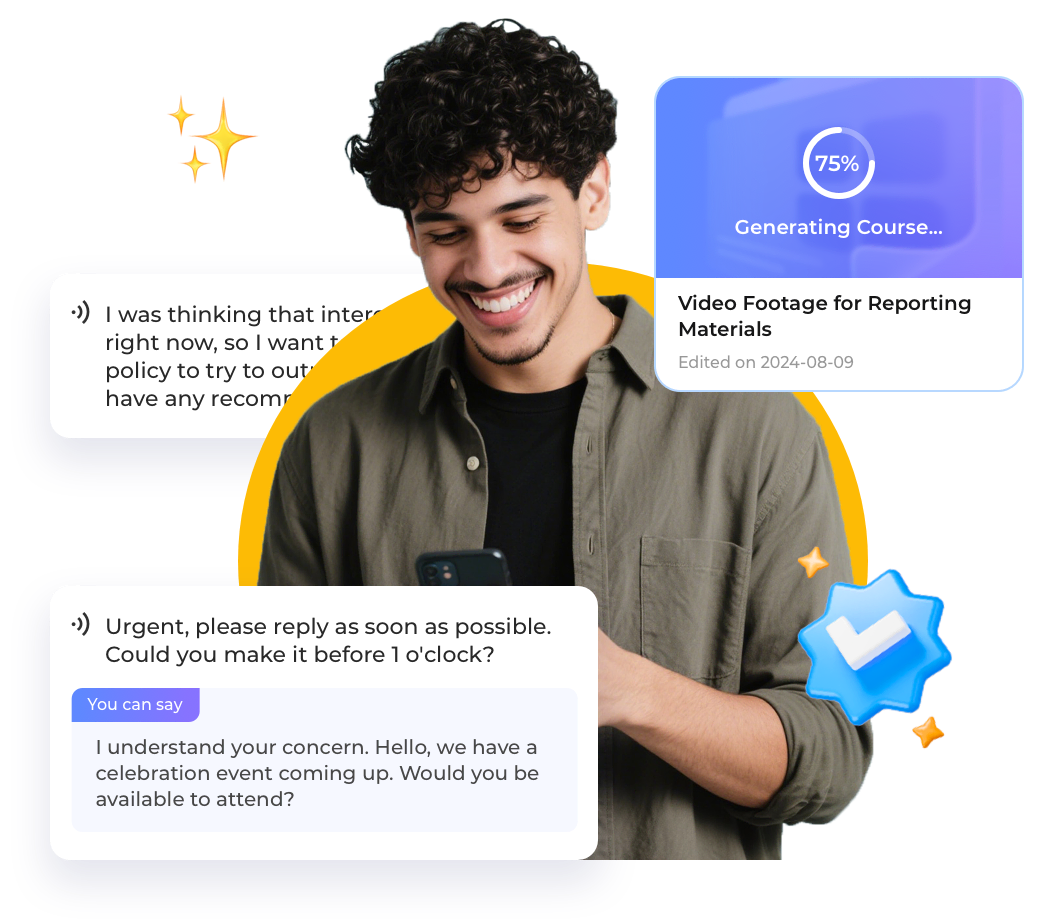
The platform transforms clinical protocols,patient education materials,and best-practice communication frameworks into structured training content instantly.
Accelerated course creation—AI extracts and structures standardized training materials,cutting content development time by over 60%.
Automated scenario generation—Virtual patient encounters are automatically generated from real clinical data and common patient profiles,tripling training relevance and variety.
Fragmented learning support—A companion knowledge base delivers micro-learning content during downtime,enabling just-in-time skill reinforcement.
2. AI Coaching Sessions: Practice That Prepares for Reality
Every 2 minutes of AI-led simulation builds muscle memory for high-stakes clinical conversations.
Massive real-patient scenarios—Clinicians practice handling diverse patient personalities—anxious,confused,skeptical,angry—drawn from anonymized real interactions,so they master tricky situations before they occur.
Instant positive feedback—The AI provides real-time coaching on communication technique,word choice,and empathic expression,with accuracy that healthcare professionals consistently rate as highly accurate and helpful.
Pre-shift readiness practice—Clinicians can practice key interactions before their shift,reinforcing the latest clinical protocols and communication approaches.
3. AI Performance Evaluation: Personalized Development at Scale
The platform delivers 1v1 guidance tailored to each clinician's unique strengths and growth areas.
Practical dialogue evaluation—AI assesses practice conversations across 14+ competency dimensions,providing granular insight into clinical reasoning,empathy,accuracy,and compliance.
Targeted coaching—Each clinician receives personalized feedback and development recommendations,mirroring the impact of a dedicated coach.
Clear team capability overview—Managers gain visibility into team-wide readiness,identifying coaching priorities and tracking progress over time.
4. AI Course Recommendations: Closing Skill Gaps Systematically
The platform identifies individual and team-wide weaknesses and prescribes targeted learning pathways.
Customized growth paths—AI automatically tailors learning for new hires,skill gaps,and career progression,turning weaknesses into strengths.
QC-linked reinforcement—The system integrates quality inspection data to identify recurring service issues and automatically assigns relevant training to address them.
This closed-loop model ensures training is never generic.It targets the exact competencies where clinicians and teams need the most support,driving measurable improvement in professional capability.
Measurable Operational Results for Healthcare Organizations
Onboarding time reduced by 50-70%—New nurses and physicians reach productive performance in weeks,not months.One study found that AI-simulated practice successfully prepared students for in-person patient encounters,with skill-related performance transferring directly from simulation to live assessment.
Patient satisfaction and quality scores significantly improved—When clinicians practice empathy,active listening,and clear communication in a safe,feedback-rich environment,patient experience scores rise.Organizations using AI communication training report marked improvements in physician-patient communication and recognition of mental health conditions.
Complaints and compliance risks reduced—Standardized,practiced communication reduces misunderstandings that lead to complaints.AI ensures clinicians consistently deliver clear,accurate information,minimizing regulatory exposure.
Training efficiency and cost significantly improved—AI simulation eliminates the logistical expense of standardized patient programs while enabling unlimited practice opportunities.Organizations reduce training spend while improving outcomes.
Why Instadesk Intelligent Training Suits Healthcare Organizations
Clinically adaptive AI—The platform's models are fine-tuned for healthcare terminology,patient communication patterns,and clinical scenarios.ASR accuracy is optimized for medical vocabulary,ensuring reliable interaction capture and evaluation.
Scalable,secure data management—Encrypted training data and strict access controls protect patient privacy and institutional intellectual property.The platform supports compliance with healthcare data regulations.
Flexible,out-of-the-box deployment—No complex infrastructure required.The platform is ready to use with pre-built clinical training scenarios,and customizable to each organization's protocols and patient population.
Full-lifecycle workforce development—From new hire onboarding to ongoing competency maintenance and leadership development,the platform supports every stage of the clinical career path.
Conclusion
Healthcare is fundamentally about human connection.Yet clinicians are rarely given the tools to practice and perfect the conversations that define patient outcomes.Instadesk Intelligent Training bridges that gap.By combining generative AI with clinical best practices,it transforms healthcare workforce development into a scalable,personalized,and measurable capability.