The window for 5G upgrades in Malaysia is closing fast. Mobile 5G coverage has now reached 82.9% of the population, according to MCMC data, and telcos are racing to convert 4G users before the window closes. Meanwhile, new players like China Mobile have entered with aggressive pricing—a 200GB plan for RM35—intensifying competition and squeezing margins on basic connectivity.
Upselling and cross selling have always been core to telecom profitability, but the playbook that worked a decade ago no longer delivers. Generic SMS blasts and manual call centers have hit a wall: low engagement, poor conversion, and high cost per sale. The biggest missed opportunity, however, lies in personalization. Most telcos treat every new plan and add on as a one size fits-all pitch, when in reality, the customer's usage pattern, location, past upgrades and even language preference hold the key to a relevant offer.
It's time to upgrade from batch and blast marketing to intelligent, two way AI voice conversations—starting with a core principle: target the right customer, at the right time, with the right plan.

Why AI voice is built for 5G upselling
Traditional telecom marketing operates on a broadcast model. SMS and email are cheap, but they are also passive. By the time a customer opens a message, the intent to upgrade may already be gone. Call centers are too expensive to scale for routine upselling, and manual agents cannot analyze real time usage data mid conversation to tailor an offer.
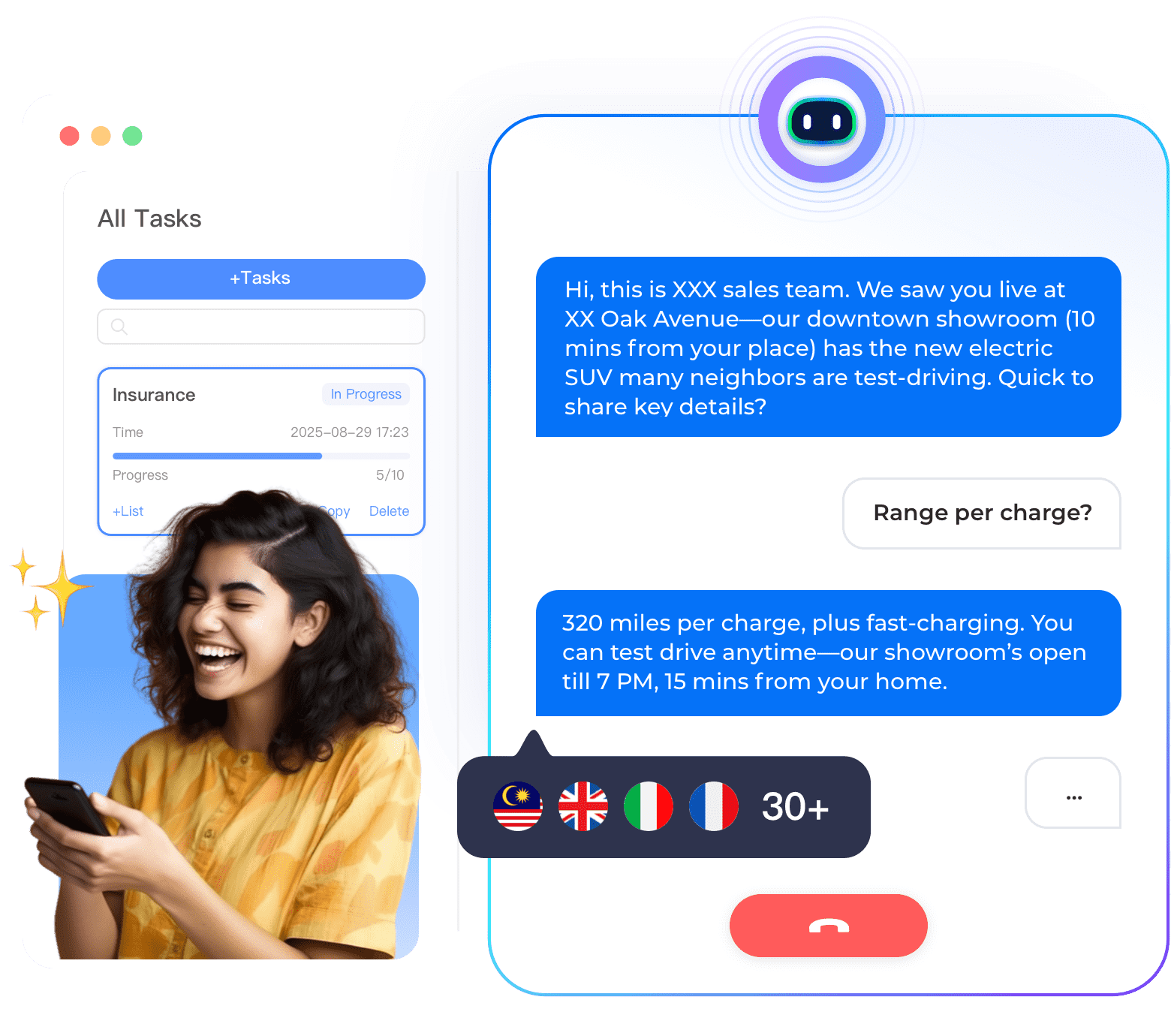
AI voice outbound delivers at scale what manual outreach cannot. A single system can handle thousands of calls per day, 24/7, while analyzing each customer's data usage, current plan, and upgrade history in real time. When a heavy data user consistently exceeds their monthly quota, an AI call can offer the next tier plan at the perfect moment, mentioning the exact overage charges the customer has already seen. That is personalization at scale, and it directly drives conversion.
What AI voice actually delivers for telecom upselling
The economics of outbound upselling shift toward AI is both measurable and significant.
Customer satisfaction improves when interactions feel relevant rather than intrusive. Leading telecom deployments using emotional AI voice have documented customer satisfaction gains of 65% compared to traditional call center upselling. Customers stay on calls longer—far longer than with scripted pitches—because the conversation adapts to their intent in real time. With intelligent interruption handling under two seconds, customers never feel ignored or cut off.
Data from actual deployments across several industries shows that AI driven outbound campaigns lift sales conversion rates by 40% compared to manual telemarketing, while increasing call efficiency 10 fold. That means one AI voice agent does the work of 10 human representatives—24/7, 365 days a year—without overtime, attrition, or retraining.
Crucially, AI voice agents do not just answer questions; they execute. Each call is automatically tagged and synchronized to the operator's CRM, creating qualified leads in real time and assigning them to the appropriate retention or sales agent. This reduces lead processing time by 50% and accelerates follow up speed by 90%, ensuring that no upgrade opportunity goes cold.
The result is a consistent, auditable, and continuous improvement loop. AI systems learn from every outcome, automatically adjust call scripts based on what converts, and feed winning phrases back into the campaign pool for ongoing optimization.
From batch blast to intelligent conversation
In a mature, oversaturated market where multiple SIMs per user are common, the operator that personalizes its upselling will win. Generic marketing is simply too easy for customers to ignore. AI voice turns an intrusive call into a helpful conversation about the customer's actual usage and needs. It uses the customer's language—true bilingual support with English and Malay code switching, deeply adapted to local communication habits—at a scale that human agents cannot match.
For Malaysian telcos competing for every share of postpaid and prepaid revenue, AI voice outbound isn't just an upgrade to outbound marketing. It is the engine that powers the next phase of 5G monetization.