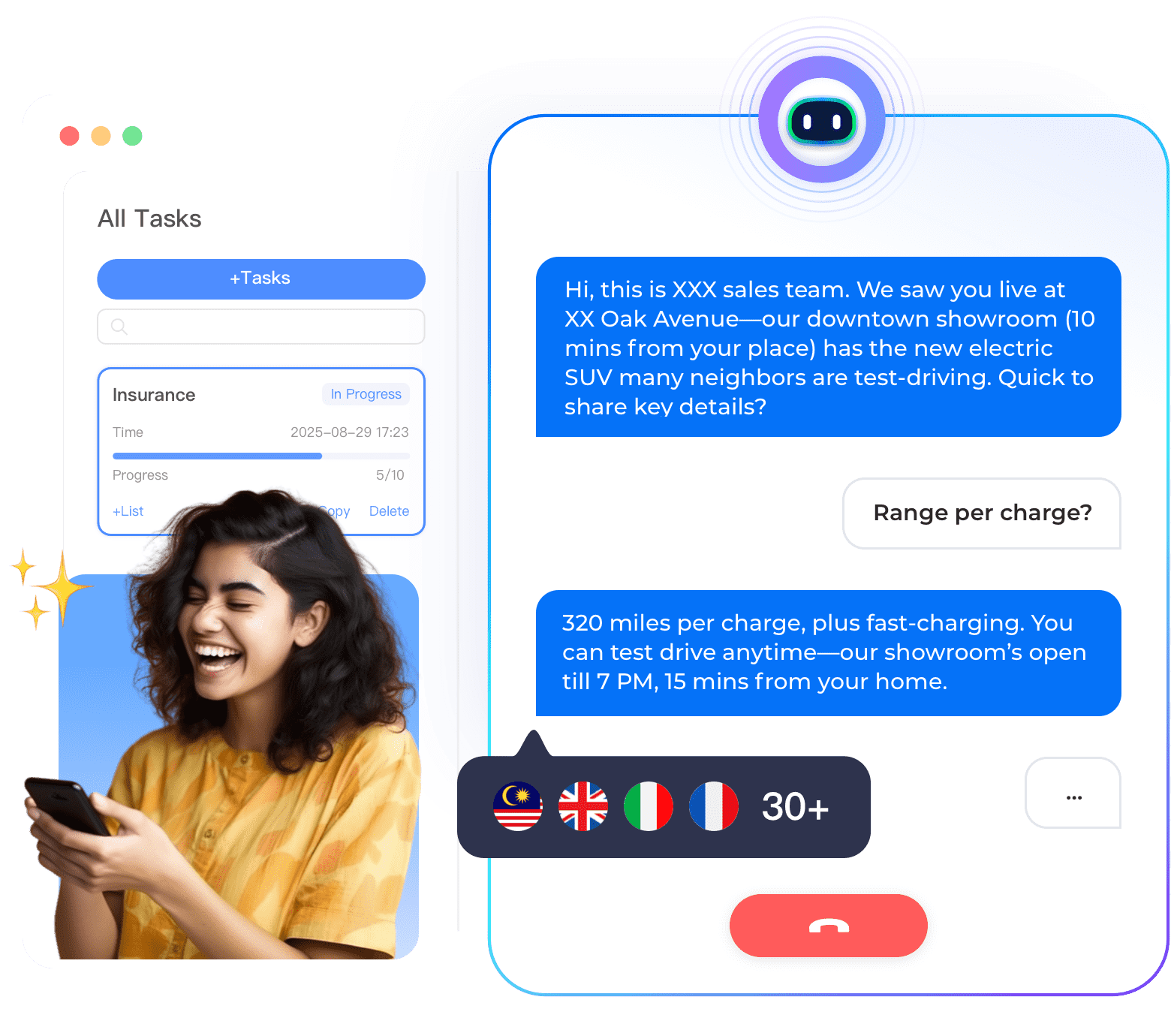

Every call your business doesn't answer is a decision your customer makes without you — usually in favor of whoever picks up next. Most guides throw definitions at you without explaining which option actually fits your call volume, budget, or industry. This guide breaks down the real difference between a call answering service and a virtual receptionist service, including where AI receptionists now fit in, so you can choose with confidence instead of guessing.

What Is a Call Answering Service?
A call answering service exists for one job: making sure no call slips through the cracks. When your phone rings and you can't get to it, an agent (or an automated system) picks up on your behalf, takes a message or routes the caller, and logs the interaction so you can follow up later.
The Core Job: Capturing Every Call Without Gaps
The cause is simple — businesses lose customers the moment a phone rings unanswered, because most callers won't leave a voicemail and will just call a competitor instead. The effect is lost revenue that never shows up on a report, because you never know about the calls you missed. The fix is a live answering service that catches every call, takes down the caller's need, and either forwards urgent ones immediately or delivers a summary within minutes.
Who Typically Answers: Live Agents vs Automated IVR Menus
Call answering services usually operate one of two ways. A live agent answers using a script you provide, so callers hear a real person rather than a recording. Or an automated IVR menu greets the caller and routes them based on button presses, which is cheaper but feels impersonal for anything beyond simple routing. Most reputable call answering service providers blend both, using IVR for basic triage and live agents for anything nuanced.
Real-World Example: A Plumbing Company During a Storm Surge
Picture a plumbing company that gets 15 calls a day on a normal week. A storm hits, and call volume triples overnight as pipes burst across the city. Without a call answering service, half those calls go to voicemail and the caller moves to the next plumber in the search results. With one in place, every call gets answered, urgent jobs get flagged and forwarded to the on-call technician, and non-urgent requests get logged for the next business day — turning a chaotic surge into a manageable, prioritized queue.
What Is a Virtual Receptionist?
A virtual receptionist does everything a call answering service does, plus a lot more. Think of it as a remote front desk for your business — the person (or team) who represents your brand on every call, not just someone who takes a message and hangs up.
How a Virtual Receptionist Differs From an In-House Front Desk
The main difference is location and cost structure, not capability. An in-house receptionist sits in your office, costs a full salary plus benefits, and can only handle one call at a time. A virtual receptionist service works remotely, usually costs a fraction of a full-time hire, and — because it's backed by a team — can handle multiple simultaneous calls without ever putting a customer on hold indefinitely.
What a Virtual Receptionist Can Do Beyond Answering
Where an answering service stops at "message taken," a virtual receptionist keeps going. That includes scheduling appointments directly into your calendar, running custom intake scripts to qualify leads before they reach you, updating your CRM with caller details automatically, and handling routine questions about hours, pricing, or services without ever transferring the call to you.
Real-World Example: A Law Firm Using Intake Screening
A small law firm gets calls from potential clients at all hours, but not every caller has a case the firm actually handles. A virtual receptionist trained on the firm's intake criteria can ask qualifying questions, screen out cases outside the firm's practice area, schedule consultations directly for qualified leads, and send a warm handoff summary to the attorney — saving hours of back-and-forth that a basic answering service simply isn't equipped to do.
Call Answering Service vs Virtual Receptionist: Side-by-Side Comparison
|
Factor |
Call Answering Service |
Virtual Receptionist Service |
|
Core function |
Answers calls, takes messages, basic routing |
Answers calls, schedules, screens, updates CRM, represents brand fully |
|
Typical cost |
Lower, often per-minute or per-call |
Higher, often per-seat or bundled minutes |
|
Best for |
High call volume, simple queries |
Complex queries, client-facing brand experience |
|
Personalization |
Basic scripted greeting |
Deep custom scripts, brand voice training |
|
Availability |
Usually 24/7 |
Often 24/7, sometimes business-hours only on lower tiers |
|
Best-fit business size |
Startups, high-volume trades, retail |
Professional services, healthcare, growing SMBs |
Why the Line Between Them Is Blurring
[New vs competitors: only fragments of this exist across current top-ranking pages; no page frames it as its own trend.] The cause is straightforward — as AI voice technology matured, providers stopped forcing customers to pick a fixed tier and started blending both models into flexible plans. The effect is that today's "answering service" often includes light scheduling, and today's "virtual receptionist" often includes AI-assisted call handling for overflow. What this means for you: don't shop by label alone — compare actual features and pricing tiers, because the marketing terms overlap more than they used to.
AI Receptionist vs Human Receptionist: The Third Option Nobody Explains Clearly
[New vs competitors: zero top-10 ranking pages dedicate a section to this despite it being the biggest shift in the category through 2025–2026.]
Cause: Call Volume Outpaced Human-Only Staffing
Businesses today field more calls across more channels — phone, web chat, social — than a purely human team can staff affordably around the clock. Hiring enough live agents to guarantee instant 24/7 pickup at scale gets expensive fast, especially for after-hours and overflow periods when call volume is unpredictable.
Effect: AI Now Handles Routine Calls at a Fraction of the Cost
AI receptionists can answer FAQs, take basic messages, and even book simple appointments instantly, at any hour, without needing a live agent on standby. The effect is that businesses can now offer genuine 24/7 coverage without paying for 24/7 human staffing, while reserving live agents for calls that need judgment, empathy, or complex problem-solving.
What to Do: Deciding Your Ideal Human/AI Split
Start by auditing a week of call logs and separating routine queries (hours, pricing, simple bookings) from complex ones (complaints, negotiations, sensitive client matters). If routine calls make up the majority of your volume, an AI-first or hybrid plan will cut costs significantly. If most of your calls need nuance — legal intake, medical concerns, high-value sales — weight your plan toward human agents and use AI only as after-hours backup.
Cost Comparison: Which Option Is Actually Cheaper?
Per-Minute vs Per-Call vs Per-Seat Pricing Models Explained
Call answering services typically bill per minute or per call, which rewards short, simple interactions and can get expensive if calls run long. Virtual receptionist services often bill per seat or in bundled minute blocks that include extra services like scheduling, which evens out cost for businesses with longer, more complex calls. As a rough guide, basic answering services often start in the two-figure monthly range for low volume, while full virtual receptionist plans with scheduling and CRM integration commonly run into the low hundreds per month depending on call volume and features included.
Hidden Costs to Watch For
Watch for setup fees charged upfront, after-hours or weekend upcharges that aren't clear in the base price, and long contract lock-ins that penalize you for switching providers. Always ask what happens when you exceed your plan's included minutes — overage rates can turn a cheap-looking plan into an expensive one during a busy month.
Which Is Cheaper, a Call Answering Service or a Virtual Receptionist?
A call answering service is usually cheaper for straightforward, high-volume calls billed per minute. A virtual receptionist costs more but replaces tasks you'd otherwise pay a receptionist or your own time to do — scheduling, screening, CRM updates — so the "cheaper" option depends on what you'd otherwise spend doing those tasks yourself.
24/7 Availability: Who Actually Covers Nights, Weekends, and Time Zones?
Cause: Global and E-Commerce Customers Don't Call During 9-to-5
Customers browsing online at 11 PM or calling from a different time zone don't wait for business hours, and if nobody answers, they often assume the business isn't reliable or simply isn't open.
Effect: Businesses Without After-Hours Coverage Lose International and Urgent Leads
The effect compounds over time — every missed after-hours call is a lead that likely converted somewhere else, and repeated missed calls damage your reputation for reliability even among returning customers.
How to Check True 24/7 Coverage Before Signing a Contract
Ask providers directly whether "24/7" means live agents around the clock or automated/AI coverage during off-peak hours, since many plans quietly shift to bots overnight even when marketed as fully live. Request a written breakdown of coverage hours by tier before committing, and test the after-hours experience yourself with a trial call.
Which Industries Should Choose Which Service?
High Call-Volume, Simple-Query Industries
Retail, recruitment, and real estate businesses tend to get a high volume of straightforward calls — store hours, listing details, application status — that a call answering service handles efficiently without needing deep customization.
Relationship-Driven, Complex-Query Industries
Law firms, healthcare practices, and accounting firms deal with sensitive, detailed conversations where a virtual receptionist service trained on specific intake scripts and compliance requirements protects both the client relationship and the business.
Is a Live Answering Service HIPAA Compliant?
Not automatically — HIPAA compliance depends on the specific provider's security practices, staff training, and data handling agreements, not the service category itself. If you're in healthcare, in writing that any answering or receptionist provider signs a Business Associate Agreement (BAA) and follows HIPAA-compliant call handling and storage procedures before signing up.
Can You Use a Call Answering Service and a Virtual Receptionist Together?
[New vs competitors: only one ranking page touches this, and only in two sentences — this section goes far deeper.]
The Hybrid Model: Safety Net Plus Front Desk
Many growing businesses run a virtual receptionist as their primary front desk during business hours, handling scheduling, screening, and brand-voice conversations, while a call answering service catches overflow calls during peak periods or after hours when the primary team is at capacity.
When Combining Both Makes Financial Sense vs When It's Redundant
Combining both makes sense when your call volume genuinely exceeds what one service tier can handle smoothly, or when you need specialized after-hours coverage that your primary virtual receptionist plan doesn't include. It's redundant, and a waste of budget, if your call volume is low enough that a single well-configured virtual receptionist plan with overflow settings already covers your needs — check your provider's overflow options before paying for two separate services.
How to Choose: A 5-Question Decision Framework
Ask yourself these five questions before choosing a plan.
● How many calls do you receive per day or week on average, including peak periods?
● Are most of your calls simple (hours, pricing) or complex (intake, negotiation, sensitive topics)?
● What's your realistic monthly budget compared to the cost of a missed lead?
● Do you need deep brand personalization and scripted intake, or just reliable message-taking?
● Are you planning to scale call volume significantly in the next 6–12 months?
If you answered "simple and high-volume" to the first two questions, start with a call answering service. If you answered "complex and brand-sensitive," a virtual receptionist service is the better starting point — and revisit the hybrid model once your volume or complexity grows.
Frequently Asked Questions
What is the difference between a virtual receptionist and an answering service?
A call answering service focuses on catching calls and taking messages, while a virtual receptionist handles the full front-desk experience, including scheduling, screening, and brand representation. The cause is different business needs — some just need calls caught, others need a real substitute for an in-house receptionist — so the right choice depends on how much beyond "answering" you actually need done.
Is a virtual receptionist the same as a call center?
No — a call center typically handles high-volume, often outbound or support-ticket-style interactions across many agents, while a virtual receptionist provides a consistent, branded front-desk experience for a specific business. The effect of confusing the two is choosing a service built for scale over service built for relationship, which can feel impersonal to your callers.
Can I use both a call answering service and a virtual receptionist?
Yes, and many growing businesses do, using a virtual receptionist as the primary front desk and a call answering service as overflow backup during peak hours or after hours. This combination works when your call volume or complexity has outgrown a single-tier plan.
Do virtual receptionists work 24/7?
Many do, but "24/7" doesn't always mean live agents around the clock — some plans shift to AI or automated coverage overnight even when marketed as continuous service. Always the actual coverage model in writing before assuming full live availability.
What does a virtual receptionist do that an answering service doesn't?
A virtual receptionist typically schedules appointments, runs custom intake scripts, and updates your CRM automatically, while a basic answering service mainly takes messages and routes calls. The effect is that virtual receptionists reduce your own follow-up workload, while answering services simply ensure you don't miss the call in the first place.