People are asking what is the difference between voice robots and chatbots. They want to figure out which way is more helpful to the customer's communication plan. This kind of market in Southeast Asia is developing rapidly. Users want to get a reply quickly in a localized way of communication. They hope that all channels will have the same service. These two technologies are actually managing different problems. Clear the difference between the two. Figure out how the two work together. This can help the company create an easy-to-use and large customer experience.

1. What is a Voicebot?
A voicebot is an AI-driven system that communicates with users through spoken language, typically over phone calls or voice-based channels. It uses technologies such as speech recognition, natural language processing, and text-to-speech to understand customer intent and respond in real time, making conversations feel more natural and human-like.
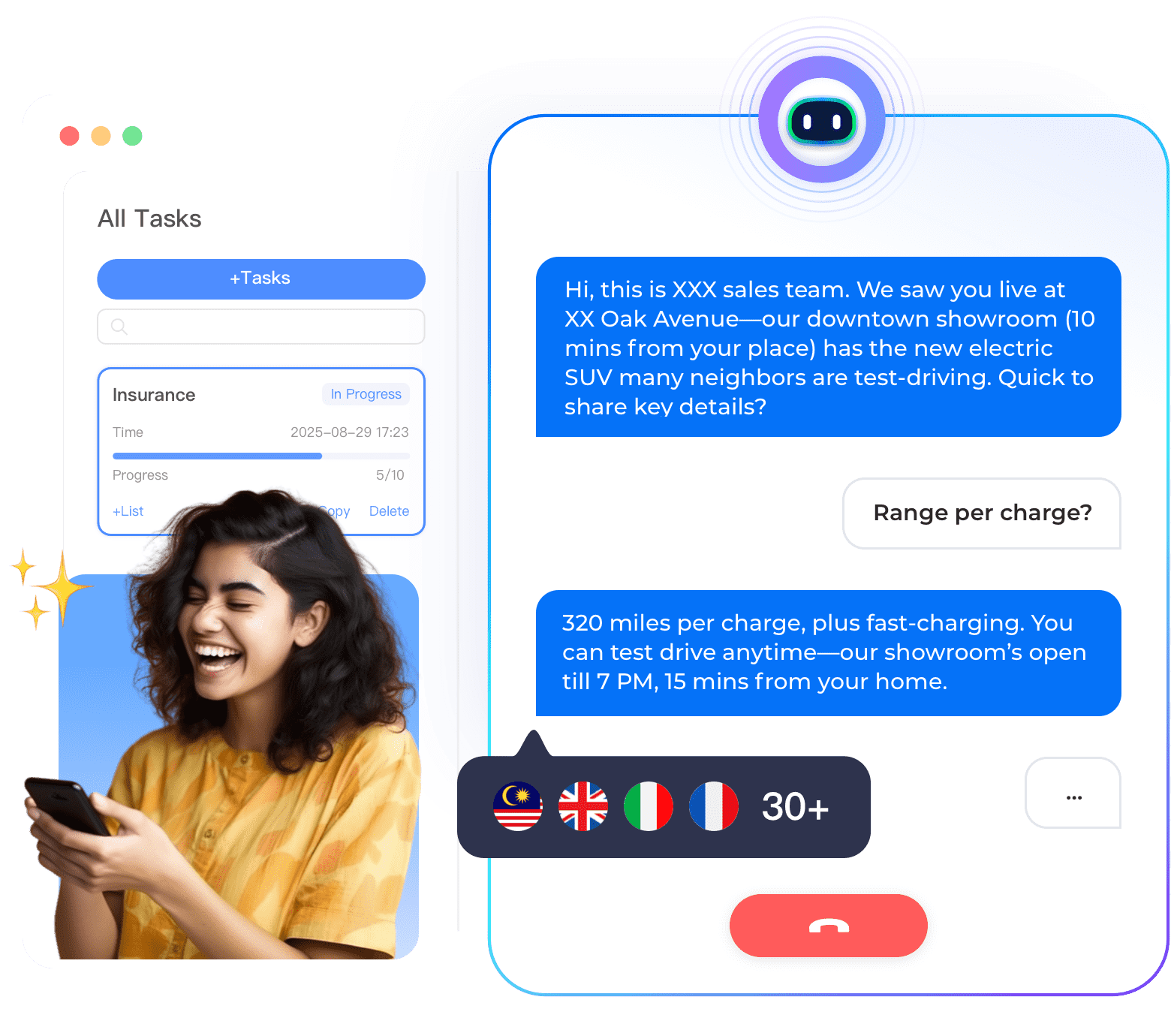
In practical business scenarios, voicebots are often used for outbound engagement at scale. Within Instadesk deployments, companies have been able to expand outbound communication from a few thousand calls per day to tens of thousands, while still maintaining stable system performance and multilingual interaction. This kind of capability is especially valuable in Southeast Asia, where voice communication remains a preferred channel in industries like finance, e-commerce, and insurance.
2. What is a Chatbot?
A chatbot, by contrast, operates through text-based interactions across websites, mobile apps, and messaging platforms. It is designed to handle inbound communication, offering instant replies to customer inquiries and guiding users through structured conversations.
In real implementations supported by Instadesk, chatbot systems have taken on a large portion of repetitive inquiries, allowing businesses to provide 24/7 support without overwhelming human agents. By leveraging knowledge bases and natural language understanding, these systems can deliver accurate and consistent responses, which is particularly important for businesses managing diverse customer bases across multiple regions.
3. Key Differences Between Voicebot and Chatbot
Communication Style and User Experience
The most fundamental difference lies in how users interact with each system. Voicebots rely on spoken communication, which can feel more direct and personal, especially in situations that require explanation or persuasion. Chatbots, on the other hand, offer text-based interactions that are often faster for simple queries and easier to scale across digital platforms.
Typical Use Cases
Voicebots are commonly used for proactive, outbound scenarios such as reminders, follow-ups, and ations, where reaching customers directly is essential. Chatbots are better suited for handling inbound requests, including frequently asked questions, order tracking, and basic troubleshooting.
For example, Instadesk voicebot solutions have supported multilingual outbound scenarios, enabling businesses to communicate with customers in different regions using localized languages, which improves engagement and reduces misunderstandings.

Scalability and Efficiency
Both of these technologies can expand in scale, and their strengths are different. Enterprises want to reach a large audience quickly. VoiceBot is very effective, and the number of calls out every day has increased to tens of thousands. The work efficiency has not decreased. Chatbots can manage thousands of conversations through many channels. These conversations took place at the same time. There is no need to hire extra people.
Operational Impact
From an operational standpoint, the two systems address different types of workload. Voicebots reduce the need for manual outbound calling, while chatbots minimize the burden of repetitive inbound inquiries. In practice, Instadesk implementations have shown that automation can significantly reduce labor costs while improving response efficiency and service consistency.
4. Why This Difference Matters in Southeast Asia
Enterprises in Southeast Asia need to control many languages. Communication channels are scattered everywhere. Customers have different expectations. Many companies have more than 20 service channels and more than 10 languages at the same time. This makes the work very troublesome.
At this time, it is very important to choose tools. The phone is still big in the market over there. VoiceBot is useful. The chatbot controls the messages in the mobile phone software. There are more and more digital interactions now.
Instadesk provides a platform that combines speaking and writing. It helps the enterprise team manage all interactions in one place. There is no need to change the operating system. The data will not be cut off.
5. When to Use Voicebot vs Chatbot
Enterprises want to take the initiative to find customers on a large scale. The schedule should be accurate. Speak like a real person. Payment reminder. Service ation. Sales follow-up. Voice robots have become a good choice. There is a practical example. Artificial intelligence makes a call. The efficiency of work has been halved. The conversion result is more than bit. This shows the power of voice interaction.
The enterprise is in charge of many channels. Customers send a lot of inquiries anytime and anywhere. They want to hear the echo right away. Chatbots are more suitable. Just rely on manual reception. The reply will be slow. The quality is high and low. The designed chatbot gives the answer. Give it quickly. It's accurate. The workload of the support team has become smaller.
The company wants to reply quickly. I want to solve the problem at the first contact. The chatbot system shortens the queuing time. It gives an instant ation. It has played a big role in the dissatisfaction of customers. Organizations that do business in different places. It is difficult to maintain the uniformity of service standards. Chatbots rely on the ready-made knowledge base. Rely on the fixed way to work. The answers given are all the same. It solved this problem.
6. Why Combining Both Delivers Better Results
Many companies do not choose between voice robots and chatbots. They put these two things together. The result is better. Chatbots go to do the first customer contact work. It goes to collect the key information. Voice robots do those more private services. The follow-up work is done by it. This makes it a customer process that has not been disconnected.
This combination method ensures that the customer's speech will not be missed. Talk begins with sending messages. Talking starts with a phone call. It doesn't matter. Instadesk puts these two functions into one platform. It has done the matter. The data flows smoothly in the middle of the channel. The team is more efficient when it manages these interactions.
7. The Role of Instadesk in Integrated Customer Communication
Southeast Asian enterprises want to be bigger and stronger. The ability to unify communication channels is very important. Automation ability is equally important. Instadesk supports real-time multilingual communication on many channels. It can do intelligent routing. It can do centralized management. The organization has expanded its business coverage. The service standard has always been at a high level.
Artificial intelligence drives the workflow. It supports up to fifteen languages. The SLA compliance rate reached 99.2%. Enterprises can provide faster services. The service performance has become more consistent. The complexity of operations has not increased.

Conclusion
Let's see the difference between VoiceBot and ChatBot. This is not simply a comparison of two technologies. It depends on how each technology is put into the large customer participation plan. Instadesk voice robots are good at actively making voice calls and communicating. Chatbots can provide easy-to-use and expandable support for door-to-door interactions. These robots work together in the unified platform of Instadesk. Enterprises can provide customers with a fast reply, personalized and efficient experience. Customers in Southeast Asia now want this kind of service.