
If you've ever managed customer service during 11.11 or Ramadan, you know the feeling. The phone starts ringing at midnight and doesn’t stop. Customers want to know where their packages are, why delivery is late, how to return something. The same questions from hundreds of people, over and over again.
Your team works late. You hire temporary staff. Still, hold times creep up. Customers get frustrated. Agents get burnt out. By the end of the season, everyone is exhausted.
There has to be a better way. And it doesn’t require doubling your budget.
First, Understand What You're Dealing With
Here's what the data tells us about peak season. During the holiday shopping peak, AI deployment in customer service grew 77% year over year. Voice call volume grew 35% in the same period. More calls, more automation, more pressure on teams that aren't prepared.
But here's the important secret many didn't realize: customers don't care who solves their problem. They just want it solved, and they want it solved fast. A study from the 2025 holiday season found that customers consistently prioritize quick, complete resolution over whether they’re talking to a human or an AI agent.
Most e-commerce calls follow a predictable pattern. Order status is almost always the top reason people pick up the phone. Delivery delays come second. Returns and payment issues fill out the rest. These aren’t complex problems. They’re routine, repetitive, and perfectly suited for automation.
So here’s where Instadesk Voice Bot comes in.
Automate the Question You Hear Most Often
Start with order status. It’s the easiest win and typically represents the largest chunk of your call volume.
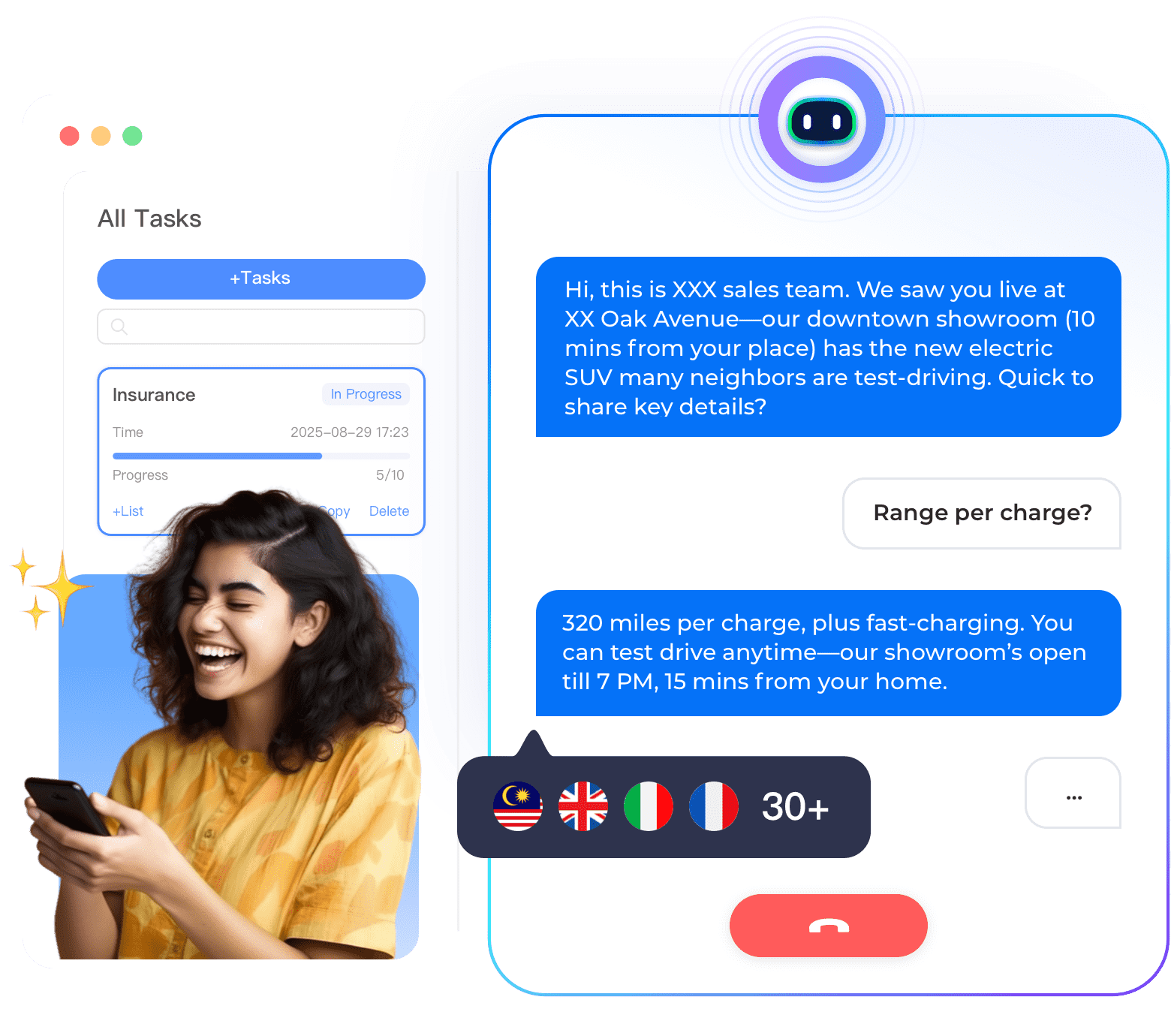
Here’s how it works when a customer calls. The Voice Bot picks up immediately — no hold music, no “press 1 for…” menus. Just a natural voice asking, “Can I get your order number?” The customer says it out loud, and the bot checks your system in real time.
Then it answers. If the order shipped, the bot reads out the tracking number and the carrier’s name. If it’s still processing, the customer hears an estimated ship date. If something’s wrong — the order number doesn’t match or the system can’t find it — the bot offers to connect them to a human agent.
The whole thing takes about a minute. No agent involved. No hold time. No overtime pay. And the customer hangs up happy because they got an answer instantly, without waiting in a queue.
Once order status is working smoothly, you repeat the process for delivery delays, then returns, then payment verification. One by one, you take the most frequent calls off your team’s plate. Your agents stop answering the same five questions all day and start focusing on problems that actually need a human.
Know When to Hand the Call Off
Not every call should be automated, and a good Voice Bot knows the difference.
Some customers are angry. Some have complicated problems that involve multiple orders or unusual edge cases. Some just want to talk to a person, and that’s fine too. The goal isn’t to replace humans — it’s to make sure humans spend their time on calls that actually need them.
Instadesk Voice Bot handles the routine stuff — status checks, basic returns, delivery updates. But when it detects frustration in the customer’s voice or runs into a request that’s too complex for its playbook, it doesn’t try to power through.
Instead, it says something natural like, “Let me connect you with someone who can help.” And here’s the important part: it passes along everything it learned during the conversation. The order number, the customer’s name, what they’ve already tried, what the issue is. The agent doesn’t have to ask, “Can you tell me your problem again?” The customer doesn’t have to repeat themselves.
That seamless handoff is what separates automation that feels cold and robotic from automation that feels genuinely helpful. The customer barely notices the transition. They just know they’re finally talking to someone who can solve their problem.
Let the Numbers Tell You What’s Working
Once you’ve got the bot running, the results start showing up pretty quickly — not just in your metrics, but in your team’s morale.
One e-commerce brand that uses Instadesk, Little Warcraft Digital, went from serving customers in 10 countries to serving them in 193 countries. They didn’t hire hundreds of new agents to make that happen. They just automated the right calls.
The data is compelling. Agent efficiency improved by over 50%. Night service gaps — those dead hours when customers call and no one answers — dropped by 80%. And during peak days, when call volume spikes unpredictably, they still hit 99.2% of their service level agreements.
That’s not because their agents worked extra hours. It’s because their agents stopped spending all day answering “where’s my order” and started focusing on the calls that actually need a human — angry customers, complex refund disputes, account security issues.
The Voice Bot handled the routine stuff. The humans handled the rest. And the whole operation ran smoother as a result.
The Bottom Line
Peak season is going to happen whether you‘re ready or not. 11.11, 12.12, Ramadan, Black Friday — they roll around every year, and every year they bring the same surge in call volume.
But you don’t have to dread it. You don’t have to hire temps you’ll let go in January. You don’t have to burn out your best agents.
Audit your calls. Find the patterns. Automate the routine ones — order status, delivery delays, basic returns. Let your humans do what they’re best at: solving real problems, calming frustrated customers, building relationships.
Instadesk Voice Bot handles the rest. That‘s how you survive peak season without losing your mind. Or your team.