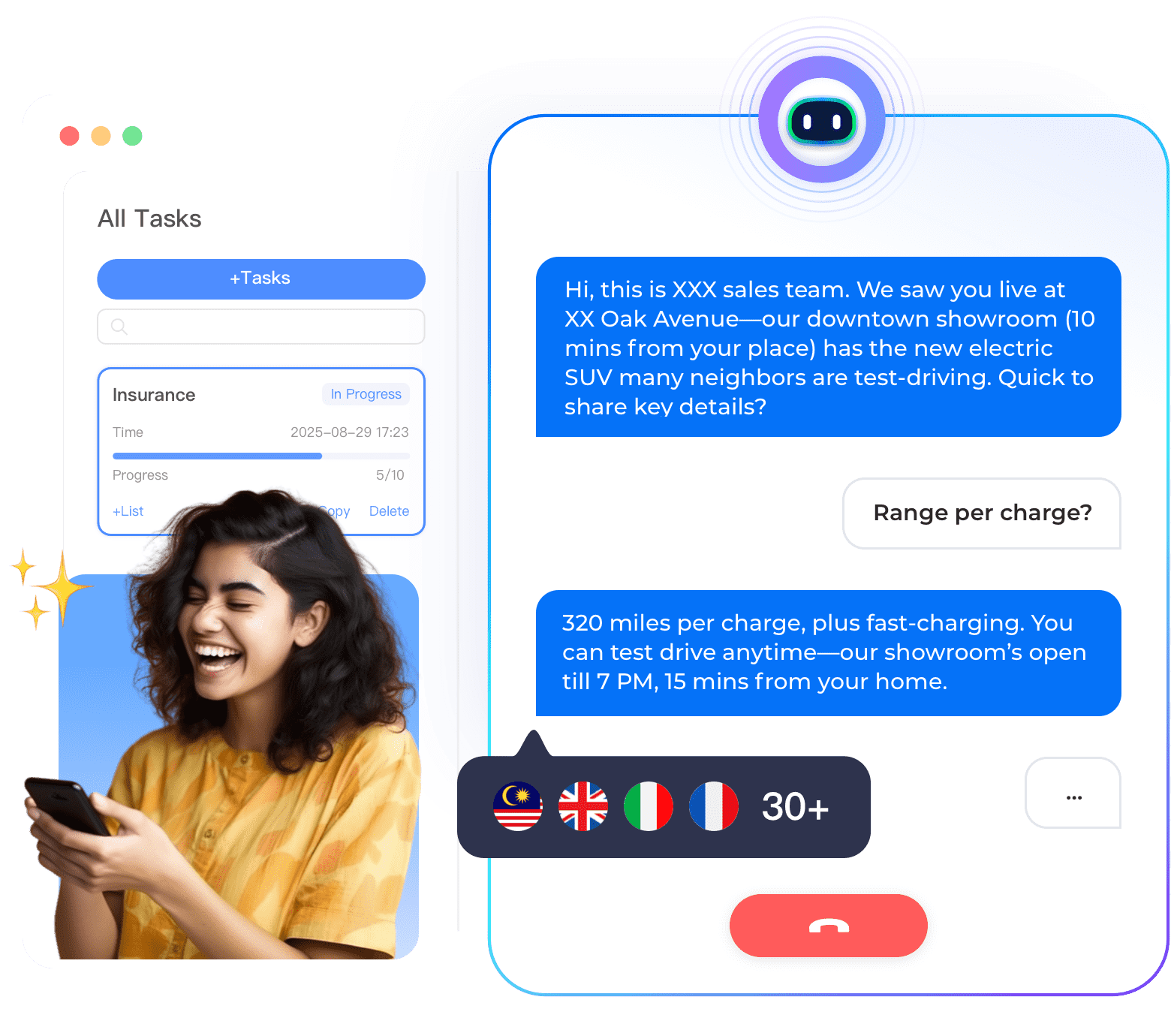
Efficiency metrics—call volume,cost per interaction,deployment speed—are important,but they're just the tip of the iceberg.The true value of smart outbound lies deeper:stronger customer relationships,actionable insights,brand loyalty,and sustainable growth beyond short-term productivity gains.

1.Deeper customer understanding.
LLM-powered voicebots don't just deliver scripts—they listen,interpret context,and identify unspoken needs.A healthcare reminder might uncover procedure anxiety.A retail follow-up could reveal dissatisfaction before it becomes a negative review.Real-time intent capture enriches customer profiles and uncovers opportunities manual processes miss.
2.Humanized engagement that builds loyalty.
Smart outbound restores humanity to customer communication:natural voice delivery,interruption-friendly conversation flows,context-aware responses.In healthcare,empathetic appointment reminders reduce no-show rates by 30%while improving satisfaction.In retail,personalized follow-ups referencing past purchases drive repeat business at twice the rate of generic outreach.
3.Proactive risk mitigation and compliance confidence.
Smart outbound systems include automated safeguards:time-of-day restrictions,real-time call recording and consent verification,automatic opt-out handling.Beyond avoiding fines(which can reach thousands per violation),these features build trust by demonstrating respect for customer boundaries.
4.Closed-loop workflows that unify customer journeys.
Integration with CRM platforms creates closed-loop workflows that automatically log conversation outcomes,trigger follow-up actions,and sync data across marketing,sales,and service systems.A lead captured through outbound can be instantly routed to the right sales rep with complete interaction history—reducing response time from hours to minutes.
5.Global reach without cultural compromise.
Native multilingual support adapts to regional dialects,respects cultural communication norms(formality levels,conversation pace),and enables localized campaigns without in-house linguistic expertise.Essential for meaningful global engagement.
The Cumulative Impact of Hidden Value
When these elements work together—intent-driven data capture, humanized engagement, proactive compliance, unified workflows, and global accessibility—they create a compound effect that transforms outbound communication from a cost center into a value generator. Businesses see:
• 25–40% higher customer retention rates due to personalized engagement
• 30% faster lead qualification through automated intent analysis
• 50% reduction in compliance-related risks
• 20% increase in cross-sell and upsell opportunities from enriched customer insights
Putting It All Into Practice
To unlock these hidden values, businesses need outbound tools designed to do more than just automate tasks—they need systems that understand, adapt, and connect.
For organizations ready to move beyond efficiency and embrace the full potential of smart outbound communication, Instadesk offers enterprise-grade VoiceBot solutions built on large-model AI, multilingual support, zero-code workflow orchestration, and seamless CRM integration. Our platform turns routine outbound interactions into meaningful conversations, actionable insights, and lasting customer relationships—all while maintaining the operational efficiency that makes intelligent outbound so compelling in the first place.
In 2026, the most successful businesses won’t just use smart outbound to work faster—they’ll use it to work smarter, connect deeper, and grow stronger.