AI spam filters are now blocking up to 50% of legitimate commercial calls before they ever reach customers. In Malaysia, leading telcos including Maxis and U Mobile have deployed network-level AI firewalls that analyze call frequency, duration patterns, and opening scripts in real time—flagging suspicious numbers as “Spam Likely” or “Scam Alert” without any human involvement.
For insurance marketers, this is not a minor inconvenience. It is a structural breakdown of the traditional outbound model. Manual dialing, static lists, and repetitive scripts are exactly what spam filters are trained to catch. And with Bank Negara Malaysia actively driving digitalization in the financial sector—including the new Digital Insurers and Takaful Operators (DITO) framework—insurers are under pressure to modernize every part of their operations, including outbound marketing.
The question is no longer whether to adopt AI-powered outbound calling. It is how quickly insurers can move from being screened out to being heard.

The real cost of getting screened out
A 2026 analysis by Cognism found that the average cold calling success rate across industries sits at just 2.7%, meaning fewer than three calls out of every hundred lead to a meaningful conversation. Yet teams using verified phone data combined with AI-assisted research and structured methodology achieved an 11.3% success rate—more than four times higher than the industry average.
For insurance marketing specifically, the gap is even wider. Many insurers continue to run campaigns the old way: agents working from static lists, dialing one number after another, using the same script with minor variations. These are the exact behaviors that trigger spam filters. A number that makes too many short calls in rapid succession, uses repetitive greetings, or gets consistently ignored is flagged automatically. The result is that even when a lead is qualified and ready to talk, the call may never connect.
How AI-powered voice agents bypass the filters
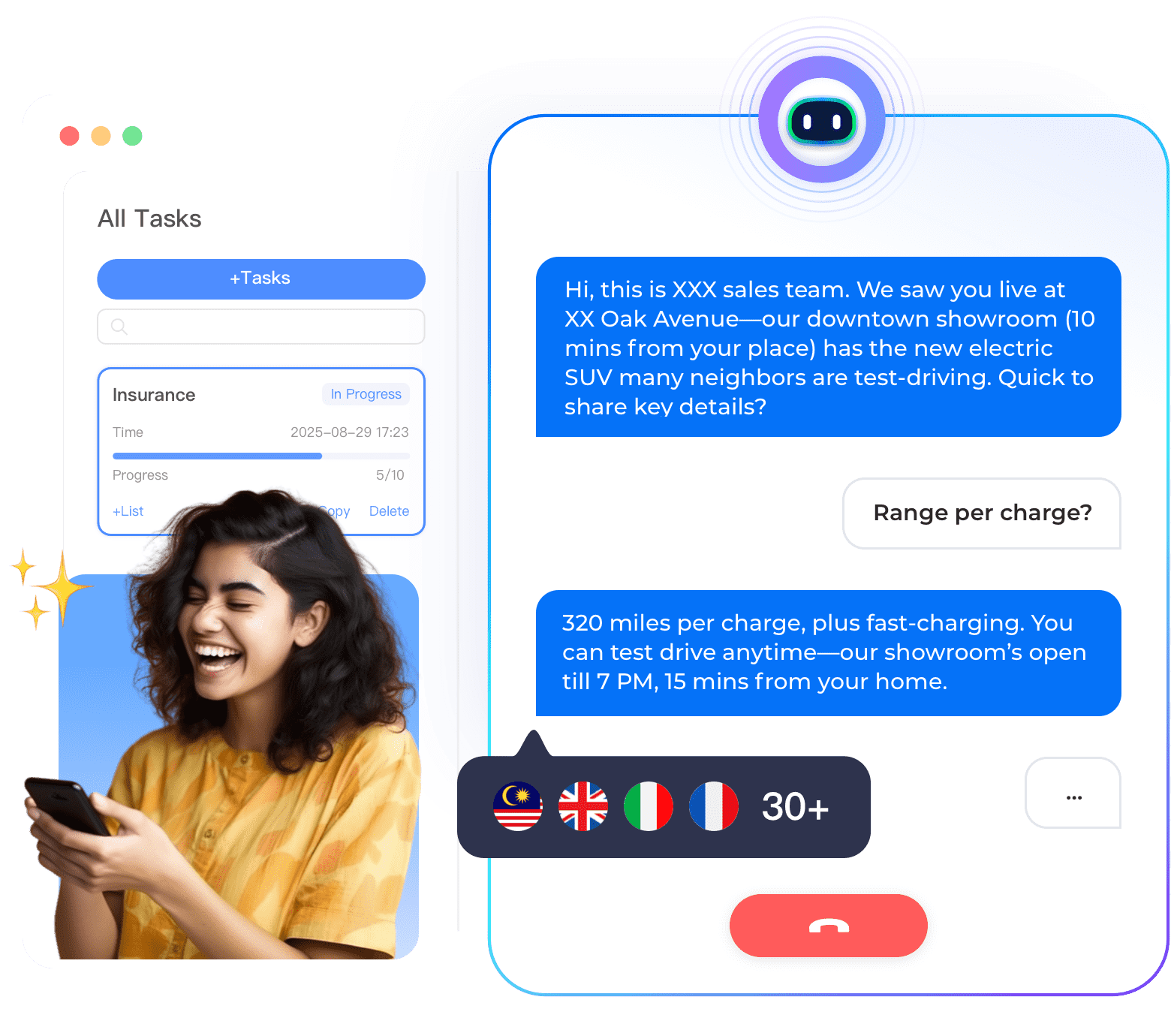
The same technology that powers spam detection can also be used to evade it—when deployed correctly. AI-powered outbound voice agents operate differently from manual dialing in ways that directly address what spam filters look for.Lower call volume, higher intelligence. Instead of flooding networks with hundreds of calls from a single number, AI voice systems distribute calls intelligently and prioritize quality over quantity. Each call is timed based on the prospect‘s behavior patterns, not a static list.
• Natural, varied conversation openings. Spam filters detect repetition. AI voice agents using large language models generate unique opening statements for each call, adapting phrasing based on the prospect’s profile and past interactions.
• Personalized timing and targeting. AI systems analyze when each prospect is most likely to answer—based on time zones, past engagement, and behavioral signals—and call at those optimal moments. Fewer unanswered calls mean fewer negative signals to spam algorithms.
• Emotion-infused, human-like voices. Generic, flat tones are easier for algorithms to identify as automated. AI voice platforms now support voice cloning from real recordings and emotional infusion, making conversations feel genuine and reducing the likelihood of being flagged as spam.
For financial and technology clients deploying AI voice in marketing and invitation scenarios, these capabilities have increased conversion rates by over 30%.
What Malaysian insurers can do right now
The shift from manual to AI-powered outbound marketing isn‘t just about improving efficiency—it’s about being heard at all.
• Audit your current outbound practices. Identify which numbers are being used, how many calls they make daily, and what your answer and conversion rates actually are. Flagged numbers may need to be retired.
• Replace volume-based dialing with intelligence-based outreach. AI voice platforms operate 24/7, handle thousands of concurrent calls, and learn from each interaction. A single AI agent can match the workload of ten human representatives while maintaining consistent, high-quality conversations.
• Invest in personalization at scale. AI voice agents can tailor every call based on customer history, sentiment, and intent. Real-time personalized responses keep prospects engaged longer and increase the likelihood of conversion.
• Measure what matters. Beyond call volume, track answer rates, conversation length, sentiment trends, and conversion outcomes. These metrics indicate whether your outreach is being received as valuable communication or network noise.
A smarter way to reach your customers
AI spam filters are not going away. If anything, they will become more sophisticated as carriers and regulators intensify efforts to protect consumers from fraud. Bank Negara Malaysia‘s ongoing work on AI governance in financial services underscores that the era of unregulated, high-volume outbound calling is ending.
But this is an invitation to upgrade. The insurers winning in 2026 are not the ones dialing the most numbers—they are the ones having the most meaningful conversations.
That’s exactly what Instadesk VoiceBot was built to do. With 24/7 batch outbound calling, real-time personalized responses, emotion-infused voice, and zero-code orchestration that launches campaigns in days, it helps insurers move from being screened out to being sought out. For insurance marketers ready to stop fighting spam filters and start having real conversations, the path forward is clear.