Workplace communication training is the process of developing employees’ skills in speaking, listening, writing, and interacting effectively with colleagues and customers. For insurance companies—where clear communication is critical for claims handling, sales, and compliance—effective training reduces errors, improves customer satisfaction, and lowers regulatory risk. AI-powered communication training uses realistic simulations with virtual customers to provide scalable, personalized practice. This article explores the benefits of workplace communication training for insurers, its key components, and how Instadesk’s Intelligent Training platform delivers measurable results.

The Insurance Communication Challenge
Insurance professionals interact with customers in high-stakes situations: explaining policy exclusions, handling claim denials, discussing premium increases, and calming upset policyholders. Poor communication leads to complaints, regulatory fines, and lost business. Traditional training (e-learning, workshops) lacks realistic practice and feedback.
What Is Workplace Communication Training?
Workplace communication training focuses on verbal and written skills: active listening, empathy, clarity, de-escalation, and compliance language. In insurance, it also includes required disclosures (“This is a sales call”), prohibited phrases (“guaranteed approval”), and fair treatment principles. Effective training uses realistic scenarios where employees practice conversations and receive feedback.
Why Communication Training Matters for Insurance
Reduced complaints: Empathetic, clear communication de-escalates angry customers.
Higher customer retention: Policyholders stay with insurers they trust.
Compliance adherence: Agents learn to make required disclosures and avoid prohibited language.
Improved claims handling: Clear communication speeds up claims resolution.
Brand reputation: Professional communication builds trust.
How to Implement Workplace Communication Training
Implementation steps include defining communication competencies for each role (claims, sales, service), selecting a platform with insurance-specific scenarios and AI simulation, creating scenarios based on real call logs—claim denial, billing dispute, policy explanation—deploying to employees via web or mobile app, having employees practice with AI-generated virtual customers, and reviewing analytics to identify skill gaps and assign targeted practice.
How Instadesk’s Intelligent Training Serves Insurance
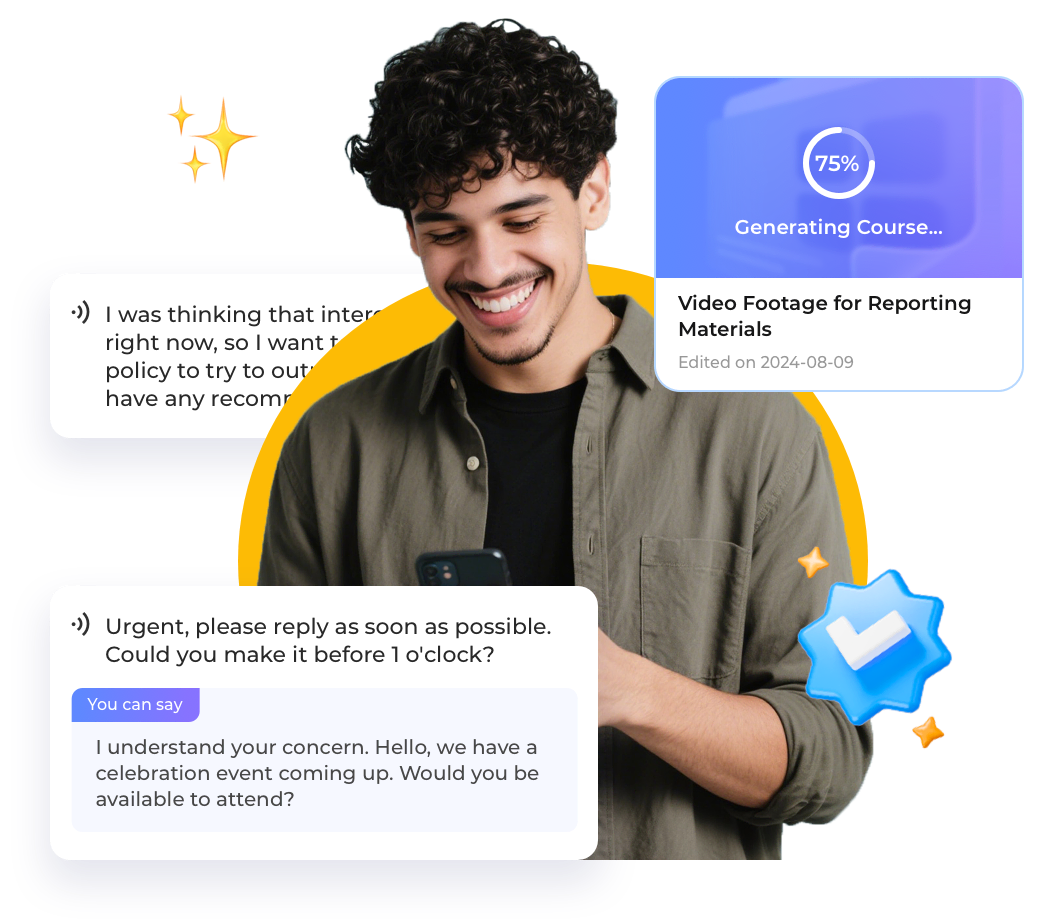
Instadesk’s platform is purpose-built for insurance communication training. Key features include insurance-specific scenarios: claim denial explanation, premium increase notification, policy coverage clarification, and complaint handling. AI-generated personas simulate virtual customers with varied emotions (angry, confused, grateful, anxious). Real-time feedback flags unprofessional language, missing disclosures, and suggests empathetic phrasing. Competency dashboards track progress on empathy, clarity, compliance, and de-escalation. A custom scenario builder allows you to upload your own policy documents and common objections.
Case Study: Insurer Reduces Complaint Escalations by 40%
A regional insurance carrier deployed Instadesk’s workplace communication training for its 300 call center agents. Results after nine months showed complaint escalations to supervisors dropped by 40 percent. Customer satisfaction scores for communication increased by 25 percent. Compliance audit findings related to disclosure language decreased by 60 percent. Agents reported higher confidence in handling difficult calls.
Workplace communication training is essential for insurance companies to improve customer experience, reduce risk, and retain policyholders. AI-powered simulation provides realistic, scalable practice that traditional methods cannot match. Instadesk’s platform delivers insurance-specific scenarios and real-time feedback to help agents communicate clearly, empathetically, and compliantly.