
The Limits of Single‑Agent Automation
A single AI agent can handle a refund request from start to finish. That is already powerful.
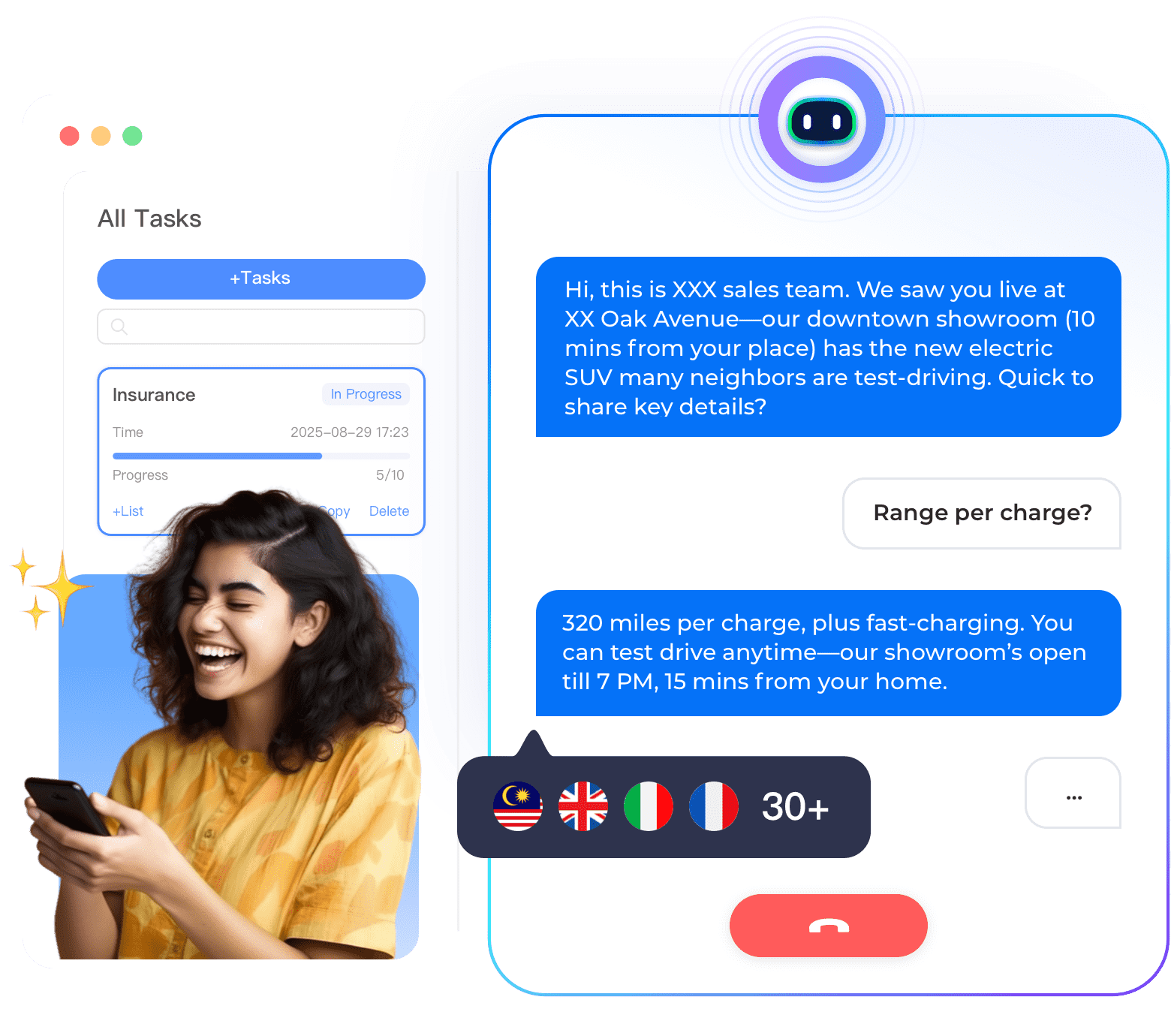
But customer service is rarely a single‑step process. A customer returns a product. The return triggers an inventory update, a refund to the payment method, a credit to the loyalty account, and a notification to the warehouse — all of which involve different systems and different types of work.
No single agent can do everything well. That is where multi‑agent collaboration changes the game.
Instadesk orchestrates specialized AI agents that work together as a coordinated service team.
This guide explains how multi‑agent collaboration works, why it matters for complex customer service, and how Instadesk builds it into every product.

What Is Multi‑Agent Collaboration?
Multi‑agent collaboration is a system where multiple specialized AI agents share a unified memory and work together to resolve complex customer requests.
Each agent has a specific role. One handles triage and intent recognition. Another looks up customer data and order history. A third processes transactions and updates systems. A fourth drafts communications and escalates only when necessary.
These agents do not work in isolation. They share context, hand off tasks, and coordinate actions across different systems.Think of it as a digital service team where every member is an expert in their domain and they all share the same brain.
For example, when a customer requests a return, the triage agent identifies the intent. The data agent pulls order details and return eligibility. The transaction agent validates the refund amount and initiates the payment. The communication agent updates the customer and logs the interaction. The entire sequence happens in seconds without any human touching the process.
How Instadesk Builds Multi‑Agent Systems
Instadesk's platform is designed from the ground up for multi‑agent orchestration.
Unified memory across agents. All agents share the same conversation history and customer context. When a customer switches from chat to email to voice, the agents do not lose track. They know exactly where the conversation left off.
Specialized agents for different domains. Instadesk provides pre‑built agents for logistics tracking, billing inquiries, returns processing, and compliance checking. Each agent is trained on industry‑specific terminology and workflows.
Seamless handoffs with context inheritance. When one agent cannot resolve a request, it hands off to another agent — or to a human — with full context. No repetition. No lost information.No‑code orchestration. Business teams can design multi‑agent workflows using a visual drag‑and-drop builder. No developers required. Deploy in days, not months.
This architecture allows Instadesk to handle complex, multi‑step service scenarios that single‑agent systems cannot manage.
The Four Types of Agents in a Service Workflow
Triage agent. The first point of contact. It identifies customer intent, language, urgency, and sentiment. It decides which agent should handle the request.
Data agent. Retrieves information from connected systems: order status from the ERP, customer history from the CRM, product details from the catalog. It prepares the data needed for resolution.
Action agent. Executes transactions: processes refunds, schedules appointments, updates records, creates tickets. It connects to backend systems via APIs.
Communication agent. Drafts responses, translates messages, formats notifications, and escalates to humans when confidence is low. It ensures the customer receives clear, accurate, and timely updates.
In Instadesk, these agents work in parallel, not sequentially. While the action agent processes a refund, the communication agent is already drafting the ation message. The customer perceives a single, seamless experience.
Real‑World Example: Logistics Service Automation
A North American logistics provider built a multi‑agent platform with Instadesk to handle cross‑border customer service.
Challenge. Customers tracked packages across multiple carriers. Inquiries came in five languages. The support team was overwhelmed by routine “Where is my package?” requests.
Solution. A multi‑agent system with specialized agents for tracking, translation, ticket creation, and escalation.
How it worked. A customer sent a tracking number in Spanish. The triage agent identified the language and intent. The translation agent converted the message to English. The tracking agent queried the carrier API and retrieved the shipment status. The communication agent drafted a response in Spanish. The entire process took under three seconds.
Results. 85% of routine inquiries fully automated. 90%+ multilingual accuracy. Response time from hours to seconds. Customer service efficiency doubled.
The same system now handles returns, delivery exceptions, and address changes without human intervention. Only complex cases — such as lost packages or damage claims — escalate to human agents.
Why Multi‑Agent Systems Deliver Better Outcomes
Faster resolution. Agents work in parallel instead of sequentially. While one agent processes data, another prepares the response.
Higher accuracy. Each agent is specialized in one domain. The tracking agent is better at parsing carrier APIs. The compliance agent is better at detecting disclosure violations.
Easier maintenance. Update one agent without breaking the others. Improve the translation model without retraining the tracking system.
Better scaling. Add new agents for new services without redesigning the entire system. Need to handle video chat? Add a video agent. Need to process documents? Add a document‑processing agent.
Consistent customer experience. A unified memory ensures that every agent knows the full context. The customer never has to repeat themselves.
How to Get Started with Multi‑Agent Service
Start with one workflow. Pick a high‑volume, repetitive process that crosses multiple systems — for example, order returns or billing disputes.
Identify the steps. Break the process into discrete actions: identify intent, look up data, execute a transaction, completion.
Assign agents to each step. Use Instadesk’s pre‑built agents for common tasks. Build custom agents for proprietary workflows using the visual builder.
Connect your systems. Use prebuilt connectors for Salesforce, SAP, Shopify, Zendesk, and more. Or use open APIs for custom integrations.
Test and iterate. Run the multi‑agent workflow on a small batch of requests. Monitor performance. Adjust and scale.
Deployment takes days, not months. No developer required.
Conclusion
A single AI agent is powerful. A coordinated team of specialized agents working together is transformative.
Multi‑agent collaboration allows businesses to automate end‑to‑end customer service workflows that span multiple systems, languages, and channels.
Instadesk builds this capability into every product. Pre‑built agents. Unified memory. No‑code orchestration. Pay‑as‑you‑go pricing.Start with a free trial. No credit card required.