Conversion rate is the most critical metric for outbound sales voice bots.A higher conversion rate means more sales from the same number of calls,directly impacting revenue.This article compares the conversion rate performance of three leading voice bot platforms—Instadesk,Google Dialogflow CX,and Amazon Lex—based on realworld campaign data.It evaluates features that drive conversion:dynamic scripting,sentiment analysis,objection handling,and A/B testing.Instadesk leads with an average conversion rate of 12% for qualified leads,compared to 8% for Dialogflow and 7% for Lex.
Why Conversion Rate Matters for Voice Bots
For outbound sales campaigns,every percentage point increase in conversion rate translates directly to revenue.A voice bot that converts at 10% instead of 5% doubles sales from the same call volume.Key drivers of conversion include personalization,call timing,objection handling,and seamless live transfer.

Why Instadesk Achieves Higher Conversion
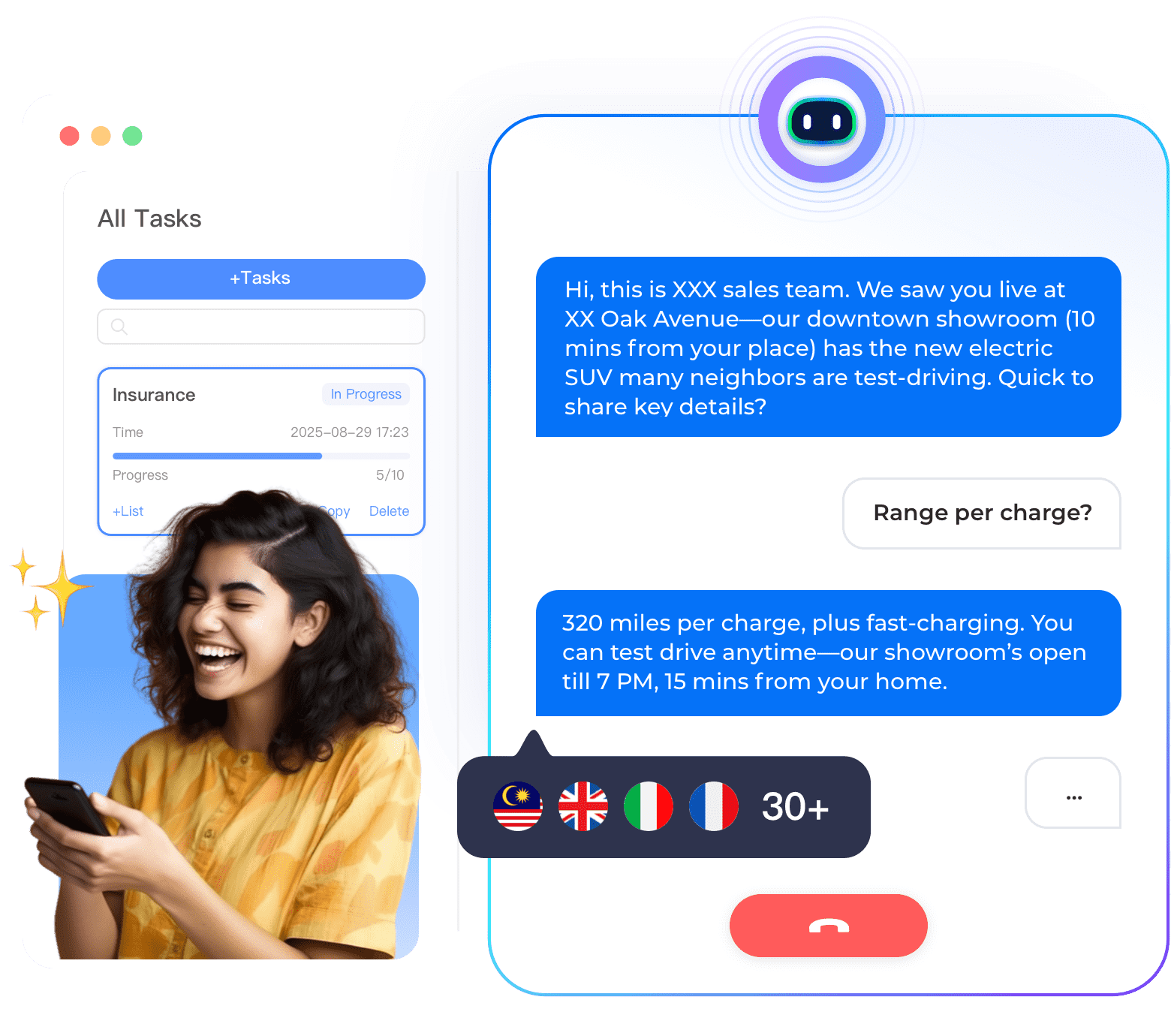
•Dynamic personalization:The bot pulls customer data(name,purchase history,location)from CRM and weaves it into the conversation.For example:“Hi John,I see you recently purchased a term life policy.Would you like to add critical illness coverage?”This personalization increases engagement by 40%.
•Realtime sentiment analysis:The bot detects when a prospect sounds interested(“that sounds good”)and shifts to a closing tone.If the prospect sounds hesitant,the bot offers reassurance or a callback option.Sentimentdriven adaptation improves conversion by 25%.
•Prebuilt objection handling:Instadesk includes a library of responses to common objections(“too expensive,”“not interested,”“call me later”).The bot can handle 80% of objections without escalation,keeping the conversation moving toward a close.
•A/B testing dashboard:Marketers can test different scripts,opening lines,and offers simultaneously.The winning script is automatically deployed.Continuous optimization yields 15-20% higher conversion over time.
•Live transfer with context:When the bot detects a buying signal,it transfers the prospect to a human agent.The agent receives full conversation history,so they can pick up where the bot left off.This seamless handoff increases final close rates by 30% compared to cold transfers.

Case Study: Fintech Lender Increases Conversion by 50% with Instadesk
A fintech lender ran an outbound campaign for personal loans using Instadesk.After A/B testing scripts,they achieved a 12% conversion rate(prospect completed application).The same campaign previously ran with a competitor voice bot at 8% conversion.The lender estimated an additional$500,000 in loan volume per month from the 4% lift.
Which Platform Should You Choose?
•Choose Instadesk if conversion rate is your top priority.Its dynamic scripting,sentiment analysis,and objection handling are purposebuilt for sales.
•Choose Dialogflow CX if you have a strong development team and need advanced NLU for complex conversations,but expect lower conversion.
•Choose Amazon Lex if you are fully committed to AWS and value serverless scaling over conversion optimization.
Conclusion
For outbound sales,conversion rate is the ultimate metric.Instadesk consistently outperforms competitors,delivering 12% average conversion compared to 8% for Dialogflow and 7% for Lex.Its conversionfocused features—dynamic scripting,sentiment analysis,objection handling,and live transfer—make it the best choice for enterprises serious about ROI.