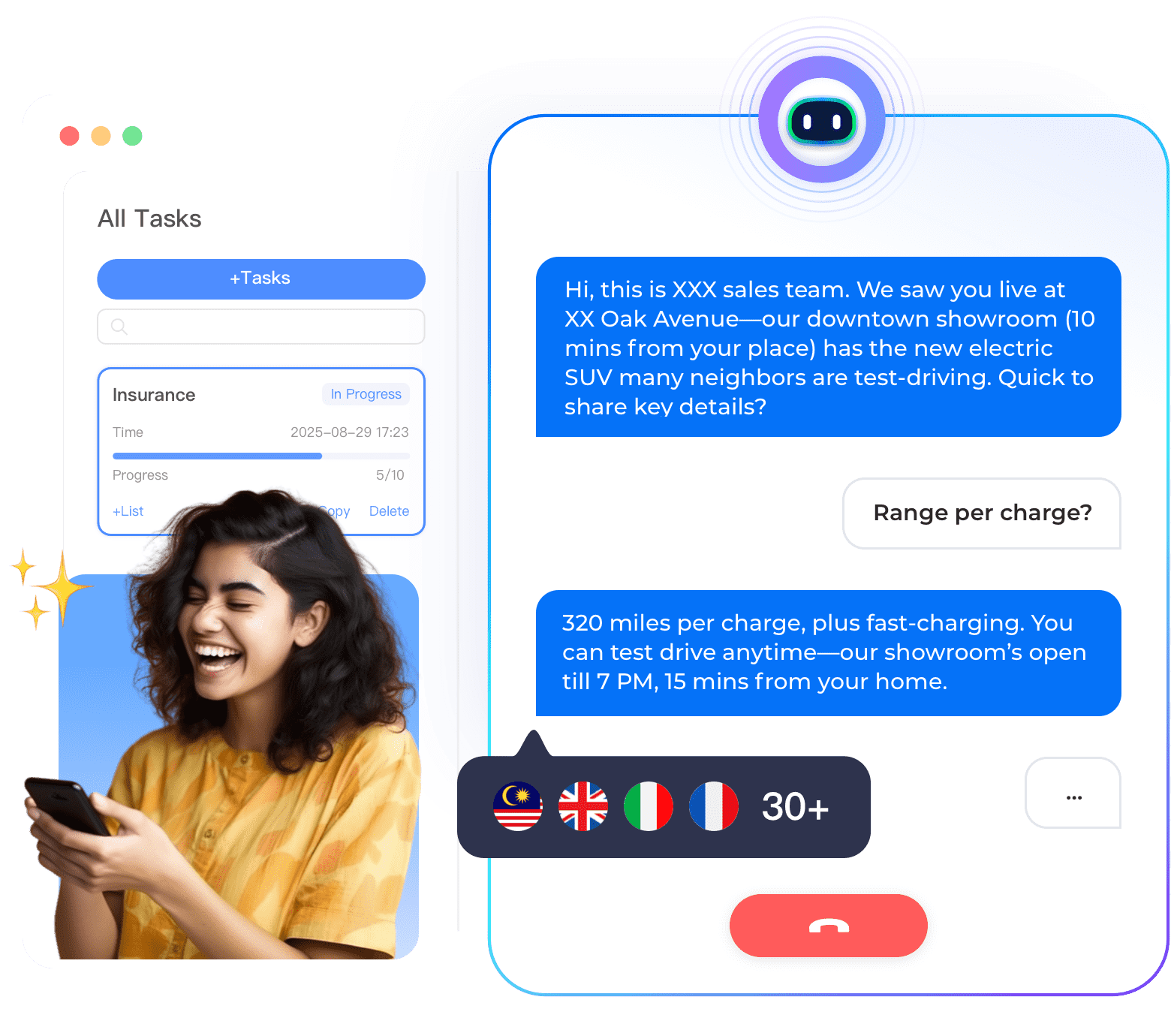
A voice bot with custom voice allows businesses to use a synthesized voice that matches their brand identity—whether it's warm and friendly,professional and authoritative,or youthful and energetic.Unlike generic text-to-speech(TTS)voices,custom voice bots are trained on recordings of a specific voice actor,producing a unique,natural-sounding voice that builds brand recognition and trust.This article explains how custom voice works,its benefits for enterprises,and how Instadesk's platform enables custom voice integration for voice bots across customer service,sales,and marketing.
What Is a Custom Voice for Voice Bots?
A custom voice is a synthetic voice created by training a neural TTS model on recordings of a specific person(voice talent,CEO,or brand spokesperson).The model learns the unique characteristics of that voice:pitch,timbre,pacing,and emotional range.Once trained,the voice bot can speak in that custom voice,delivering consistent,on-brand interactions across millions of calls.Custom voices are distinct from standard TTS voices,which are generic and shared across many businesses.

Benefits of Using a Custom Voice
· Brand differentiation: Stand out from competitors with a unique voice that customers recognize.
· Trust and familiarity: A consistent brand voice builds customer confidence.
· Emotional connection: Custom voices can convey specific emotions(empathy,excitement,urgency)aligned with brand values.
· Professional consistency: Same voice across all automated interactions,from sales to support.
· Legal and compliance: For regulated industries,a custom voice can be a controlled brand asset.
How Custom Voice Training Works
The process involves several steps.First,record a voice talent reading hundreds of scripted sentences(typically 30 minutes to several hours of audio).The recordings must be high-quality,with minimal background noise.Second,the audio is used to train a neural TTS model(e.g.,Tacotron,WaveNet).This can take days to weeks depending on the amount of data.Third,the model is integrated into the voice bot platform.Finally,the custom voice is deployed across inbound and outbound calls.Some platforms offer fine-tuning for emotions(happy,sad,urgent)using additional recordings.
How Instadesk Supports Custom Voice for Voice Bots
Instadesk's voice bot platform includes custom voice capabilities.Key features include support for custom TTS model integration(pre-trained models from ElevenLabs,Amazon Polly,Google TTS,or custom models).Voice cloning from as little as 5 minutes of clean audio(for basic quality;30+minutes recommended).Emotion control to adjust pitch and tone for different contexts(e.g.,empathetic for complaints,urgent for reminders).A/B testing of different voices to optimize customer satisfaction.Easy switching between custom and standard voices for different use cases.No additional per-call fees for custom voices(standard pricing applies).

Case Study:Luxury Hotel Chain Increases Booking Conversions with Custom Voice
A luxury hotel chain deployed a voice bot for reservation inquiries using a custom voice modeled after their brand ambassador(a well-known hospitality personality).The custom voice conveyed warmth and professionalism,matching the brand’s high-end image.After deployment,the voice bot's booking conversion rate increased by 18% compared to the standard TTS voice.Customer surveys showed 85% of callers found the custom voice“pleasant and trustworthy.”The chain rolled out the custom voice across all 50 properties.
Considerations Before Implementing a Custom Voice
· Cost: Custom voice training typically costs$1,000-$10,000 depending on audio length and provider.
· Time: Training takes 2-6 weeks.
· Voice talent: Secure rights to use the voice indefinitely.
· Consistency: Ensure the custom voice matches all brand touchpoints(advertising,video,voice bot).
· Localization: For multilingual bots,you may need custom voices for each language.
Conclusion
A voice bot with custom voice is a powerful way to build brand identity and customer trust in automated interactions.Instadesk's platform supports custom voice integration,allowing enterprises to deploy unique,on-brand voice experiences across millions of calls.While custom voices require upfront investment,the ROI in brand recognition and conversion can be substantial.