Market research is the systematic process of gathering,analyzing,and interpreting information about customer needs,competitor strategies,and industry trends.For telecom operators navigating rapid technology changes and intense competition,effective market research is essential for informed decisions on service offerings,pricing,and customer experience.This guide defines market research,explains its importance for telecom operators,and shows how Instadesk's VoiceBot enhances research through automated customer insights.

What Is Market Research?
Collecting primary data(surveys,interviews,focus groups)and secondary data(industry reports,competitor analysis,market trends)to understand market dynamics and customer preferences.For telecom operators,it answers:Which services do customers value most?How satisfied are they?What are competitors doing?Which emerging technologies to invest in?
Market Research vs.Business Intelligence:What’s the Difference?
Business intelligence focuses on analyzing internal operational data—call volumes,churn rates,revenue per user—to optimize current operations.Market research,in contrast,looks outward:understanding customer sentiment,competitive positioning,and market opportunities.While business intelligence tells you what is happening,market research explains why and helps predict future trends.
| Aspect | Market Research | Business Intelligence |
| Focus | External: customers, competitors, market trends | Internal: operations, performance, efficiency |
| Data Source | Surveys, interviews, third-party reports | CRM, billing systems, network data |
| Objective | Identify opportunities, understand customer needs | Optimize operations, improve efficiency |
| Output | Customer insights, competitive analysis | Dashboards, operational metrics |
Why Market Research Matters for Telecom Operators
•Rapid technology evolution—5G,fiber,IoT,cloud;understand which technologies customers value
•Intense competition—traditional competitors and new entrants(cable,OTT players)
•Changing customer expectations—seamless digital experiences,personalized offers,instant support
•Regulatory environment—stay compliant with evolving rules
•Customer retention—understand what drives loyalty and what causes defection
How to Conduct Market Research in Telecom
•Define objectives—what questions need answering?
•Identify data sources—primary(surveys,interviews)and secondary(industry reports,competitor analysis)
•Collect data—deploy surveys,analyze customer interactions,gather feedback from support channels
•Analyze and interpret—identify patterns,trends,and actionable insights
•Act and monitor—translate insights into strategy(new offerings,pricing changes,service improvements)
AI-powered tools can significantly enhance market research capabilities:
•Automated Customer Interviews:Voicebots can conduct structured interviews with customers,gathering feedback on services,preferences,and satisfaction levels.
•Sentiment Analysis:Analyze customer interactions across support channels to identify emerging issues,frustration points,and satisfaction drivers.
•Competitor Analysis:Monitor social media,review sites,and forums to understand competitor performance and customer sentiment.
•Predictive Insights:AI models can identify trends and predict future customer needs based on historical data.
How Instadesk VoiceBot Enhances Market Research for Telecom Operators
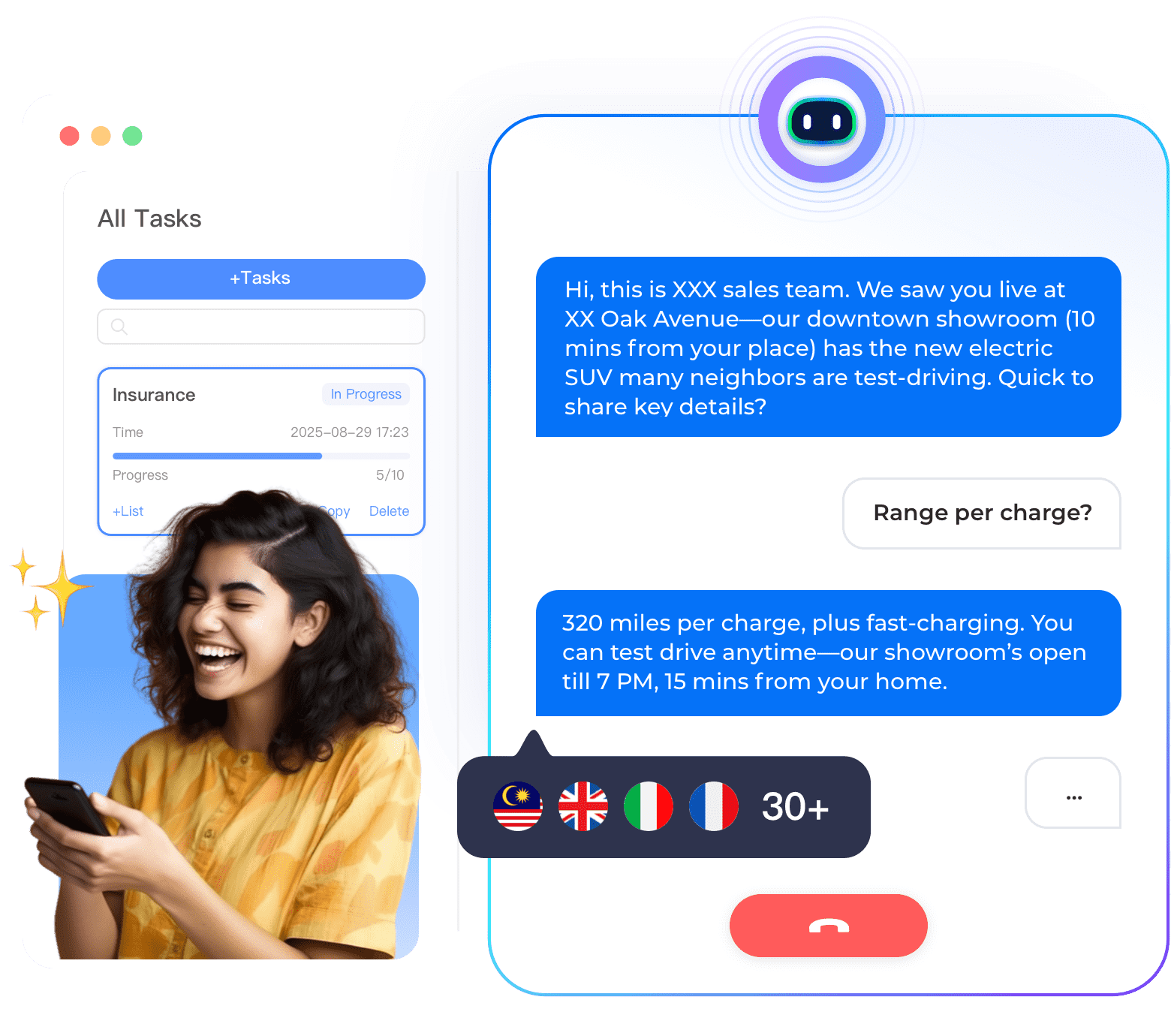
Instadesk’s VoiceBot platform enables telecom operators to conduct automated,large-scale customer research.By deploying voicebots to conduct structured interviews,gather feedback,and analyze sentiment,operators can collect actionable market insights without manual effort.

Key features for market research include:
•Automated Surveys:Deploy voicebots to conduct customer satisfaction surveys,service feedback calls,and product interest polls.
•Natural Language Understanding:Voicebots understand open-ended responses,capturing nuanced feedback beyond simple ratings.
•Real-Time Translation:Serve diverse customer bases with multilingual voice surveys.
•Sentiment Analysis:Automatically detect frustration,satisfaction,and emotional tone in customer responses.
•Integration with Analytics:Export survey results to analytics platforms for deeper analysis.
•Scalable Outreach:Conduct thousands of research calls simultaneously,collecting data at scale.
Frequently Asked Questions
•How do you ensure customers are willing to participate in automated research calls?Voicebots can be deployed as follow-up after support interactions,offering customers the option to participate in brief surveys.Clear opt-in and opt-out mechanisms ensure compliance.
•Can voicebots capture qualitative feedback effectively?Yes.Advanced voicebots using large language models can understand open-ended responses,summarize key themes,and identify actionable insights.
•How does this compare to traditional market research firms?AI-powered voice research provides faster,more scalable data collection at a fraction of the cost.It complements—rather than replaces—in-depth qualitative research.
Conclusion
Market research is essential for telecom operators to stay competitive in a rapidly evolving industry.By leveraging AI-powered tools like Instadesk’s VoiceBot,operators can automate customer feedback collection,gather insights at scale,and make data-driven decisions about service offerings and customer experience investments.This approach reduces costs,accelerates insight generation,and enables more responsive strategy development.