Mastering Voice Automation: 5 Best Practices for Deploying AI Voicebots in Customer Service

Mastering Voice Automation: 5 Best Practices for Deploying AI Voicebots in Customer Service

2026-03-05 14:55:31 Readership 334

Every business knows the paradox of phone support: customers love it, but the costs can be staggering. From banking to healthcare, organizations spend billions maintaining contact centers that struggle to keep pace with rising call volumes and customer expectations. What if you could deliver the warmth of human conversation with the efficiency of automation?

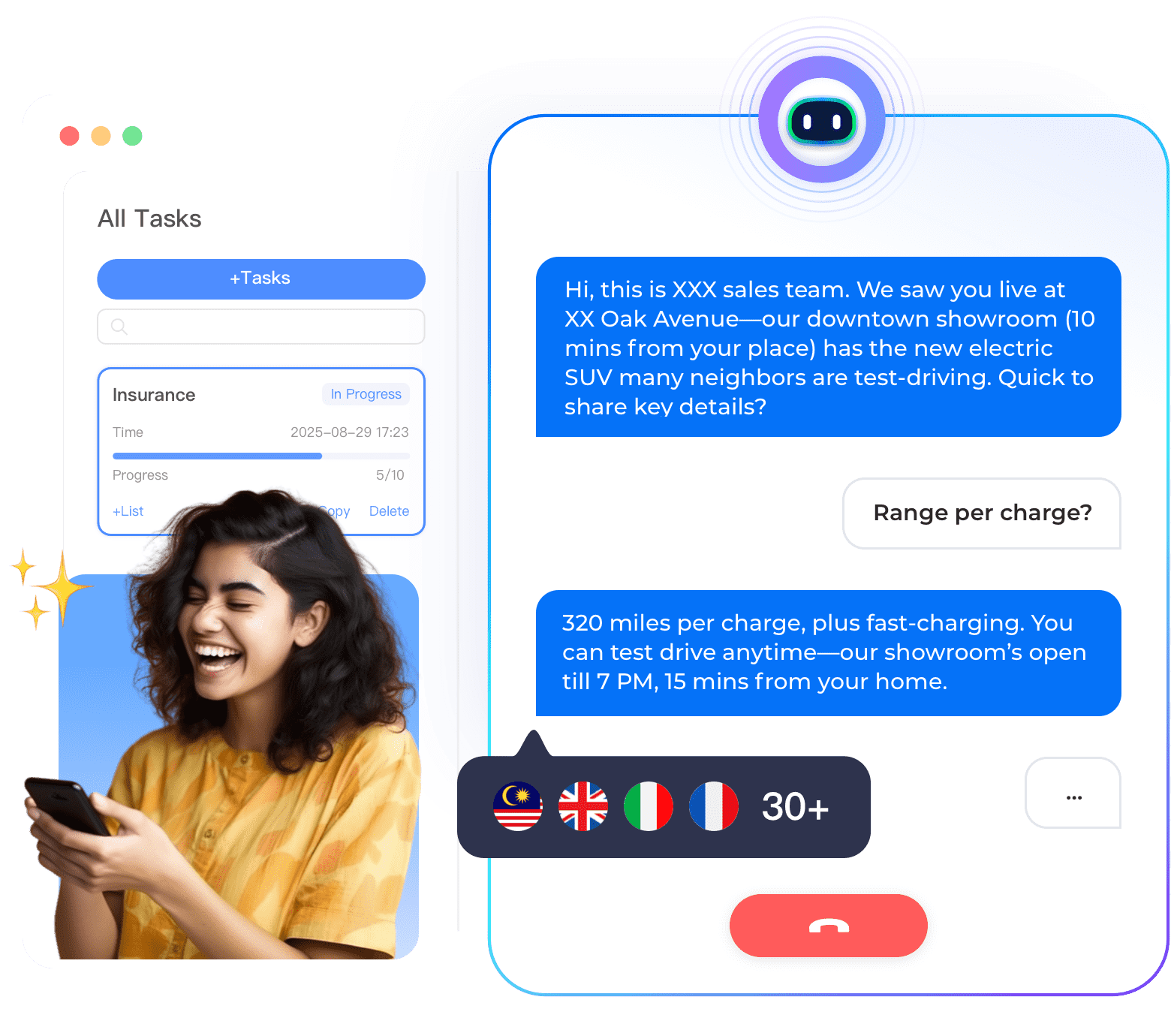
That's precisely what Instadesk's AI voicebot delivers. By combining large-model technology with natural conversation flows, our voice automation helps companies across finance, retail, and healthcare increase conversion rates by over 30% while reducing manual workloads by up to 60%. Whether handling outbound sales campaigns in Malaysia or inbound service requests for Chinese retail giants, Instadesk powers millions of conversations that feel remarkably human.

But here's what we've learned from years of deployment: successful voice automation isn't just about technology—it's about design. Through trial, iteration, and real-world results, we've identified five foundational practices that separate voicebots customers love from those they abandon. Here's what works.

1. Start by Understanding Who's Actually on the Line

Voice callers aren't the same people who type into your chat widget—and treating them as such is the first step toward automation success. The customer who picks up the phone often has different expectations, different patience levels, and different communication patterns than those who prefer messaging channels.

Ask yourself: Will callers be comfortable speaking with an automated assistant? Are they calling from mobile devices or landlines? Do they speak dialects your voicebot AI should accommodate?

2. Make the First 10 Seconds Count

The opening moment of any call determines whether customers hang up, demand a human, or give your voicebot a chance. A well-designed greeting does more than say hello—it sets the stage for a successful conversation.
A strong opening should:
•    Clearly inform callers they're speaking with an AI voicebot
•    Notify about call recording (required in jurisdictions like California)
•    Account for "hello" interruptions with secondary greeting responses
•    Provide clear instructions on what to ask

Instadesk's greeting base functionality helps businesses manage this critical touchpoint. When iKang Guobin, a leading health management institution, deployed our inbound voicebot, they crafted greetings that immediately communicated the bot's capabilities—resulting in seamless handling of over 100,000 customers per store with 7*24 availability.

Most importantly, highlight your voicebot's top capabilities upfront. "I can help you with appointment scheduling, billing questions, or prescription refills" gives callers confidence to proceed rather than immediately requesting transfer.

3. Design Conversations for Listening, Not Reading

People process spoken information differently than text—which means your carefully crafted chat scripts won't work over the phone. Phone calls demand more cognitive attention than chat. Callers are either focused solely on resolving their issue or multitasking with limited attention. This makes brevity and clarity non-negotiable for voicebot conversations.

Keep information succinct:
Instead of lengthy explanations, deliver the core message and offer additional details if requested. For example:
•    Before: "Your plan has been successfully updated and you should see the changes reflected in your account within approximately two to four hours."
•    After: "You're all set! Changes will appear in 2-4 hours."

Use conversation markers:
Words like "first," "almost there," and "finally" help callers understand their progress. This simple technique, combined with Instadesk's intelligent interruption capabilities that respond within 2 seconds, creates natural conversations that keep callers engaged.

4. Silence Is Part of the Conversation—Use It Wisely

Unlike chat where typing buffers create natural pauses, voice conversations require intentional silence management. When callers need to locate information like policy numbers or account details, strategic pauses prevent frustration.

Set appropriate timeout lengths:
•    Longer timeouts (3-5 seconds) for grouped numbers like credit cards or when callers need to recall information
•    Shorter timeouts (1-2 seconds) for yes/no responses to maintain momentum

Provide clear re- s:
Rather than generic "I didn't catch that," use specific guidance: "Please repeat your account number. You can find it at the top of your statement."

5. Recognize When Human Intervention Matters More

The best voicebots know exactly when to step aside. Even the most sophisticated AI voicebot has limits—and recognizing them isn't failure, it's intelligent design. Smart handoff strategies protect customer experience while maximizing automation benefits.
Trigger handoffs when:
•    The conversation loops repeatedly without resolution
•    Business rules require specialized departments (e.g., all cancellation requests to retention teams)
•    Callers express clear frustration or repeatedly request human agents

For Chongqing Department Store, Instadesk's hybrid approach—combining voice contact center with voicebot automation—increased effective resolution rates by 15% while reducing manual costs by 60%. The system intelligently routes complex electronics warranty questions to human agents while voicebots handle routine after-sale surveys with 96.5% satisfaction.

Getting Started with Voice Automation

Successful voicebot deployment requires more than good technology—it demands thoughtful design, a clear understanding of caller behavior, and solutions flexible enough to handle real-world complexity. The principles outlined here apply whether you're automating inbound customer service or outbound sales campaigns: know who's calling, write for the ear, manage silence intentionally, and recognize when human intervention adds value.

Instadesk's approach focuses on giving businesses the tools to put these principles into practice. With visual orchestration and pre-built templates across industries, teams can build, test, and refine voice conversations without starting from scratch. The goal isn't to replace human interaction but to handle routine conversations efficiently—freeing people to focus on the calls that truly need them.

When conversations flow naturally, customers notice. They stay on the line longer, resolve issues more quickly, and hang up with a better impression of the business on the other end. That's what well-designed voice automation delivers: not just efficiency, but experiences that actually work for the people using them.

Tags

Share This Article

Table of Contents

Instadesk

Instadesk official

Instadesk’s official account, all news and updates of Instadesk are published here.
Explore how we can help you achieve customer success
Get started free

You may also like

LLM-Powered VoiceBot for Indonesian Banking: Human-Like Multilingual Calls at Scale

Banking in Indonesia faces unique challenges. Customer expectations for fast, localized service are rising. Meanwhile, operational costs and compliance complexities keep growing. An LLM-powered VoiceBot addresses these pain points head-on. It delivers human-like, multilingual interactions at scale. For banks, this means better efficiency, happier customers, and stronger growth.

2026-05-14 15:19:34

Automated Customer Support Results: How a Malaysian Insurer Reduced Claim Processing Time by 70%

A Malaysian insurer used Instadesk’s AI voicebot and chatbot to automate motor FNOL claims. It cut processing time by 70%, lowered agent call volume and significantly boosted customer satisfaction.

2026-05-14 10:42:21

Philippines BPO Bulk Outbound VoiceBot Solution:Boost Callback Efficiency by 3x,Cut Operating Costs by 50%with AI Voice

The Philippines is the global Business Process Outsourcing(BPO)hub,known as the"Call Center Capital of the World".The industry contributes over 8.5%of the country's GDP and employs more than 1.3 million people.Beyond traditional customer service,BPO companies handle massive volumes of bulk outbound work such as market research,customer satisfaction surveys,and lead qualification.However,bulk outbound faces three major pain points:high labor costs–an outbound agent costs approximately 15,000-20,000 PHP per month($270-360),with turnover rates as high as 30-40%;low efficiency ceilings–each agent completes only 80-120 effective calls per day,with significant time wasted on invalid numbers,rejections,and hold times;inconsistent quality–variations in tone and pace affect customer experience and survey data accuracy.BPOs urgently need a scalable,cost-effective,script-consistent outbound solution.

2026-05-14 10:28:36
Elevate Your Customer Experience. See How Instadesk Can Help.

Get Started in Minutes. Experience the Difference.

Get started free
Experience the AI-Powered CX Transformation Now
Free Trial

WhatsApp Us Now !

Book a Demo
Please Select
  • VoiceBot Outbound Call
  • VoiceBot Inbound Call
  • ChatBot
  • Quality Inspection
  • Intelligent Training
  • Agent Assistant
  • Smart Badge
  • Intelligent Contact Foundation
  • Call Center
  • Live Chat
  • Video Agent
  • Ticket System

By submitting, you agree to our Privacy Policy

Submit