
Top 10 Intelligent Work Order Management Systems Compared: Which One Is Right for You?
When the work orders are chaotic, the service completely collapses. When faced with the top ten popular intelligent work order management systems such as Instadesk, Zendesk, Freshdesk, and ServiceNow, the selection should first consider the three trump cards of "function, price, and learning speed". This article takes a comprehensive look at the top 10, with a focus on testing Instadesk: AI automatic order allocation, multi-channel inbound, mobile quick processing, rapid response in the background, and using data analysis to tell you why it has consistently ranked at the top in terms of cost-effectiveness and become the first choice for digital services for global small and medium-sized enterprises to large groups.

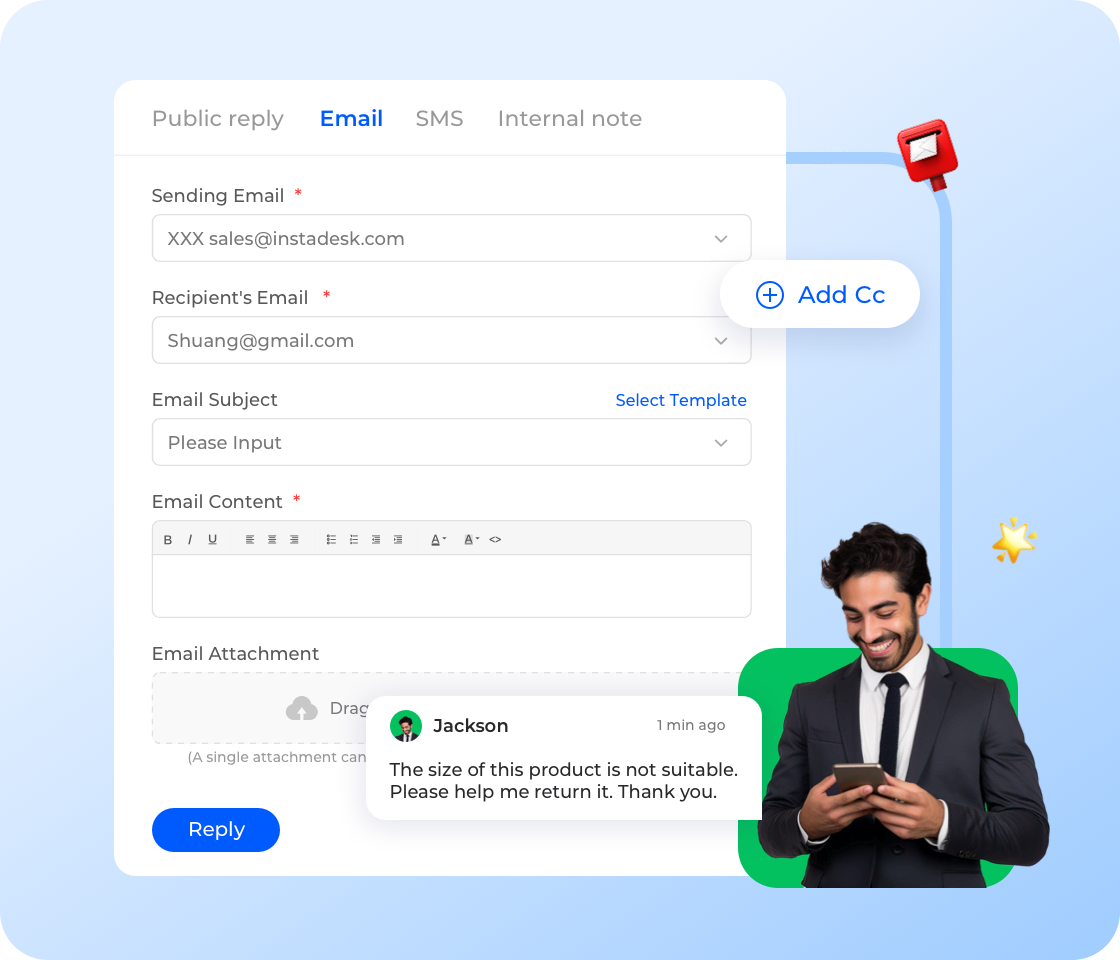
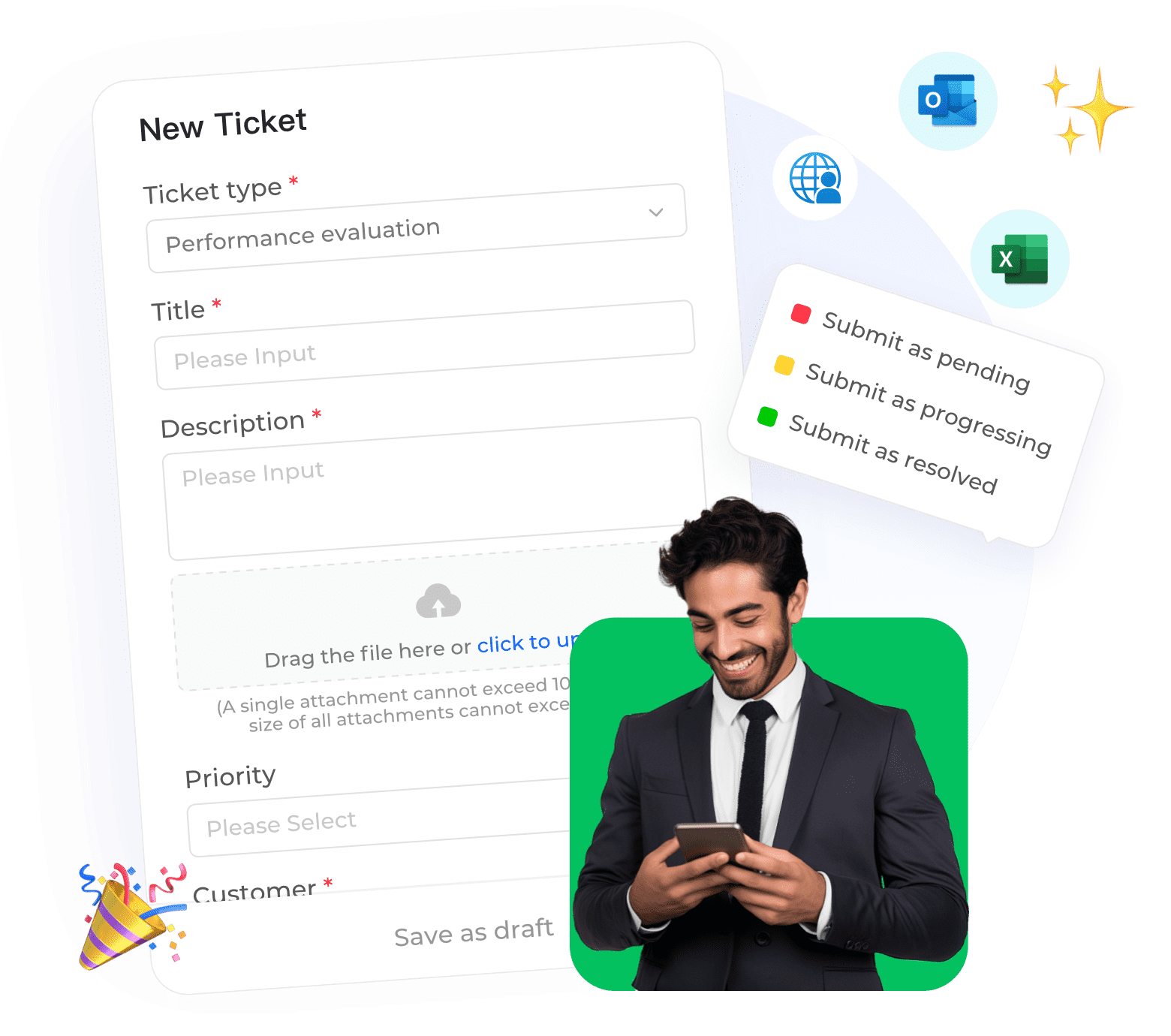
Instadesk is a comprehensive intelligent work order system that focuses on efficiency, professionalism, and systematic approaches to enhance cross-departmental collaboration, solve customer problems more quickly and effectively, and also features automatic assignment and transfer functions, providing visual supervision during the service process. The core technology is licensed from a large-scale model, making the ticketing system more intelligent.
Core function
By implementing customizable workflows, we can solve customers' actual problems more quickly and effectively, which can increase customer satisfaction by more than 20%.
It can also be compatible with cross-platform unified management, support manual and automatic scheduling, and increase the agent efficiency by more than 30%.
Applicable scenarios
Customer Service: Respond quickly to customer inquiries and enhance satisfaction.
Manufacturing: Manage equipment maintenance and production tasks, enhance work efficiency
Advantage
The interface is simple and clear, suitable for all people.
The tiered pricing plan is suitable for enterprises of different sizes.
The powerful background big data analysis capability of AI, with high accuracy.
Recommendation Reason
Instadesk—Ticket System solution directly addresses operational inefficiencies by combining customizable workflows with cross-platform unified management, enabling enterprises to resolve real business issues faster and at scale. Its measurable impact—over 20% improvement in customer satisfaction and more than 30% gain in agent efficiency—demonstrates clear ROI. With a user-friendly interface, flexible tiered pricing, and high-accuracy AI-driven data analytics, it is suitable for organizations of varying sizes and technical maturity, making it a practical and scalable choice across customer service and manufacturing scenarios.
2.Zoho Desk
Zoho Desk is a comprehensive and flexible intelligent ticket management system, specifically designed to enhance customer service efficiency and optimize team collaboration.
Core functions
Intelligent task allocation: Utilizing AI technology (Zia AI), automatically assign tickets based on task priority and employee workload, improving allocation efficiency.
Real-time data analysis: Equipped with powerful analysis tools, it supports generating custom reports and dashboards, enabling enterprises to gain a deep understanding of ticket processing efficiency and customer satisfaction.
Mobile support: Zoho Desk offers mobile applications, allowing service personnel to handle tickets anytime and anywhere.
Disadvantage
The applicable scenarios are limited, and it has certain limitations when used by some large energy-based manufacturing enterprises.
3.Zendesk
Zendesk is a globally renowned customer service and ticket management system, dedicated to helping enterprises enhance their customer support efficiency. It is renowned for its powerful multi-channel support and user-friendly interface.
Core functions
Multi-channel support, including phone, email, social media, and real-time chat.
Automated ticket assignment and priority ranking.
Data analysis and reporting to help enterprises optimize their customer support processes.
Support for knowledge base management to facilitate customers' self-service problem-solving.
Applicable scenarios
Customer service: Suitable for enterprises that need to handle a large number of customer inquiries.
E-commerce industry: Managing customer orders and after-sales services.
Advantages:
The interface is simple and easy to use.
It has powerful multi-channel support capabilities.
Disadvantage
The price is relatively high, but it is suitable for enterprises with sufficient budget.
Advanced functions require an additional payment.
4.Freshdesk
Freshdesk is an intelligent ticket management system specifically designed for customer support, offering a variety of automation features and powerful collaboration tools.
Core functions
Multi-channel support, including phone calls, emails, and social media.
Automated ticket assignment and SLA management.
Support for knowledge bases and community forums to facilitate customers' self-service in solving problems.
Applicable scenarios
Customer service: Suitable for the customer support needs of small and medium-sized enterprises.
IT support: Managing technical support tickets.
Advantages
The interface is user-friendly and easy to operate, pricing is flexible and suitable for small and medium-sized enterprises.
Disadvantage
It has fewer advanced functions and is suitable for enterprises with basic needs.
5.ServiceNow

ServiceNow is an intelligent work order management system designed for large enterprises, focusing on IT Service Management (ITSM) and enterprise process automation.
Core functions
IT work order management and automated task allocation.
Powerful data analysis and reporting capabilities.
Support for deep integration with existing enterprise systems.
Applicable scenarios
IT industry: Managing complex technical support and project tasks.
Large enterprises: Enterprises that require highly customized and integrated management. Advantages
Powerful in function, suitable for complex requirements.
Supports deep customization and integration.
Disadvantages
The implementation cost is high and it is suitable for large enterprises with sufficient budgets. And learning ability is relatively weak.
6.Jira Service Management
Jira Service Management is an intelligent ticket management system launched by Atlassian, focusing on IT service management and project management.
Core functions
Supports IT ticket management and SLA management.
Seamlessly integrated with Jira software, suitable for project management needs.
Data analysis and reporting functions to help optimize processes.
Applicable scenarios
IT industry: Managing technical support and project tasks.
Software development: Combined with Jira software to enhance development efficiency. Advantages
Deeply integrated with Jira software, suitable for development teams.
Powerful in functionality, capable of handling large and complex requirements.
Disadvantage
The interface is rather complex, and new users will need some time to learn it.
7.Kayako
Kayako is an intelligent work order management system specifically designed for customer support, offering multi-channel support and collaboration tools.
Core functions
Multi-channel support, including phone calls, emails, and real-time chat.
Support for knowledge base management, facilitating customers' self-service in solving problems.
Data analysis and reporting functions, helping to optimize the customer support process.
Applicable scenarios
Customer service: Suitable for the customer support needs of small and medium-sized enterprises. Advantages
The interface is simple and easy to use. And pricing is flexible and suitable for small and medium-sized enterprises.
Disadvantages
The general functions are relatively basic and are suitable for enterprises with simple needs.
8. Help Scout
Help Scout is an intelligent work order management system centered on "lightweight customer support experience", emphasizing humanized communication and efficient collaboration. It is particularly suitable for teams that are customer experience-oriented.
Core functions
Email-based Work Order Management: Convert customer emails into work orders uniformly to avoid duplication and omissions.
Automation Rules and Tags: Support automatic assignment based on conditions, priority setting, and tag management.
Customer View (Customer Profile): Centralize the display of customer historical communication records to enhance service continuity.
Applicable scenarios
Customer Service: Suitable for enterprises that value the service experience and brand positioning.
SaaS Industry: Handles user support requirements of moderate to low complexity.
Advantages
The operation logic is intuitive and the learning cost is low.
The user interface is simple and emphasizes a "non-robotic" customer communication experience. Disadvantages
The automation and AI learning capabilities are relatively limited. Not suitable for enterprises with complex processes or high requirements for cross-departmental collaboration.
9. ManageEngine ServiceDesk Plus
ServiceDesk Plus is a mature ticketing system under the ManageEngine brand. It covers the entire process of IT Service Management (ITSM) and emphasizes standardized management combined with asset management.
Core functions
IT Work Orders and Incident Management: Supports incident, problem, and change management processes.
Asset and Work Order Integration: Deeply integrates IT asset information with work order processing.
Applicable scenarios
IT Operations Department: Internal IT services and support within the enterprise.
Medium and large-sized enterprises: Organizations that require standardized ITSM processes. Advantages
The ITSM functions are complete and in line with the ITIL framework.
There is flexibility in choosing between local deployment and cloud deployment.
Disadvantages
The interface is relatively simple and traditional, and the user experience leans towards a "management-oriented" approach. At the same time, it has limited support for non-IT scenarios.
10. Salesforce Service Cloud

Salesforce Service Cloud is a high-end intelligent work order and customer service platform built based on the Salesforce CRM ecosystem. It emphasizes data-driven and multi-channel customer management.
Core functions
Cross-channel ticket management: Supports phone calls, emails, social media, online chats, etc.
AI-assisted service (Einstein AI): Intelligent reply suggestions, prediction of ticket priority.
Deep CRM integration: Fully integrates customer data, sales data with service tickets. Applicable scenarios
Large enterprises: Organizations with high demands for integrating customer data and conducting refined operations.
High-end service industries: Finance, technology, and multinational corporations.
Advantages
The data and process integration capabilities are extremely strong.
The AI and automation capabilities are mature and suitable for complex business scenarios. Disadvantages
The cost of use is relatively high, and the implementation and configuration process takes a long time; for small and medium-sized enterprises, the functions may be "excessive".
Instadesk - Ticket System has become the ideal choice for enterprises in various industries due to its flexible pricing model, powerful functions, and high scalability.
There is no best system; there are only the most suitable needs. If you want immediate results, Instadesk - Ticket System's templated workflow, drag-and-drop automation, and native integration with CRM can halve the average ticket processing time, with a visible ROI. Flexible pricing ensures cost-effectiveness while maintaining strong functionality. It is a great value proposition and highly recommended. Click below to experience it.
Tags
Issac
Omnichannel Digital Operations: Driving Traffic Growth & Deepening User Value
You may also like
Customer Service Ticket Systems for Enterprises: Definition, Core Functions, Top Brands, and Healthcare Applications
Abstract: Customer complaints, information gaps during cross-departmental collaboration, and dispersed data are common problems faced by enterprise professionals. The high volume of similar questions overwhelms customer service representatives, particularly in hospitals. A superior customer service ticketing system has emerged as a new instrument for modernising and transforming businesses. This article will explain the customer service ticketing system's definition, features, suggested brands, and hospital application cases if these issues are bothering you.
Get Started in Minutes. Experience the Difference.